

























































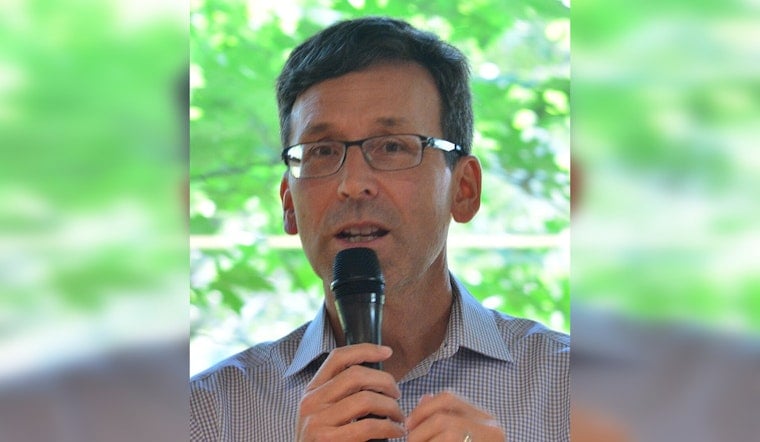
Washington state officials knew as early as December 2025 that a report on the Climate Commitment Act had wildly overstated how much greenhouse gas cap-and-trade projects were cutting, but Governor Bob Ferguson's office delayed releasing a correction for weeks, according to internal emails. The state didn't publicly fix the error until the afternoon of January 6, 2026 — and only after a conservative watchdog published his own analysis of the discrepancy that morning.
The original November 2025 report claimed Climate Commitment Act projects would cut about 8.6 million metric tons of greenhouse gas emissions. The corrected figure was 1.2 million metric tons, according to reporting from Axios, whose Melissa Santos obtained the internal emails detailing the delay. A separate accounting of the same correction, reported by KNKX, put the corrected lifetime reduction figure at 308,000 metric tons — less than 4% of the original 8.6 million metric ton estimate.
The state's Department of Ecology had actually prepared a news release correcting the error back in December 2025. Per the emails Axios reviewed, an Ecology Department official named Dustin Terpening requested at least twice that weekend that the governor's office approve a draft correction release, and the department had emailed the governor's office on December 20, 2025 asking permission to issue the correction two days later. That request went unanswered for weeks.
Why the Fix Sat on a Desk
Brionna Aho, Ferguson's lead spokesperson, told Axios that she and Ferguson's chief of staff, Shane Esquibel, wanted to review the correction release again before it went out, saying additional review was needed to verify the source of the error and prevent another one. Aho pointed to December flooding, preparations for the upcoming legislative session, and the year-end holidays as factors affecting the timing, according to the same report.
Whatever the cause, the inaccurate climate data remained public for weeks after officials discovered the error, and Ferguson's office resisted some requests for agency officials to speak with media about it, per Axios. The error itself traced back to incorrect Department of Commerce data. According to KNKX, eight Department of Commerce home-electrification and appliance rebate projects were miscalculated to cut 7.5 million metric tons of emissions, when their actual impact was just 78,000 metric tons — accounting for virtually the entire 8.3 million metric ton discrepancy in the flawed report.
A Watchdog Forces the State's Hand
The correction only became public after Todd Myers, a representative of the conservative Washington Policy Center, noticed something odd: the state's reported cost to reduce a metric ton of carbon dioxide had dropped from $1,400 in prior reports to just $40 in the faulty November 2025 report. Myers published a blog post laying out the discrepancy on January 6, 2026, and the state issued its formal correction that same afternoon — with Ecology officials and Aho reportedly already preparing to send it before Myers went public.
The episode fits a broader pattern flagged by other outlets covering Ferguson's communications operation. Early in 2025, Ferguson's administration established a rule requiring cabinet agencies to submit news releases to the governor's office at least 48 hours before publication and to seek prior clearance before speaking with major media outlets, according to FOX 13 Seattle. Aho has defended the policy as necessary to foster cohesion across state government.
That same clearance process reportedly delayed other public communications before the climate data episode, including Snohomish County public health alerts about a measles outbreak and state vaccine guidance, as reported by MyNorthwest.com. Internal agency emails obtained by reporters described the central clearance process as grueling and a continual barrier, the outlet noted.
The Climate Commitment Act's High Stakes
The Climate Commitment Act, enacted under former Governor Jay Inslee in 2021, legally requires Washington to cut overall greenhouse gas emissions 95% below 1990 levels by 2050, according to the Washington State Department of Ecology. The law requires facilities emitting more than 25,000 metric tons annually to purchase carbon allowances through quarterly cap-and-invest auctions. During the 2023–2025 biennium, 37 state agencies distributed more than $1.5 billion generated from those auctions across more than 3,600 individual projects statewide, with at least 35% of revenues legally required to go toward overburdened communities.
Washington's carbon auctions have generated nearly $3.5 billion in total revenue since launching in January 2023, though critics argue the system inflates retail gasoline and natural gas prices statewide. Voters weighed in decisively on the program in November 2024, defeating Initiative 2117 — which sought to ban carbon credit trading and repeal the cap-and-invest system — with 61.95% voting no. Ecology's next report on the program's outcomes is due later in 2026, per Axios.
A Rocky First Year in Office
The delayed correction adds to a rough transparency record for Ferguson dating back to his first months in office. During his first eight months as governor in 2025, Ferguson drew criticism from state lawmakers, lobbyists, and journalists for consolidating executive oversight and eliminating standard weekly media briefings, according to Cascade PBS. A poll cited in that report showed Ferguson holding the lowest first-term approval rating for a Washington governor in more than 30 years.
Hoodline has previously covered the Climate Commitment Act's expanding footprint, including plans to link carbon markets with California and Québec, and how the program has funneled money into projects like safer school routes in Tacoma. The latest revelations about the delayed correction raise fresh questions about how the governor's office balances message control against the public's right to accurate, timely information on programs funded by billions in ratepayer dollars.



.jpg)