

























































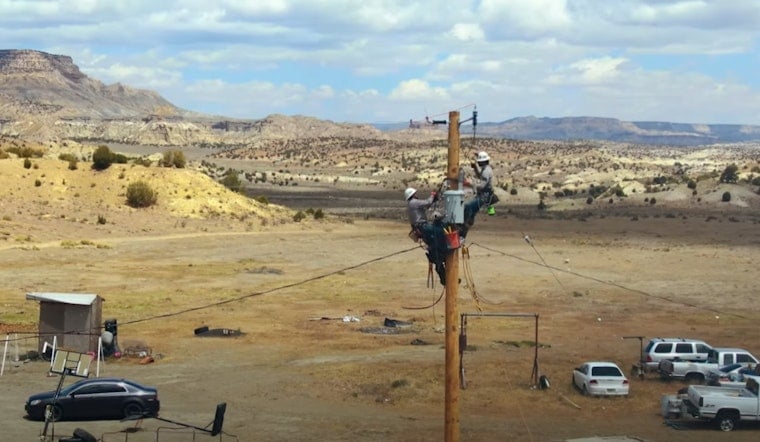
Five linemen from Seguin Electric Utilities traveled more than 800 miles to Chinle, Arizona, this summer and spent two weeks stringing nearly 6,000 feet of power line so that nine families on the Navajo Nation could flip on lights for the first time in their lives. Freddy King, A.J. Martinez, Eli Santos, Alex Duarte and J.R. Cruz worked alongside crews from the Navajo Tribal Utility Authority to complete the installation, connecting homes to electricity, refrigeration, heating and cooling that most Texans take for granted.
The trip was part of the Light Up Navajo initiative, according to the City of Seguin, which posted video of the crew's work to its Facebook page. The five-man team's deployment fits into a much larger national effort: the 2026 iteration of the program, Light Up Navajo VII, mobilized more than 300 electric lineworkers from 53 utility companies across 24 states between April and August, according to KTAR.
A Program Built Like Storm Recovery
Light Up Navajo launched in spring 2019 through a partnership between the American Public Power Association and the Navajo Tribal Utility Authority, adapting the same mutual-aid frameworks utilities normally use for hurricane or ice-storm recovery, per the same association's account. Instead of restoring power after a disaster, though, participating crews like Seguin's are building it from scratch in places that have simply never had it.
The need is staggering by national standards. More than 75% of all households without electricity access in the United States are located within the Navajo Nation, as reported by T&D World. Out of roughly 55,000 to 56,000 homes spread across the Navajo Nation's 27,000 square miles, an estimated 9,300 to 10,000 households still lack electricity in 2026, the outlet notes.
Why the Work Takes So Long
The Navajo Tribal Utility Authority has estimated that without volunteer labor from visiting crews, it would take more than 50 years to connect every unpowered home on the reservation to the grid, according to T&D World's reporting. Part of the reason is cost: connecting a single off-grid Navajo home requires an average of roughly $5,500 in materials, including nine utility poles, one transformer, 16 insulators, two arrestors and 0.6 miles of wiring, per the American Public Power Association. Visiting line crews help stretch that funding further by absorbing the labor costs themselves.
Seguin Council Signed Off Months in Advance
The trip wasn't a last-minute volunteer trip. Seguin Utilities Director Timothy Howe formally presented the Electric Department's mutual aid and training mission for Light Up Navajo VII to the Seguin City Council in February, according to city records. City leaders framed it as both a humanitarian effort and a workforce training opportunity for Seguin's linemen before the crew ever left for Arizona.
The city also put real effort into publicizing the project ahead of time. A proposal video the City of Seguin produced about the Light Up Navajo initiative won first place at the Texas Association of Telecommunication Officers and Advisors annual conference in November 2025, months before the crew's deployment.
A Small Texas Utility With a Big Reach
Seguin Electric Utilities, established in 1907, operates a municipally owned distribution system with three substations and more than 8,500 electric meters, purchasing wholesale power from San Antonio's CPS Energy. The utility falls under the regulatory jurisdiction of the Electric Reliability Council of Texas and funds its operations entirely through customer utility rates rather than municipal taxes, meaning the Chinle mission was carried out within the department's existing operational budget rather than local tax dollars.
Seguin's crew joins a growing list of utilities that have sent workers to the reservation this year. Hoodline previously reported on Phoenix line crews lighting up Navajo homes through Salt River Project's participation in the same initiative, while Oklahoma-based Edmond Electric sent its own crew to assist last October. For the nine families in Chinle now living with electric lights, refrigeration and climate control for the first time, the effort represents the end of a wait that, without outside help, utility officials say could otherwise have stretched for decades.




