

























































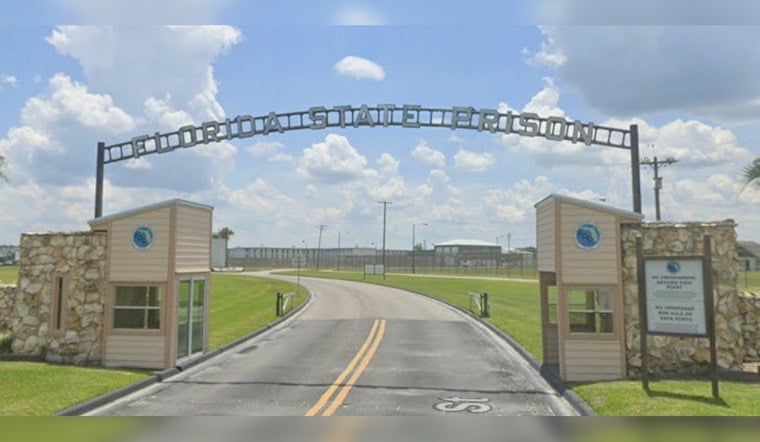
Florida has scheduled the execution of Daniel Owen Conahan Jr., a 72-year-old former nurse from Punta Gorda whom investigators have long suspected of being the serial killer behind the so-called Hog Trail Murders. Governor Ron DeSantis signed the death warrant, setting an official execution window from noon on September 10 through noon on September 17, 2026, with the execution itself set for 6 p.m. on September 10 at Florida State Prison in Raiford.
Conahan was convicted of just one murder — the 1996 kidnapping and killing of 21-year-old Richard Alan Montgomery — even though police have long suspected him in as many as a dozen homicides of men across Southwest Florida, according to Tampa Free Press. Montgomery disappeared on April 16, 1996, after telling friends he was meeting a man to pose for nude photographs for money. His body was found the next day by utility workers in a wooded area of Charlotte County, and autopsy reports showed he had been tied to a tree and strangled, the outlet reported.
A Pattern Investigators Couldn't Ignore
Investigators noticed that Montgomery's death matched a pattern of bodies found in remote areas of Southwest Florida between 1994 and 1996, per the same account. Many of the victims were young men who had been lured with promises of paid photography work — the exact tactic Montgomery described to friends before he vanished.
That pattern nearly claimed another victim two years earlier. Survivor Stanley Burden escaped in 1994 after Conahan lured him into woods near South Fort Myers under the pretense of a paid nude photography session, then bound him to a tree and attempted to strangle him, according to FindLaw. Burden told police that Conahan tied him to a tree and tried to strangle him before he managed to get away, giving investigators a rare surviving witness who could describe the killer's methods firsthand.
Named for the Region's Wild Hog Trails
The killings became known as the Hog Trail Murders because victims' bodies were discarded along remote, brush-choked corridors used by wild boar and hunters off U.S. Route 41, spanning Charlotte, Sarasota, and Lee counties, as reported by WFTV. The dense palmetto scrub and swampy terrain in that stretch of Southwest Florida often left remains badly decomposed by the time search teams found them.
The scale of what investigators suspect Conahan may be connected to became starkly visible in March 2007, when a land surveyor in Fort Myers discovered eight skeletal remains scattered across a remote wooded lot — a site that came to be known as the Fort Myers Eight. WFTV reports that investigators suspect Conahan is connected to those deaths, though he was never formally charged in any of them.
Forensic breakthroughs have continued to chip away at the mystery long after Conahan's 1999 conviction. In July 2021, advanced genetic genealogy allowed Charlotte County detectives to identify one of the 1994 Hog Trail victims as Gerald Anthony Lombard, a 31-year-old Massachusetts native who had been missing for more than 27 years. Even so, of the up to a dozen homicides law enforcement agencies and cold-case investigators have linked to Conahan, he was formally indicted, tried, and convicted for only one.
From Navy Discharge to Nursing License
Conahan's path to that single conviction traces back decades. He served in the U.S. Navy beginning in 1977 before receiving an administrative discharge in 1978 following a fight over an attempted sexual advance, according to Wikipedia. He then returned to Florida and, in 1995, graduated at the top of his class as a licensed practical nurse — training that put him at Charlotte Regional Medical Center in Punta Gorda around the same time the bodies tied to the case were being discovered.
Physical evidence ultimately tied him to Montgomery's murder. A unique four-layer paint chip found on Montgomery's body matched Conahan's Mercury Capri automobile, and matching carpet padding had been used to help conceal the corpse, per FindLaw's account of the case. Conahan waived his right to a jury trial for the guilt phase, and Charlotte County Circuit Judge William L. Blackwell convicted him of first-degree premeditated murder and kidnapping before sentencing him to death on December 10, 1999. The Florida Supreme Court upheld that conviction in 2003.
Appeals Exhausted, Clemency Denied
Conahan's legal options ran out gradually over more than two decades. Federal appeals courts rejected his remaining petitions in 2023 and 2024, and on February 24, 2025, the U.S. Supreme Court denied his final petition for a writ of certiorari, ending his federal habeas corpus appeals and clearing the last legal barrier to execution, according to Wikipedia. State officials confirmed that executive clemency was also reviewed and denied.
In the death warrant, DeSantis said it would carry out Conahan's sentence, and he sent the order to Warden Randall Polk. Attorney General James Uthmeier wrote that the record legally supported issuing the warrant, stating that Conahan's appeals had been turned down by both state and federal courts and that no stays of execution had been issued by any court of competent jurisdiction.
Conahan's case is one piece of a much larger wave of capital punishment activity in Florida this year. His execution order arrives amid an ongoing surge of death warrants signed by DeSantis in 2026, part of what has become one of the state's most active years for executions in recent history, as previously reported by Hoodline. For families of the still-unidentified Hog Trail victims, though, Conahan's execution will close the books on only one case — leaving the broader mystery of Southwest Florida's decades-old killing spree formally unresolved.




