

























































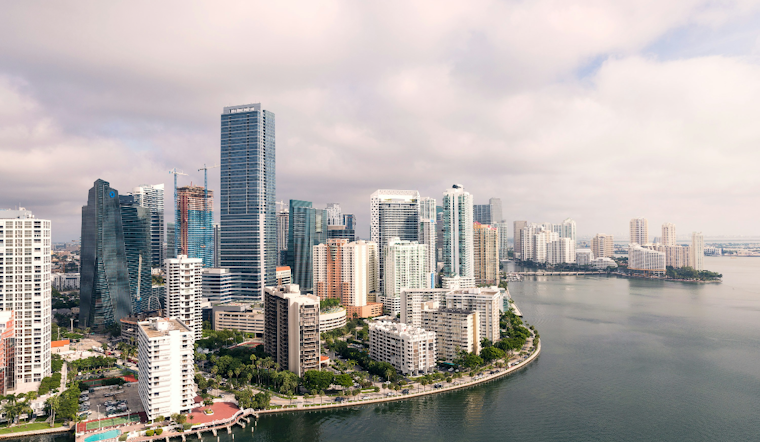
Florida landed at No. 10 overall in WalletHub's newest ranking of the best states to live in, a slide from sixth place a year earlier as the state's affordability problems pulled down an otherwise strong showing. The state notched a total score of 57.48, buoyed by a No. 3 ranking in quality of life and a No. 11 spot in safety, even as it slumped to No. 32 in affordability and No. 24 in education and health.
A Familiar Culprit Drags Down the Score
The drop reflects a state caught between lifestyle appeal and mounting costs, according to WKMG, which reported that Florida's lifestyle advantages offset weaker rankings in affordability and education and health. WalletHub compared all 50 states across categories including affordability, economy, education and health, quality of life, and safety, drawing on data compiled from the U.S. Census Bureau, FBI, CDC, and other federal and research organizations. Florida's quality-of-life score drove its strong overall showing, per the outlet's report.
That affordability weakness has a clear driver: property insurance. Florida homeowners pay an average annual premium of $8,292, the highest in the nation and 181% above the national average, according to an April 2026 analysis by Insurify, which pointed to storm risk, rebuilding costs, and litigation overhead as key drivers, with premiums having jumped 49.5% between 2020 and 2025. Hoodline previously reported on how those rising bills were biting back at Florida homeowners alongside mounting mortgage delinquencies.
Renters Feel the Squeeze Too
Rental costs compound the pressure. Renters in the Orlando metro area need to earn at least $33 an hour, or about $69,000 annually, to afford a standard one-bedroom apartment, according to a report by the National Low Income Housing Coalition cited in 2025 by 107.9 WSRZ. That leaves minimum-wage workers earning $13 an hour needing to work 96 hours a week to cover rent alone, even as Florida's minimum wage is scheduled to rise incrementally to $15 by September. Miami has separately been flagged in WalletHub rental affordability data as the least affordable rental market in the country, a point Hoodline noted in its coverage of a Miami-Dade apartment complex sale.
Migration patterns suggest the cost pressures are reshaping where people settle. Net migration to Florida dropped to 201,191 residents in 2025, down nearly 66% from its 2022 peak of 598,737, according to July 2026 data from the University of Florida's Shimberg Center for Housing Studies, with growth shifting away from major urban centers toward mid-sized counties like Polk, Pasco, and Marion. At the same time, Florida led all 50 states in net international migration in 2025, adding 178,674 foreign-born residents, per U.S. Census Bureau Vintage 2025 estimates, even as slowing interstate domestic arrivals held back overall growth.
What Kept Florida in the Top Ten
Despite the affordability drag, Florida's safety and lifestyle numbers held up. The state's 2024 violent crime rate stood at 267.1 per 100,000 residents and its property crime rate at 1,420.4 per 100,000, both roughly 25% and 19% below national averages, respectively, according to FBI Uniform Crime Reporting statistics compiled by USAFacts. WalletHub's safety methodology weighs violent crime, property crime, traffic fatalities, and law-enforcement employees per capita, while its quality-of-life measure factors in everything from commute times and bike friendliness to beaches, weather, and air quality.
Florida also benefits from a structural tax advantage: it remains one of only eight states without a personal state income tax, instead leaning on tourism sales taxes generated by more than 75 million annual visitors and 825 miles of public beaches. Florida ranked 17th in WalletHub's economy category, a methodology that accounts for unemployment, income growth, entrepreneurship, and tax-friendliness among other factors.
How Florida Stacks Up Against the Leaders
Idaho claimed the top overall spot with a score of 60.15, according to WalletHub analyst Chip Lupo. Idaho posted the nation's lowest property crime rate, the 14th-lowest violent crime rate, and the eighth-highest homeownership rate, alongside a median real estate tax rate of just 0.5% and the fourth-lowest overall tax burden nationally. It also recorded the highest median household income growth rate in the country and the seventh-lowest share of urban interstates hit by peak-hour congestion.
New Jersey followed at No. 2 with a score of 59.41, trailed by Wisconsin at No. 3 (59.32), Massachusetts at No. 4 (59.28), and New Hampshire rounding out the top five at 58.89. Lupo said people should consider how where they live will impact their health and safety, adding that those weighing a move should factor in both financial considerations and day-to-day living conditions.
Florida's slide from sixth to 10th place tracks a broader national conversation about the tradeoffs between lifestyle and cost of living. U.S. News & World Report's separate 2026 rankings placed Florida eighth nationally, citing strong marks in education and economy but a steep drop to 47th in opportunity due to income inequality and housing affordability struggles — a divergent but complementary signal that Florida's appeal is increasingly shadowed by what it costs to actually live there.





