

























































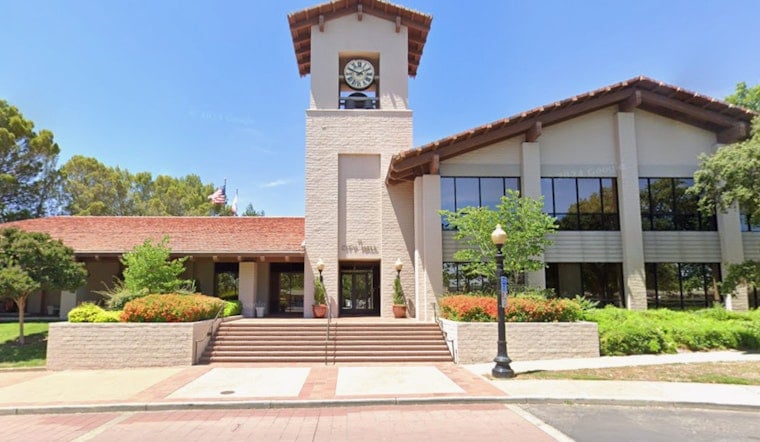
The Folsom City Council voted unanimously on Tuesday to spend $7.1 million on a vacant lot next to Folsom Lake College and Lakeside Church, locking down land the city says it will eventually develop into affordable housing. The purchase, made using money from the city's own housing fund, gives Folsom outright ownership of a parcel that a city department report says has capacity for about 200 multifamily units.
According to the Sacramento Bee, the lot is owned by Lakeside Church, and city officials say buying it outright is the surest way to guarantee it eventually gets used for affordable housing rather than market-rate development. Community Development Director Pam Johns said the city plans to eventually develop the property for affordable housing, though she cautioned that the timeline remains uncertain. Johns added that Folsom could prioritize this particular site for master planning or instead focus its near-term efforts on another location it already controls.
Council member Barbara Leary, who supported the purchase, said she was committed to making sure the development moved forward. Still, per the same report, Leary acknowledged that actual construction on the site could take two years or more, and city officials say the project could even be pushed back until Folsom's next state housing element cycle begins in 2029.
Why Folsom Needs the Land
The purchase is rooted in state and regional housing mandates. State and regional officials determined in 2021 that Folsom needed about 3,500 additional housing units for low- and very low-income households, split roughly between 2,200 very low-income units and 1,300 low-income units, the Sacramento Bee reports. State law requires Folsom to make sure its zoning allows enough land to accommodate that need, even though the city itself is not required to actually build or finance those units.
Despite that state mandate, the Sacramento Bee's reporting cites a city department finding that affordable housing has not been built fast enough to meet Folsom's lower-income housing needs. By last August, the city had only reached 347 low-income units and 225 very low-income units toward its targets, leaving Folsom with a shortage of about 2,995 low- and very low-income units overall. Under Folsom's income guidelines, a four-person household earning at or below $105,100 a year is considered low-income, while a four-person household at or below $65,700 annually falls into the very low-income category.
A College Campus Next Door
The lot's location beside Folsom Lake College is not incidental. City officials have said the property could help meet the affordable housing needs of students at the college, where housing insecurity has become a documented local issue. Folsom Lake College reported that 64 students experienced homelessness during the 2024–25 academic year, nearly 1% of its roughly 9,700-student enrollment, according to the Folsom Times, which also notes college officials believe such insecurity is often underreported because of stigma and informal living arrangements.
That local urgency has already spurred a parallel, smaller-scale effort. In March, the nonprofit HART of Folsom broke ground on a student housing village at nearby Oak Hills Church, aiming to build up to five residential units for unhoused students attending the college, with private kitchens and restrooms on church-owned land, the Folsom Times reported.
How the City Pays for Land Without Touching Its General Fund
Folsom's ability to make a $7.1 million purchase without tapping general municipal revenue traces back to its Housing Trust Fund, established by the City Council in 2002. Per the California Department of Housing and Community Development, the fund is financed through commercial linkage fees on nonresidential projects and inclusionary in-lieu fees paid by residential developers who choose not to build affordable units within their own projects. The Sacramento Bee reports that the fund has received exactly those kinds of developer fees, and that Folsom has used housing fund money to support development at two other properties in previous years.
One of those, a property acquired in June, is intended for affordable housing development, while another was transferred to Habitat for Humanity of Greater Sacramento, which plans to develop 10 homes affordable for low-income buyers. The city separately allocated up to $810,000 in Permanent Local Housing Allocation funds to that Habitat project on Persifer Street, which converts former city surplus land into starter homes and accessory dwelling units, according to the Folsom Times.
A Pattern of Land-Banking Ahead of Rising Prices
The Lakeside Church purchase follows Folsom's earlier land buy in July, when the city acquired two parcels totaling 1.92 acres for $1.55 million to hold for future affordable housing while relocating its public works corporation yard. Taken together, the two purchases show a city increasingly buying land directly rather than counting solely on private developers to deliver below-market units.
That approach is partly a response to how developers handle Folsom's inclusionary housing rules, which apply to projects of 10 or more units but let builders pay in-lieu fees instead of constructing affordable homes on site. In June, the City Council approved the 1,424-home Alder Creek community, whose developer elected to pay in-lieu fees into the city's housing fund rather than build affordable units within the project itself, the Folsom Times reported. Those fees are part of what allows the city to keep buying land like the Lakeside Church parcel.
Market conditions underscore why the city is moving now. Folsom's rental market recently produced the Sacramento region's largest multifamily transaction reported in 2026, when the 293-unit Talavera Ridge apartment community sold for $102.5 million, or $350,000 per unit, as Hoodline reported. That complex includes six extremely low-income units as part of the city's regulated affordable housing inventory, illustrating both strong demand for Folsom rentals and how thin the low-income supply remains within it.
What Comes Next
Folsom's 2021-29 Housing Element set the city's goals for accommodating its future housing needs, and its site inventory identified capacity for 13,930 total housing units, including a buffer of roughly 500 lower-income units above what state law requires. To help meet those mandates, the City Council in August 2024 also approved General Plan amendments increasing building heights and densities along the East Bidwell Street corridor and near transit stations.
For now, the newly purchased lot remains undeveloped, and Johns has said the development timeline is uncertain. The Sacramento Bee reports that the city's Community Development Department plans to return to the City Council for a housing workshop in September, where further decisions about the site's future — and how it fits into Folsom's broader affordable housing strategy — are expected to take shape.



