

























































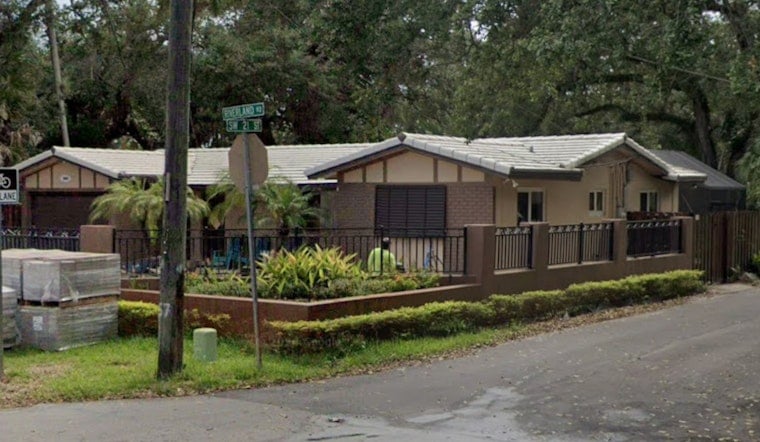
A city employee found two Flock Safety license plate reader cameras cut down and destroyed near SW 4th Avenue and SW 21st Street in Fort Lauderdale's Croissant Park neighborhood around 8:50 a.m. one morning in late July. One pole appeared to have been cut from the ground, possibly with a knife, while both cameras were left looking melted and slashed. The city later tallied the damage at $6,000, and police classified the incident as felony criminal mischief.
The destruction was first reported by the Miami New Times, which detailed how a city employee hauled the mangled poles to police headquarters after finding them down. The employee estimated the poles cost about $3,000 apiece. Under Florida Statute § 806.13, willfully damaging property worth $1,000 or more is a third-degree felony punishable by up to five years in prison and a $5,000 fine, which is why Fort Lauderdale Police classified the case as they did.
Despite the felony classification, the Fort Lauderdale Police Department has made no arrests. A detective assigned to the case found no public or private surveillance video and no witnesses, and closed the case on July 28 pending additional evidence, according to the department. A department spokesperson confirmed no one has been taken into custody.
A Growing Target Nationwide
Fort Lauderdale's cameras aren't the only ones getting hit. The Guardian identified at least 33 instances across 23 states as of July 2026 in which people damaged or destroyed Flock cameras, reflecting mounting frustration with the devices' spread. In Texas, the backlash escalated further: the Burnet County Sheriff's Office pulled its entire fixed-camera network on August 6 after repeated vandalism rendered the devices inoperable, opting to abandon the system rather than keep replacing damaged units.
Flock cameras log the plate of every car that passes and upload it to a massive cloud database, identifying vehicles by make, model, color and even bumper stickers. The company, founded in 2017 and based in Georgia, now maintains roughly 120,000 cameras nationwide and is valued at $8.4 billion, according to the American Civil Liberties Union. Flock says camera scans are deleted after 30 days and maintains its network is integral to public safety, advertising that the cameras stop crime in real time by alerting officers when a suspect vehicle passes by.
How Fort Lauderdale Built Its Network
Fort Lauderdale Police first signed a one-year agreement to test 25 Flock cameras in March 2022; the city's footprint has since grown to 88 cameras. Rather than seeking standalone city commission approval for each expansion, the department buys the equipment through a cooperative purchasing agreement with Cobb County, Georgia. FLPD spokesperson Casey Liening said the arrangement is permissible because it involves another government agency and products from a vetted vendor. Broward County as a whole now has more than 850 license plate readers, according to DeFlock.
That procurement path has drawn scrutiny elsewhere in Florida. Palm Bay officials ordered their entire camera network hooded and shut down on August 7 over concerns the vendor never obtained required municipal permits, with City Manager Matthew Morton and Police Chief Jeff Spears suspending the system pending a compliance audit. Lake City took a different route, placing a nonbinding November referendum on the ballot to let voters decide whether to keep its Flock contract at all.
Misuse Scandals Fuel the Backlash
Beyond vandalism and permitting fights, police misuse of the database has become a flashpoint. A Monroe County Sheriff's deputy was arrested in March 2026 on three felony counts of misusing a law enforcement database after tracking down and pulling over a woman he met on the set of the Apple TV series Bad Monkey, adding her plate to a hotlist to find her. He was fired over the incident. In August, the former deputy, identified as Lamar Eliseo Roman, entered a pre-trial intervention agreement requiring two years of supervision, $1,700 in fines and 100 hours of community service, along with therapy and no contact with the victim, according to TMZ.
Elsewhere, a Texas police officer reportedly searched Flock cameras nationwide for a woman who had gotten an abortion, an example privacy advocates point to when warning about the scale of the system — Flock cameras scan license plates billions of times each month in communities in nearly every state. In response to cases like these, the ACLU has expanded its national Get the Flock Out campaign, which helps residents file public records requests, draft model ordinances and attend city council meetings to push local governments to end their Flock contracts.
Florida law adds another wrinkle: state statutes 316.0777 and 316.0778 allow police to install the readers within highway rights-of-way but exempt captured plate images and location data from public records requests, meaning residents can't simply request raw scan logs to see what's being collected. For now, whoever melted and slashed the two cameras in Croissant Park remains unidentified, and the Fort Lauderdale case sits closed unless new evidence surfaces.




