

























































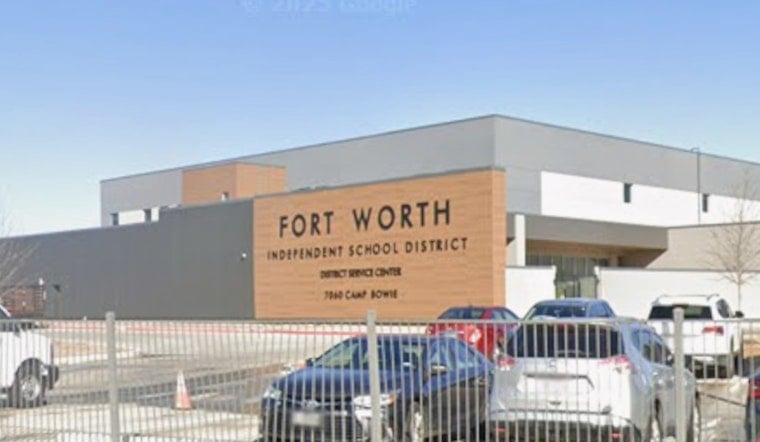
Fort Worth ISD has joined a fresh wave of school districts signing on to OpenAI's ChatGPT for Teachers program, but district leaders have yet to say how the free chatbot will actually be used, who decides what student information can go into it, or how teachers will be trained before it touches classrooms. OpenAI announced the district's involvement on August 26 as part of an expansion bringing the program to 55 new school systems across 20 states.
According to the Fort Worth Report, ChatGPT is a generative artificial intelligence chatbot that can answer questions, draft text and help users complete tasks based on written prompts. The partnership gives verified K-12 educators free access to the tool through June 2028, and includes training, support for district leaders and ongoing guidance, per the outlet's reporting. Fort Worth ISD spokesperson Jessica Becerra characterized the district's involvement as being in the early stages of exploring opportunities to use ChatGPT, saying the district is evaluating potential use cases while establishing governance, security, privacy and instructional guardrails. Becerra did not answer questions about access, rollout timing, whether use will be voluntary, whether the district is paying anything, or whether identifiable student records could be entered into the system, the outlet reported.
A Nationwide Rollout Reaches Fort Worth
Fort Worth ISD's move fits into a much larger national push. OpenAI's own announcement of the expansion, cited by MLQ News, states the program now reaches more than 100 K-12 organizations across 30 states, giving over 300,000 educators and staff free access. That expansion reportedly includes one in five of the 20 largest public school districts in the country. Alongside the district growth, OpenAI also announced a National Data Privacy Agreement across 16 states, including Texas, under the Student Data Privacy Consortium framework. That agreement sets standardized procurement terms, bars targeted advertising or the sale of student data, and prevents workspace inputs from training OpenAI's models by default, according to the same report.
The company's teacher outreach also builds on its partnership with the American Federation of Teachers, a union representing 1.9 million members, through a five-year initiative called the National Academy for AI Instruction that aims to train 400,000 educators on classroom AI integration, per Seeking Alpha. OpenAI has also released usage figures suggesting the appeal for time-strapped teachers: between January 1 and July 16, 2026, educators using ChatGPT for Teachers sent 1.9 million time-saving prompts, including 900,000 focused on report cards or progress reports and 800,000 on lesson planning, according to figures the company self-reported.
One Teacher's Workaround: Keep Names Out Of It
Nicholas Moore, a Fort Worth ISD English teacher at Paschal High School, has already built customized ChatGPT versions using his own teaching notes and presentations. He told Fort Worth Report that the tool can save him about five hours when planning a week's worth of lessons, and that he sometimes uses it for grading as well. But Moore said ChatGPT requires a lot of editing and checking, and he recalled catching it using outdated or incorrect state standards.
Moore said he does not enter students' names, grades, test results, Individualized Education Program information, or other identifiable information into the tool. Fort Worth ISD curriculum writers have separately been told they can use ChatGPT to work more efficiently amid staff turnover and a smaller team, the report notes.
Privacy Advocates Say Basic Questions Remain Unanswered
Hannah Quay-de la Vallee, a technologist at the Center for Democracy & Technology who has worked on student privacy issues for more than eight years, said keeping information out of model training is meaningful protection, but only a starting point. She said districts should explain where information is stored, how long it is kept and what other uses are made of it, and argued that responsible school adoption of generative AI requires districts to answer basic questions publicly. Quay-de la Vallee added that federal privacy law represents only a floor, and that districts should build stronger protections on top of it. She said teacher training is particularly important, and that schools should emphasize data minimization, keeping personally identifiable information out of ChatGPT whenever it offers little benefit to teachers. Sensitive information involving disabilities or protected characteristics, she noted, can create both privacy and bias risks.
National survey data underscores why those questions matter. A Center for Democracy & Technology survey found that 85% of middle and high school teachers and 86% of high school students used generative AI during the 2024-2025 school year, up sharply from 51% of teachers and 58% of students the year before, per reporting from Missoula Current. The same research found that 57% of special education teachers used generative AI to help draft Individualized Education Programs or 504 plans that year, an 18-point jump from the prior year, according to a report cited by Elevate K-12. Experts have warned that automated IEP drafting risks generating generic accommodations that could run afoul of the Individuals with Disabilities Education Act.
Texas Has Rules, But Districts Lag Behind
Texas has enacted its own guardrails. Public school districts are navigating AI tools under House Bill 18, known as the SCOPE Act, which governs permissible digital applications, and House Bill 3512, which requires annual AI literacy training for school system employees, according to Region 16 ESC. Even so, a late 2025 survey of Texas school administrators by UT Austin and the Texas Association of School Administrators found that while 86% reported teachers in their district use AI, only 20% of Texas districts had established a formal staff AI policy.
That gap is exactly what worries Erika Ramos, who said she wants to see the privacy agreement, policies and educator training before the tool spreads further, and wants to know what Fort Worth ISD will actually allow teachers to enter into ChatGPT. Tracy Bethmann Austin, a former teacher and parent of an I.M. Terrell Academy senior, raised a different concern, saying AI-generated images can deny humans an opportunity to show creativity. Even so, researchers note that carefully designed AI tutoring has research-supported benefits, though unrestricted AI use could help students in practice situations while hurting them on actual tests.
Budget Pressure Adds Urgency
The free software arrives at a pointed moment for Fort Worth ISD. The district is facing a projected $49.8 million operating budget deficit for the 2026-2027 school year as enrollment drops to 63,068 students, nearly 6,000 fewer than earlier projections, which in turn reduces state funding tied to average daily attendance, according to KERA News. Heading into the current school year, the district also hired 142 uncertified teachers to fill 239 classroom vacancies, concentrating those uncertified hires in hard-to-fill positions like special education, speech and bilingual instruction — staffing strain Hoodline previously reported is playing out across Texas districts.
Against that backdrop, free efficiency tools carry obvious appeal for a district managing fewer staff and tighter budgets. But with district-managed workspace data not used to train OpenAI's models by default, and with only a fraction of Texas districts having formal AI policies in place, the open question for Fort Worth ISD families is not whether teachers will keep using ChatGPT — many already are — but whether the district will spell out, in public, exactly what is and isn't allowed once student information is involved.





