

























































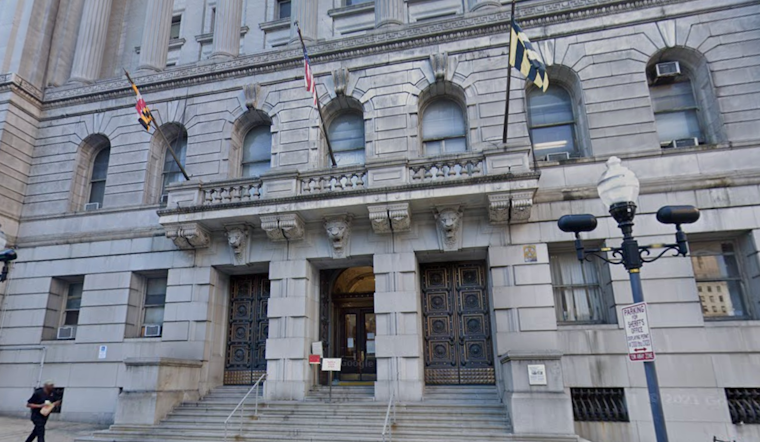
A 54-year-old man extradited from North Carolina is now facing murder charges in the killing of a longtime Maryland Transit Administration supervisor who was shot inside a Northeast Baltimore home in front of his daughter. McKevit Walker is being held without bond after being served an arrest warrant that had been outstanding for a month, and he had no attorney listed as representing him as of Thursday morning.
The victim, Dominic Rhames, was shot and killed on July 20 at a residence in the 2400 block of Perring Manor Road, according to WCBM.com, which cited reporting from the Baltimore Sun. Baltimore Police officers dispatched to the scene at 10:17 p.m. found Rhames suffering from life-threatening gunshot wounds inside the home before medics pronounced him dead, according to Baltimore Witness. Officers had initially responded to reports of an active domestic argument inside the residence.
Rhames's family told the Baltimore Sun that he and his son had gone to the Perring Manor Road home to check on his ex-wife after learning she might be in physical danger, a visit that ended in a fatal dispute. Rhames and his ex-wife had reportedly been childhood sweethearts who shared children, and relatives say he was shot in front of his youngest daughter. Rhames's family identified Walker to the Baltimore Sun as the alleged shooter.
A Decade-Long Career With Maryland Transit
Rhames began his career with the Maryland Transit Administration in 2015 as a bus driver, working his way up over nine years to become a field supervisor and superintendent, per the Baltimore Sun's reporting. MTA field supervisors oversee daily transit operations and route logistics, a role that placed Rhames in a visible position within Maryland's state transit agency.
Baltimore Police could not confirm Walker as the suspect while he remained at large, a decision the department made to preserve the integrity of the eventual prosecution, the Baltimore Sun reported. Walker reportedly claimed shortly after the shooting that he intended to turn himself in, but instead fled Maryland and was arrested as a fugitive in North Carolina days later. The Sun's account frames his flight as requiring a multi-jurisdictional effort to bring him back to face charges.
Six Counts Filed in Baltimore City Circuit Court
Walker now faces six criminal counts, including first-degree murder, second-degree murder, first-degree assault, second-degree assault, reckless endangerment, and several firearm offenses, according to WCBM.com's report on the case. Under Maryland law, a first-degree murder conviction carries a maximum penalty of life imprisonment without the possibility of parole, since the state abolished the death penalty in 2013, per FindLaw. Maryland Criminal Code § 2-201 defines first-degree murder as deliberate, premeditated, and willful.
A second-degree murder conviction carries a potential prison term of up to 40 years, while second-degree assault carries up to 10 years, according to Greenberg Law Offices. The range of charges reflects prosecutors' effort to cover multiple legal theories of the case as it moves through Baltimore City Circuit Court.
A Killing Amid Historic Crime Declines
The shooting happened during a month that otherwise marked a public-safety milestone for Baltimore. The city recorded just seven homicides in July, the fewest in any July in its history and only the second time in 25 years that the month's homicide count reached single digits, according to the City of Baltimore Mayor's Office. July has historically been the city's deadliest month for violent crime.
Through early August, citywide homicides had declined 25.9% year-over-year to 60 total cases, with the Baltimore Police Department maintaining a clearance rate of roughly 60%, well above the national average of around 50%. The department's Warrant Apprehension Task Force, which works with state and federal partners to track down fugitives fleeing Maryland, executed 1,006 arrests in the first six months of the year, a 17% increase over the same period in 2025, according to the Baltimore Police Department. Rhames's case, rooted in a domestic dispute rather than street violence, illustrates the kind of killing that citywide crime statistics often struggle to prevent even amid broader declines.
Hoodline previously reported on the Perring Manor shooting before Rhames's identity had been released, when police were first called to the scene. The Maryland Transit Administration had separately moved in October 2025 to grant itself authority to suspend or ban individuals who assault transit operators or passengers, a policy that followed a rise in physical attacks on agency staff, Hoodline reported at the time. That policy does not apply to Rhames's case, which unfolded away from transit property, but it underscores the agency's broader focus on employee safety in recent years.





