

























































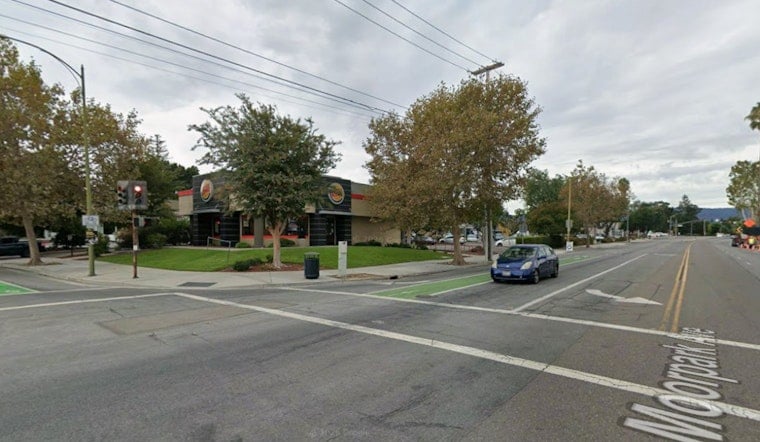
A full first-alarm fire broke out before sunrise today at the Burger King on the 5100 block of Moorpark Avenue in West San Jose, sending firefighters racing to the commercial strip near Lawrence Expressway. Crews were dispatched at 5:15 a.m. and reported making good progress on the blaze soon after arriving, though nearby traffic was affected as the response unfolded.
The call came in for the fast-food restaurant located at 5154 Moorpark Avenue, on the border of West San Jose and Cupertino, according to the San José Fire Department, which posted about the incident on its official social media account. The department said a full first alarm was responding to the fire and asked the public to avoid the area while crews worked. A full first-alarm structure fire dispatch by the department typically deploys between 20 and 27 personnel, including three Type 1 fire engines, two aerial ladder trucks, a squad unit, and battalion chiefs, per figures published by the City of San José.
#SJFD has a full first alarm responding to a fire at Burger King on the 5100 block of Moorpark Ave. Crews making good progress. Traffic impacted nearby. Please avoid the area.
— San José Fire Dept. (@SJFD) August 13, 2026
TOC: 5:15am pic.twitter.com/qAoZ8DfqJe
Fire Station 15, on South Blaney Avenue, sits less than a mile from the 5100 block of Moorpark Avenue and is the closest station to the scene, giving crews a short trip to reach the burning restaurant. Moorpark Avenue itself functions as a key east-west artery running parallel to Interstate 280, linking Lawrence Expressway, San Tomas Expressway, and Saratoga Avenue, which meant the early morning response rippled into commuter traffic on a corridor known for heavy cut-through use.
A Corridor With Recent Fire History
Today's fire marks the second significant blaze on Moorpark Avenue in less than a month. Just three weeks earlier, on July 22, San Jose Fire Department crews battled a 2nd-alarm garage fire on the 3100 block of the same street that forced nearby residents to evacuate before firefighters contained the main blaze without injuries.
It remains unknown what sparked the fire inside the Burger King, whether it began in the cooking line, the exhaust hood, or the building's electrical system. The extent of monetary and structural damage to the restaurant has not been disclosed, and it is unclear whether the location's automatic wet-chemical fire suppression system activated as required.
Why Kitchen Fires Like This Happen
Commercial kitchen fires are a well-documented hazard in the fast-food industry. National Fire Protection Association data cited by Warren Forensics indicates that cooking equipment causes roughly 61% of all structure fires in commercial eating and drinking establishments nationwide, with deep fryers and cooktop ranges responsible for the largest share of equipment ignitions. Separate NFPA research shows that failure to clean grease buildup in exhaust hoods and ductwork causes another 22% of commercial kitchen fires.
California regulations require commercial kitchens with heat- or grease-producing appliances to maintain automatic, UL 300-compliant wet-chemical suppression systems and dedicated Class K fire extinguishers under Title 19 and the state Fire Code. San Jose also enforces semi-annual mandatory inspections of kitchen exhaust hoods and suppression systems in accordance with adopted NFPA 96 standards, with noncompliance carrying the risk of an immediate shutdown by the fire marshal.
The stakes for restaurant operators after a serious kitchen fire can be steep. Federal Emergency Management Agency research, as compiled by fire-safety firm Total Fire Protection, shows commercial kitchen fires cause an average direct property loss exceeding $23,000, and roughly 43% of affected food establishments never reopen following a significant fire incident.





