

























































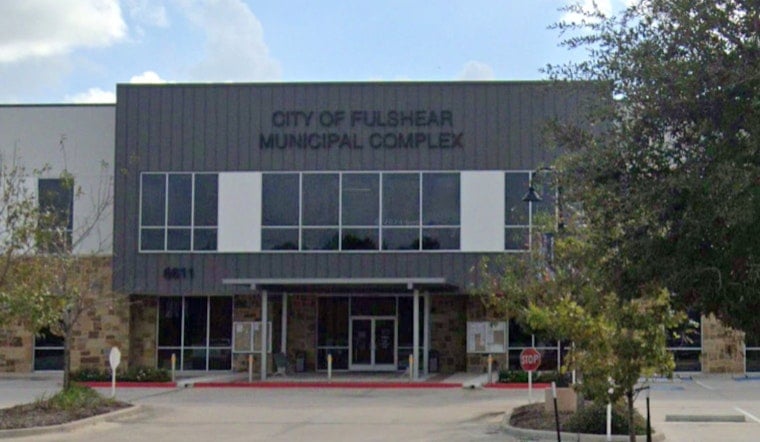
Fulshear property owners could see their city tax rate jump by as much as 22% under a proposal city council put forward this week, though officials say they're leaning toward a smaller increase before a final vote next month. The council set a ceiling of $0.20490 per $100 of valuation on Tuesday, up from the current rate of $0.167903, while signaling it may ultimately land closer to a staff-recommended $0.19310 rate instead.
Council Sets a Ceiling, Not Necessarily a Landing Spot
The higher figure represents the maximum voter-approval rate allowed under state law, and once a city proposes a rate, it cannot legally go above it — only come down, according to Community Impact. That's why Fulshear City Council voted for the maximum rate even as it leaned toward the lower, staff-recommended $0.19310 figure that supports the preliminary FY 2026-27 budget, per the outlet's report. Fulshear Finance Director Angela Alvarado said the council has the option to vote on the final budget and tax rate after a required public hearing.
Council member Omar Peña said adopting the higher ceiling gives the city flexibility as it works out details on proposed capital projects, evaluating them on cost, timing, and impact, among other factors. He added that the higher rate lets Fulshear judge how quickly commercial business tied to those projects can get underway, the outlet's report notes.
Why the City Says It Needs More Room
City Manager Zach Goodlander told council that new construction is adding far less taxable value to Fulshear's tax rolls than it did a year ago. New property added just $180.2 million in new taxable value this fiscal year, compared with $375 million last year, per the same account. Fulshear's total appraised value now stands at $7.26 billion, with total taxable value at $5.6 billion, and Alvarado said new growth will significantly slow in coming years — and is already slowing now.
That slowdown arrives even as Fulshear keeps growing overall. U.S. Census Bureau estimates released in May ranked Fulshear as the second-fastest growing city in the country, with its population expanding 21% in 2025 to nearly 65,000 residents, up from just 17,185 in 2020, according to the Houston Chronicle. That population boom, largely driven by master-planned communities like Cross Creek Ranch, is exactly what has fueled the demand for more police, more public works staff, and more infrastructure now weighing on the budget.
What the Extra Revenue Would Fund
The maximum voter-approval rate would generate an additional $912,000 in maintenance and operating funding beyond what the lower rate would bring in, and would provide a $1.25 million operating surplus and reserves above the city's 25% target, per the Community Impact report. Part of that operating pressure comes from a proposed three-year, $4.3 million police pay plan; a 2026 council subcommittee study found Fulshear officer compensation sat around only the 55th percentile compared with regional departments, prompting the push to reach the 75th percentile by FY 2028-29. Fulshear's preliminary FY 2026-27 budget also adds seven new staff positions, including three police officers, three public works employees, and one utility worker, outlining $36.66 million in expenditures against $43.93 million in revenue.
Debt service is also climbing. The issuance of voter-approved park bonds increased the fiscal year 2026-27 interest and sinking rate, after Fulshear residents voted in May 2025 to let the city issue $13.5 million in park bonds and levy taxes to repay them. Fulshear's adopted 2025 rate of $0.167903 had been split into a $0.116523 maintenance and operations rate and a $0.051380 interest and sinking rate, according to Fort Bend County Tax Office records — a split now shifting as the park debt comes due.
A Five-Year Capital Plan Adds to the Math
The city's broader five-year Capital Improvement Plan for FY 2026-31 totals $335.63 million, with more than $70 million budgeted for FY 2026-27 projects alone, including Primrose Park and downtown east-side drainage work, per Community Impact's earlier reporting. Fulshear even weighed a $15.72M parking garage as part of that same downtown capital push. Voters also approved a separate funding shift in May, reallocating 0.25% of local sales tax from the Economic Development Corp. Type A board to the city's general fund, which raised the general fund's sales tax collection rate to 1.25% without changing Fulshear's overall 2% sales tax cap, according to Citizen Portal.
How Fulshear Compares to Neighbors
Even at its proposed maximum, Fulshear's rate would remain far below neighboring cities. Fort Bend County commissioners kept the county's own rate at $0.412 per $100 valuation for FY 2025-26, below both its no-new-revenue and voter-approval rates. Neighboring Katy proposed maintaining a $0.425 rate for the same fiscal year, meaning Fulshear's proposed $0.20490 ceiling would still sit well under half of what Katy residents pay, reflecting the cities' differing tax bases and service structures.
Under Texas Senate Bill 2, cities face a statutory 3.5% cap on maintenance and operations revenue growth before a proposed rate becomes a voter-approval rate requiring a mandatory election. Fulshear has stayed within that legal framework by proposing the rate as a ceiling rather than immediately adopting it. The council will hold a public hearing on the budget and tax rate on Sept. 1, with formal adoption scheduled for Sept. 15.





