

























































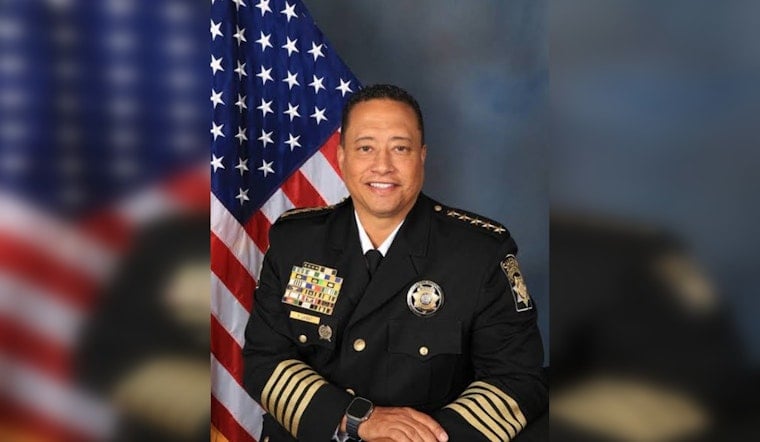
A Fulton County community advocate spent Friday in federal appeals court arguing that Sheriff Patrick Labat used a temporary protective order to punish her for criticizing him publicly — a case now turning on who authorized paperwork that was later dropped.
Laquana Alexander says Labat retaliated after she criticized him on social media and other public pages. She also accused the sheriff of misappropriating jail funds and questioned whether he had the moral character to hold office; those are allegations in her lawsuit, not findings established by a court.
The fight centers on a temporary protective order Labat filed in April 2024. The order was later dropped after Alexander questioned how it had been approved without notifying her, and WSB-TV reported that Labat says he did not sign the paperwork while his attorney did; Alexander says she had never spoken with Labat or been in the same room with him.
Three federal appeals judges heard arguments Friday at the U.S. Court of Appeals for the Eleventh Circuit in Atlanta. The court’s official calendar lists the dispute as case 25-11573, Laquana Alexander v. Patrick Labat, but the panel did not announce a ruling during the hearing.
The federal docket identifies the case as a civil-rights action under 42 U.S.C. § 1983. Alexander filed the lawsuit in July 2024, and her appeal was docketed in May 2025, according to the federal appellate docket.
Alexander’s appeal argues that she should be allowed to move forward with discovery, including testimony from Labat and requests for emails and text messages. She also plans to investigate who was responsible for preparing and submitting the protective-order paperwork, while maintaining that a lower-court judge dismissed her case without weighing the evidence.
A Sheriff’s Office At The Center Of The Dispute
Labat is Fulton County’s 28th sheriff and oversees the county jail, courtroom security, warrant service, civil process and other law-enforcement functions, according to Fulton County government. That makes the case unusually direct: a resident who says an elected law-enforcement official tried to silence her is asking a federal court to examine the official process used against her.
The lawsuit also lands as Labat’s administration remains under scrutiny over the Rice Street jail. Hoodline previously reported on the sheriff’s plan to stop booking most misdemeanor defendants into the facility, a policy framed as a response to overcrowding and the jail’s consent decree.
What The Federal Appeal Could Decide
The appeal is not a final finding that the protective order was unlawful or that Labat retaliated against Alexander. The immediate question is whether her civil-rights case should have been dismissed before she could obtain evidence and pursue those claims.
If the panel revives the case, discovery could include communications surrounding the protective order and testimony from Labat or other officials. If the dismissal stands, Alexander’s federal retaliation claim would end at this stage, leaving the dispute over the order and alleged motive without a full evidentiary trial.
Alexander said she felt justice was close after Friday’s arguments and intends to keep investigating who approved the protective order. The appeals court’s eventual ruling will determine whether that investigation continues inside a federal lawsuit or stops at the courthouse door.





