

























































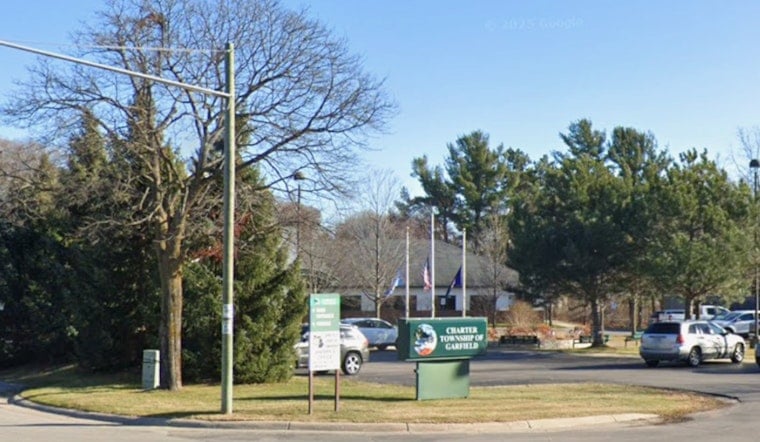
Garfield Township's board voted unanimously to freeze all new data centers and cryptocurrency mining facilities for a year, a move officials say was needed after a proposed project near Cass Road exposed a gap in local zoning rules that let such developments skip public review entirely. The moratorium, which can be extended six more months if the board decides it's necessary, gives township officials time to rewrite zoning code before any new project can move forward.
The trigger was a site plan application from developer Tom Cervenka, who proposed repurposing an existing building on Cass Road for a small-scale data center. As reported by Michigan Advance, Cervenka submitted incomplete site plans last month, and his proposal called for retaining the existing building and infrastructure, generating very limited traffic, and including noise, screening, and mitigation commitments. According to Taylor & Janel Brown, Cervenka Development Partners' application targets a 3.45-acre property at 2325 and 2357 Sybrandt Road near the former Sara Lee plant, and it proposes adapting existing industrial buildings without expanding their footprint or adding water-based cooling.
A Zoning Loophole Nobody Noticed
The reason the proposal set off alarms wasn't the project itself, but what it revealed about township rules. Data centers and computer operations had been classified as a permitted use by right in both the township's General Industrial and Limited Industrial zones, meaning developers could win administrative staff approval without any public notice, hearings, or board votes, the same market-notes report explains. That meant a data center could move in next door without neighbors ever getting a say.
Garfield Township residents raised concerns last month about how data centers could affect water and electric rates and the environment, according to Michigan Advance's reporting. The township's Planning Commission responded by recommending an amendment to the zoning ordinance that would allow temporary bans, a step officials took specifically because they wanted the moratorium to hold up if challenged in court.
Built to Survive a Legal Fight
Township attorney John Sych said using a zoning ordinance amendment is a stronger legal foundation than a standalone ordinance or resolution, per Michigan Advance's account, and he noted that moratoriums aren't actually addressed in the state law governing local zoning. That gap has burned other communities. Township Supervisor Joe McManus said some municipalities have been challenged and lost in court after enacting knee-jerk moratoriums without following the required process, the outlet reports.
To avoid that fate, Garfield Township's moratorium is reportedly the first enacted under a newly adopted local policy requiring officials to document specific written findings that a land use could adversely affect the health, safety, or welfare of residents or property before imposing a temporary pause, according to The Ticker. McManus said the moratorium will allow officials to better plan for future proposals, and he said the public universally accepted and supported the pause.
Power and Water Questions Still Loom
Even though Cervenka's proposal skips water-based cooling, the underlying utility questions haven't gone away. Municipal utility Traverse City Light & Power has confirmed that its Cass Road substation, adjacent to the proposed Sybrandt Road site, has 20 megawatts of existing available power capacity, which the developer says is enough to run the facility without triggering grid upgrades or rate increases for existing customers, per The Ticker's reporting. Water remains a separate complication: Garfield Township relies entirely on the neighboring City of Traverse City for municipal water and wastewater service, a multi-jurisdictional arrangement that adds another layer to any future data center review, the same outlet notes.
During the pause, officials plan to update the legal definition of data centers, distinguish small-scale operations like the Sybrandt Road proposal from massive hyperscale campuses, shift data centers from a use-by-right classification to a special use permit process, and potentially restrict them to specific industrial zones, The Ticker reports.
Part of a Statewide Pattern
Garfield Township isn't alone. More than 20 Michigan municipalities, including Kalamazoo, Flint, Pittsfield Charter Township, and Ypsilanti Township, have enacted local moratoriums or utility infrastructure freezes since 2025 to pause data center projects while they update zoning codes, according to tracking by DataCenterBans.com. The wave of local action follows big state incentives: Michigan Public Acts 181 and 207 of 2024 took effect in April 2025, exempting certified enterprise data centers from the state's 6% sales and use taxes through 2050, or 2065 for brownfield sites, if developers invest at least $250 million and create 30 full-time jobs paying 150% of the regional median wage, per the Michigan Economic Development Corporation.
Those incentives have collided with local pushback at the state level too. Bipartisan legislation introduced in the Michigan House and Senate in June proposed a statewide moratorium on new data center permits through April 2027, but Governor Gretchen Whitmer publicly rejected statewide moratoriums as an automatic non-starter, according to DataCenterBans.com. In July, Whitmer instead unveiled the Michigan Affordable and Responsible Growth Action Plan, securing voluntary commitments from major technology firms that local residents won't subsidize data center energy costs.
Michigan currently has about 75 data centers statewide but no large hyperscale facilities, though one hyperscale data center is under development in southeast Michigan, per Michigan Advance. State law prohibits municipalities from completely banning specific land uses outright, which is why Garfield Township's approach is a temporary pause rather than a permanent ban, giving the township board a year, and possibly 18 months, to rewrite its rules before the moratorium expires.




