

























































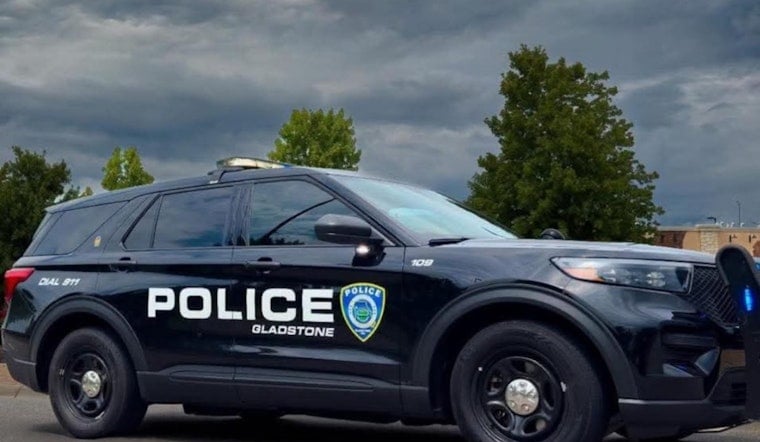
A former Gladstone police officer has sued the city and its police chief, alleging she was pushed out of her job and lost a second position as a longtime Clay County dispatcher after she reported sexist comments and misconduct within the department. Tricia Wadell claims in the lawsuit that Chief Fred Farris barred her from department property without his permission, a restriction that also blocked her from reaching the dispatch console she had worked for roughly nine years.
Wadell joined the Gladstone Police Department as a probationary officer in July 2025 and was placed in its training program, according to the lawsuit reported by The Kansas City Star. She alleges that during training, one training officer told her he “can't train her to be a good female cop,” and that she was told she needed to become a “better female cop.” Wadell says she reported the training officer's comment to supervisors, and that officer was later reprimanded and removed from further field training of her, per the lawsuit.
The lawsuit, filed in Clay County Circuit Court, accuses the City of Gladstone and Farris of sex discrimination and retaliation. It alleges Wadell was treated differently than male officers and was punished for raising concerns about misconduct within the department, including claims that command staff berated officers behind closed doors and threatened discipline if officers discussed those conversations. Wadell also alleged that recruits who raised concerns were told to “shut your mouth, keep your head down (and) do what you are told.”
A Second Job Lost to an Access Ban
The suit's central claim involves how a restriction on Gladstone property doubled as the end of Wadell's other career. She had worked as a dispatcher for the Clay County Sheriff's Office for roughly nine years, a role that operates out of the communications center inside Gladstone police headquarters. That co-located dispatch center, part of an 11-console operation serving Gladstone, Liberty and the sheriff's office, was completed in a 2024 headquarters expansion, according to Hoefer Welker, the firm that designed the facility.
According to the lawsuit, Gladstone denied Wadell permission to continue working her second job as a Clay County dispatcher, and Farris told her he could not have her “wandering around” the police facility. The suit alleges Farris lacked authority over Clay County hiring decisions, yet the restriction from Gladstone headquarters prevented Wadell from performing her dispatch duties for the county. As a result, the Clay County Sheriff's Office ended her employment because she could no longer access the communications center, and county officials retrieved her credentials, the lawsuit states.
The lawsuit accuses Farris of interfering with Wadell's separate employment with the sheriff's office. It also alleges the Gladstone Police Department restricted her from attending outside training on her days off.
Termination and Disputed Justification
Wadell was placed on administrative leave before Farris terminated her employment on September 29, 2025. Farris allegedly told Wadell that her reporting demonstrated “bad character” and did not allow her to ask questions about the termination decision, according to the suit.
Termination paperwork cited departmental rules regarding conduct unbecoming, criticism of policies and procedures, and failure to follow orders, and it said command staff had become aware of multiple incidents involving disruptive verbal and digital conversations, per the lawsuit. Wadell alleges her performance evaluations were inconsistent with the department's stated explanation for firing her. She also says a corporal texted her that people had heard what she said while working in the investigations unit, and separately instructed her to “keep (her) head down” and “do as (she was) told for now.”
Wadell had submitted written feedback about the criminal investigations unit, the field-training program and department morale, after a detective sergeant asked her in September 2025 to provide feedback about her experience with the department. She praised the criminal investigations unit in that written feedback even as she raised other concerns, and she was ultimately ordered to surrender her police identification, keys, weapon and radio.
City Declines Comment as Case Proceeds
Wadell is seeking back pay, lost benefits and compensatory damages in the suit. A city spokesperson, Nikki Lansford, said Gladstone and Farris would not comment because the matter is ongoing, per the Star's reporting. Kirk Holman did not respond to requests for comment on the lawsuit.
Farris took command of the Gladstone department in 2021 after serving as chief of the Goddard, Kansas Police Department and spending 22 years with the Lenexa, Kansas Police Department, according to the National Tactical Officers Association. He began his law enforcement career with the Kansas City, Missouri Police Department in 1990, and in 2023 he received the first annual Heartland Tactical Officers Association leadership award, which the group later renamed in his honor.
Staffing Crunch and a Wider Pattern
Wadell's hiring and termination unfolded as the Gladstone Police Department grappled with severe staffing shortages. As of July 2025, the department was missing 14 officers out of 48 authorized sworn positions, a roughly 30% shortfall that prompted the city council to approve emergency 7% pay increases for existing officers and higher starting pay for lateral hires, according to KCUR.
The case also lands amid persistent national underrepresentation of women in policing. Female officers make up only about 12% to 14% of sworn local police personnel and hold just 3% of law enforcement leadership roles nationwide, per Bureau of Justice Statistics data cited by Police1, and roughly 40% of general-purpose U.S. law enforcement agencies employed no full-time female sworn officers as of 2020. The National Policing Institute's 30x30 Initiative aims to raise women's representation in police recruit classes to 30% by 2030, citing research showing female officers use less excessive force and face fewer civilian complaints.
Gladstone's collective bargaining agreement with its police union explicitly prohibits discrimination or harassment based on gender and requires compliance with federal, state and local civil rights laws, according to city ordinance records. The Missouri Human Rights Act similarly bars employers with six or more employees from discriminating based on sex and forbids retaliation against workers who report discriminatory practices, per the Missouri Department of Labor and Industrial Relations. In a 2016 case, Ross-Paige v. Saint Louis Metropolitan Police Department, the Missouri Supreme Court sided with a former female officer who prevailed on retaliation claims under that same law after reporting workplace sexual harassment.





