

























































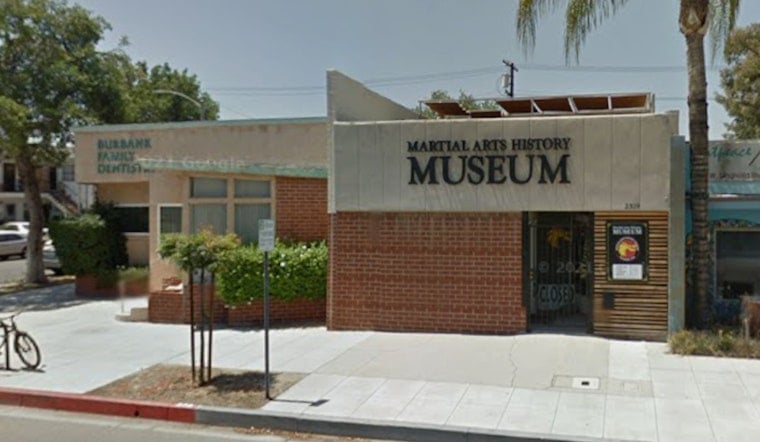
An 8,000-square-foot exhibit devoted entirely to the world's warrior women has opened permanently inside the Martial Arts History Museum in Glendale, and the woman who helped bring it to life is herself a rare figure in martial arts history. Kumu Michelle Manu, a black belt practitioner and teacher of the ancient Hawaiian combat art Lua, inaugurated the new Warrior Women exhibit, which chronicles female soldiers and defenders across the centuries.
According to Aloha State Daily, Manu helped create the video presentation and the information featured on the exhibit's boards, and it was her daughter Malia who cut the red ribbon to officially open the exhibition. Manu said the exhibit represents a permanent museum installation devoted to warrior women, telling the outlet that such figures belong in the historical record. The museum itself relocated from Burbank to an expanded facility at 201 N. Brand Blvd. in Glendale, holding its official grand opening in June 2025 after operating in Burbank for more than 16 years, according to the Martial Arts History Museum.
A Museum Built Around Global Combat Traditions
The museum is organized into distinct cultural rooms covering China, Japan, Korea, Thailand, the Philippines and Hawaiʻi, illustrating how combat disciplines from across Asia and the Pacific shaped American history and culture, per the museum's own account documented on Wikipedia. Founder and president Michael Matsuda, a 10th-degree black belt in monkey kung fu, called the Hawaiian exhibition one of the museum's most exciting sections, per the same account from Aloha State Daily. The museum claims to be the world's only educational venue displaying and preserving global self-defense disciplines, and its holdings range from samurai swords to an Elvis Presley workout uniform — a nod to the singer's own martial arts history, since Presley studied karate while serving as a soldier in Germany in 1958 and eventually earned a 7th-degree black belt, the outlet reports.
The Warrior Women exhibit includes informational boards and a video presentation spotlighting figures who span continents and eras. Among them is Joan of Arc, France's 15th-century patron saint, alongside Viola Davis as depicted in the 2022 film The Woman King, per the same Aloha State Daily report. Manu said she hopes to eventually accumulate an armory of traditional weapons within the exhibit space itself.
Chiefess Manono and the Battle That Nearly Ended the Old Ways
One of the exhibit's central figures is Manono, a Maui-born chiefess who died at the 1819 Battle of Kuamoʻo near Kona. According to the U.S. National Park Service, Manono fought alongside her husband Kekuaokalani in defense of the traditional kapu system during that December 1819 battle, which erupted over King Kamehameha II's abolition of Hawaiʻi's traditional eating taboos and religious order. She reportedly died on the battlefield uttering the words “Mālama kō aloha” — keep your love.
The exhibit also honors Moʻo Alā, an all-women special forces regiment that served under Oʻahu's Queen Kūkaniloko, and features Gabriela Silang, the 18th-century Filipino revolutionary who resisted Spanish colonizers. Silang took command of rebel forces in 1763 after the assassination of her husband Diego Silang, becoming the first Filipina to lead an anti-colonial revolt against Spanish rule, according to Encyclopedia.com. Known as La Generala, she led guerrilla attacks for four months before her capture and public execution by Spanish forces in September 1763.
Breaking a 200-Year Barrier in Lua
Manu's own place in this story runs deep. She is recognized as the first public female master, or Kumu Lua, in over 200 years to teach the ancient Hawaiian warrior art, breaking a multi-century gender barrier under her late mentor ʻŌlohe Solomon Kaihewalu, according to Ka Wai Ola. While ancient Hawaiian aliʻi women practiced Lua, public instruction by a woman had been absent for centuries until Kaihewalu authorized it. Manu has since earned a 10th-degree black belt and holds the title ʻAlihikaua, and per Aloha State Daily she teaches Lua to students of all genders, saying it is the only indigenous warrior art of Hawaiʻi's people and that she views it as a pathway to female self-empowerment.
Kaihewalu's own expertise and uniform are displayed inside the museum, alongside weapons he donated in full, including newa handheld clubs that may contain nihomanō — tiger shark or great white teeth — as well as maka pāhoa double-edged daggers, pāhoa single-edged daggers, and woodwork including paddles, the outlet reports. Lua is a contact martial art that nonetheless resembles ceremonial hula from ancient times, a connection rooted in a painful history: public practice of Lua and hula was banned in 1830 following the arrival of Western missionaries, prompting practitioners to secretly encode combat maneuvers within hula's gestures, according to Iconomy. King David Kalākaua later spearheaded a public revival of traditional Hawaiian arts during his reign from 1874 to 1891. Hula itself, notably, is not a contact art.
Students and a Royal Title
Manu's students describe her influence in personal terms. Kiaʻi Ikaika Kūkaniloko, who originated from Mākaha and now lives in Orange County, called Manu a phenomenal teacher, according to the Aloha State Daily report. Manu, who resides in Huntington Beach, is the only woman in history knighted as a Knight Commander of the Royal Order of Kamehameha I's Oʻahu Chapter, an honor tied to her work preserving Hawaiian culture through Lua, per Michelle Manu's own biography. The order was founded in 1865 by King Kamehameha V to defend the sovereignty of the Kingdom of Hawaiʻi and perpetuates the islands' ancestral culture, customs and traditions, according to the Royal Order of Kamehameha I.
Manu's work extends well beyond the museum walls. Following the September 11, 2001 terrorist attacks, she served as a director for America in Defense, training commercial pilots and flight attendants in close-quarters air cabin self-defense, according to UCLA. She has since expanded her self-protection instruction to high-risk professionals, university students and domestic violence survivors, and she has authored books about Lua. Other practitioners featured in the broader Filipino martial arts world cited by Aloha State Daily include Janel Barlongo, who has taught kali and silat at UCLA and elsewhere, and Crystle Diño, who teaches Filipino martial arts in Chicago.
A Retreat on Sacred Ground
Manu will next co-present the Koa Wāhine Retreat, running from September 3 through September 6 at Kahaluʻu Ma Kai in Kailua-Kona. The site is a historic 22-acre royal complex restored by Kamehameha Schools that contains ancient heiau, or temples, and sacred grounds, according to a Hawaiʻi state environmental document published on Hawaii.gov; the property previously housed the Keauhou Beach Resort before Kamehameha Schools repurposed it for cultural education. Manu described the retreat site as sacred land holding a birthing stone and several temples, per Aloha State Daily's report.
The retreat will address wāhine identity, adversity, voice, mana and connection to the ʻāina, with workshops focused mainly on helping women find their inner warrior. Programming includes Lua, hula, warrior massage and metaphysical practices, according to the same account. Between the Glendale exhibit and the Kona retreat, Manu's efforts to root modern self-empowerment work in centuries-old Hawaiian tradition are, for now, converging on two islands of the Pacific and one museum floor in the San Fernando Valley.




