

























































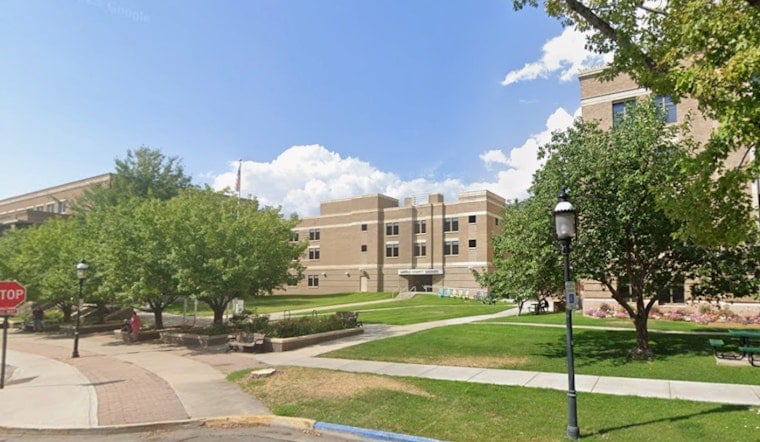
Glenwood Springs City Council is set to decide Thursday whether to sue the federal government over an ICE holding facility tucked inside a shopping center near Interstate 70, after residents pushed the city to revoke the site's permit in April. The facility, where people arrested by ICE in Garfield County and the surrounding region are held before being transported to Aurora, has operated for more than 20 years and violated the city's own 12-hour maximum hold condition at least seven times last year.
The push to yank the permit came from residents who spent months digging through records and pressing officials for answers, according to The Colorado Sun. Resident Claire Noone said she and neighbors spent hundreds of dollars obtaining city records about the property, and noted the facility has sat there for 22 years without ever being investigated. City Attorney Karl Hanlon has recommended the council file suit against the property owner, ICE, and the General Services Administration, the federal agency that manages workspaces around the country.
A Permit Revoked, A Landlord Silent
The Glenwood Springs Planning and Zoning Commission voted 5-1 on April 28 to revoke the facility's special use permit, with Commissioners Amy Connerton, John Houghton, Connie Geiman, Peter Waller, and Kyle Jones in favor and Patrick Corcoran opposed, according to Aspen Public Radio. That vote came despite a staff report from Economic and Community Development Director Trent Hyatt recommending the commission uphold the permit with corrective measures and quarterly reporting rather than revoke it outright, illustrating the tension between administrative caution and citizen pressure at City Hall.
Jeff Gillespie, who owns the property and leases the office space to the federal government, did not respond to the city's notice that the permit had been revoked, per the Sun's reporting. The office received its original special use permit in 2003, and a temporary certificate of occupancy in 2004; city officials and the fire department granted it a fresh certificate of occupancy earlier this year even as the permit dispute unfolded. The Glenwood Springs Fire Department confirmed on July 24 that the building was still being used as a detention facility after responding to a medical call there, and officials say they had previously provided the department with emergency evacuation procedures for the site, which the Sun reports includes a cell that can hold about 30 people without beds.
Office Space Or Detention Center?
The dispute over what to call the building runs deeper than the permit fight. Records examined in May showed Glenwood Springs has classified the ICE facility as “B: Office, Professional” rather than the “I-3” institutional detention category under the International Building Code, which governs spaces where people are held under physical restraint, according to The Revolutionist. ICE has described the Glenwood Springs site as a processing facility rather than a detention facility, and the Department of Homeland Security has said ICE does not hold detainees there for more than 12 hours, denying it violated the hold limit — a claim that directly conflicts with the city's own finding of at least seven violations last year, according to the Sun.
City officials conducted a comprehensive inspection of the holding facility in February and a follow-up review in April before the commission's vote. One woman held at the facility was ultimately deported to Mexico, the Sun reports, and ICE says it transfers processed people to permanent housing at a detention facility such as the one in Aurora — a facility accused of swapping detainees mail for cheap copies, according to prior Hoodline reporting.
Federal Money, Fewer Local Guardrails
The legal fight is unfolding against a shifting federal backdrop. In December 2025, federal authorities repealed an internal rule that had directed the General Services Administration to cooperate with local jurisdictions and follow municipal building codes on leased federal space, according to Aspen Public Radio. That repeal came as the Department of Homeland Security has gotten more money to expand immigration enforcement and detention, per the Sun's reporting. Federal law nonetheless states that agencies should consider following local laws, including zoning regulations, under the Federal Urban Land Use Act, which instructs the GSA to coordinate with local planning agencies “to the greatest extent practicable,” as reported by WKMG.
Hanlon has said the federal government could seek dismissal of the case once it's filed, but he wrote that attempting to enforce the city's local regulations until a court tells the city it cannot is good policy. Glenwood Springs plans to ask a judge whether the city can close the detention facility despite federal supremacy claims, a legal theory that Santa Clara University law professor Pratheepan Gulasekaram said gives states and local governments a stronger chance of enforcing generally applicable zoning laws against private ICE contractors than trying to target ICE itself. Gulasekaram also noted federal agencies have previously tried to follow local zoning laws, undercutting arguments that compliance is impossible.
A Pattern Playing Out Nationwide
Glenwood Springs is not alone in testing this approach. In Leavenworth, Kansas, officials went to court to require CoreCivic to obtain a permit before reopening an immigration detention facility, administratively rescinding the private prison operator's special use designation through Resolution B-2394 and securing a state court temporary restraining order, according to FindLaw. A state court ultimately ruled that the Supremacy Clause did not exempt CoreCivic from local permitting requirements.
In Howard County, Maryland, local officials revoked a building permit in February and pursued emergency legislation to block a private developer from converting a 30,000-square-foot warehouse into an ICE detention facility, according to WMAR-2 News. In Arizona, residents of Surprise launched an effort to dissolve their city after Attorney General Kris Mayes filed a lawsuit against the Department of Homeland Security in April seeking a federal environmental review before a warehouse there is converted into a detention center; DHS has agreed not to proceed with that project until the review is finished, per the Sun. Closer to home, the GEO Group plans to reopen a former private prison in Hudson, Colorado as a contract detention center, and an immigrant rights group has sued, arguing the property is not zoned for a detention center and requires a special permit.
Colorado's Legal Backdrop
Colorado has its own statutory guardrails against immigration detention expansion. Under Colorado Revised Statutes § 24-76.7-102, enacted through House Bill 23-1100 in 2023, state and local government entities are barred from entering, renewing, or expanding agreements with private entities to own, manage, or operate civil immigration detention facilities. The Colorado Court of Appeals upheld that law in April in Douglas County v. State of Colorado, ruling the statutory prohibition does not violate county constitutional contracting powers.
The state's sanctuary-style posture dates back further still: House Bill 19-1124, enacted in 2019, established that federal civil immigration detainers are not judicial warrants under state law and barred local law enforcement from arresting or holding people solely on civil ICE detainers. ICE's internal procedure allowed people to be held up to 72 hours in short-term facilities as of 2025, a standard well beyond Glenwood Springs' own 12-hour cap — and officials in Portland, Oregon separately found ICE violated a similar 12-hour hold rule in that city's facility permit.
Even if the council votes Thursday to move forward, Hanlon has acknowledged the proposed lawsuit could take two or three years to reach trial, leaving the Glenwood Springs facility to keep operating while the case winds through federal court. The outcome could hinge on how judges weigh municipal zoning authority against the Constitution's Supremacy Clause — a question that, as Gulasekaram's comments suggest, remains genuinely unsettled even as more cities attempt the same maneuver.





