

























































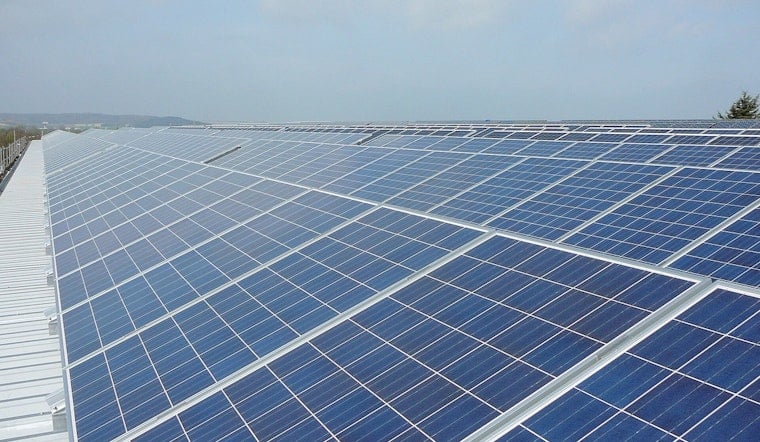
Google is putting a 15-year stamp on a major new solar project in southeastern Oklahoma, signing a deal for the full output of the planned Crooked Creek Solar facility in McCurtain County. The agreement gives the rural county a potential new economic engine while tying one of the world’s biggest technology companies to another large-scale power buildout.
The planned 155-megawatt project is expected to begin construction later this year and start commercial operations in 2028, according to News 9. RWE says the project could employ up to 250 workers onsite during its development and operation. That is a sizable workforce footprint for a county better known for forests, rivers and Broken Bow-area tourism than utility-scale solar.
Why Google Wants More Oklahoma Power
The agreement also fits Google’s broader Oklahoma energy strategy. In an April update, Google said its growing data center operations in Stillwater and Muskogee require new power and grid infrastructure, while emphasizing that the company wants to pair that growth with additional clean energy and protect affordability for local utility customers.
Crooked Creek’s electricity will support Google operations within the Southwest Power Pool, the regional grid market serving Oklahoma and surrounding states. A 2026 SPP filing identifies Crooked Creek Solar LLC as the interconnection customer and shows the project moving through the grid-connection process with AEP Oklahoma Transmission Company.
The Money Behind McCurtain County’s Solar Pitch
For McCurtain County, the headline is not only renewable electricity but also the money expected to follow it. News 9 reported that RWE projects about $424.3 million in local economic activity, $1.4 million in state and local tax revenue, and roughly $25 million in county revenue over time.
That revenue is expected to benefit county programs, local emergency medical services, Broken Bow Public Schools and regional technology education centers. In other words, the solar panels may be the visible part of the project, but the county’s long-term calculation is being made in classrooms, ambulances and county budgets.
McCurtain County Debate Is Still Alive
The project is not arriving without opposition. In May, state Sen. George Burns, R-Pollard, told the Oklahoma Senate that he opposed the proposed generating facility, citing concerns about transparency, public notice, neighboring landowners, tourism, wildlife and property rights.
That makes the new Google-RWE agreement an economic announcement and a local land-use flashpoint at the same time. The project’s supporters are emphasizing jobs, tax revenue and grid investment, while opponents are asking whether those benefits justify the facility’s impact near the Mountain Fork River and other natural assets.
RWE Already Has A Footprint On Oklahoma’s Grid
RWE is not a stranger to Oklahoma power projects. The company’s Boiling Springs project in Woodward County is a 148.4-megawatt wind farm and RWE’s first project in both Oklahoma and the Southwest Power Pool.
Now the German-based energy company is seeking to add solar to that Oklahoma portfolio, with Google providing the long-term buyer. If the schedule holds, McCurtain County will see construction begin later in 2026 and a new source of renewable power come online in 2028.





