

























































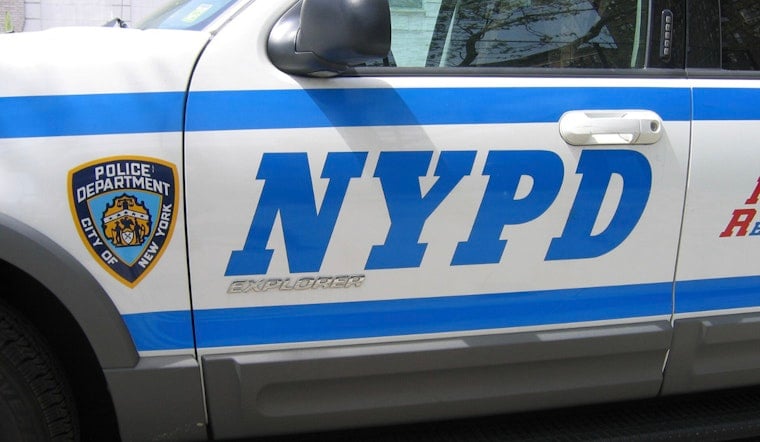
Two elderly subway riders slashed by a machete-wielding attacker inside the 42nd Street-Grand Central station are asking a Manhattan judge for permission to sue New York City, the NYPD and the MTA, arguing that officers were nowhere to be found as the rampage unfolded. Leila Sumulong, 70, was slashed across her back, and Jose Fermin, 84, was slashed across his head, according to the petition described in their case.
The attack happened on the morning of April 11, when 44-year-old Anthony Griffin, who police say had shouted “I am Lucifer,” attacked three people at the station in roughly one minute, according to police, as reported by the New York Post. Griffin had carried a roughly 17-inch machete and began the rampage after leaving the 7 train before moving to the 4/5/6 train platform, the Post reports. A 65-year-old man caught up in the attack suffered severe head lacerations and a skull fracture.
According to the petition, Sumulong and Fermin were forced to search for NYPD officers on the platform themselves, only finding them after leaving the platform and reaching the general concourse. The proposed notice of claim accuses the city and its agencies of failing to immediately stop the assailant and keep subway platforms safe. Sumulong and Fermin have since developed post-traumatic stress disorder and are, per the petition, terrified of riding the subway again.
How the NYPD Says It Responded
NYPD Commissioner Jessica Tisch has defended the police response, saying officers gave clear commands, attempted to de-escalate and acted to protect New Yorkers, and that they confronted an armed individual who had injured multiple people and remained a threat. Body-camera footage released in May, according to the Post, shows police ordered Griffin to drop the machete more than 24 times before officers fired two shots, killing him. The Associated Press reported separately that Detective Ryan Giuffre fired those shots after commanding Griffin to drop the weapon over 20 times during an encounter lasting about one minute, with responding detectives identified as Ryan Giuffre and Anthony Manetta.
Griffin had three prior unsealed arrests but no documented history with the department as an emotionally disturbed person, Tisch said at an April press conference reported by The Guardian. Surveillance footage showed Griffin had entered the subway system in Queens at the Vernon Boulevard station around 9:30 a.m. that day before traveling to Grand Central and slashing his first victim on the 7 train platform, according to the same account. During the confrontation, Griffin reportedly yelled, “Shoot me, please!”
A Steep Legal Climb Against the City
Because Sumulong and Fermin missed the 90-day notice-of-claim deadline required under New York's General Municipal Law § 50-e for suing public entities like the city, the NYPD or the MTA, they must first convince a judge to let them file late. Attorney Joseph Napoli called the incident a classic case of inadequate security at a major New York City station, according to the Post. His firm, Napoli Shkolnik PLLC, said the victims are focusing on recovery and are not providing interviews or statements; Sumulong, Fermin and their attorney declined further comment.
Under the statute, judges weigh whether public agencies had actual knowledge of the essential facts within that 90-day window and whether the delay would substantially prejudice their defense, according to legal analysis published by the St. John's Law Scholarship Repository. Even if the late filing is approved, longstanding New York Court of Appeals precedent — including *Weiner v. MTA* and *Cuffy v. City of New York* — holds that transit authorities and municipal agencies generally owe no duty to protect individual riders from third-party criminal assaults unless a plaintiff can establish a special relationship with police, according to Justia Law. City Hall and the MTA did not return requests for comment on the petition.
A Spring of Subway Violence, and a Summer Uptick
The Grand Central attack triggered an immediate tactical shift within the NYPD Transit Bureau, which reassigned roughly 175 officers directly onto station platforms and train cars rather than keeping them stationed at fare turnstiles, as Hoodline reported at the time. It was followed by a string of other Midtown-area slashings that Hoodline has since covered, including an attack near 190th Street, another near 49th Street, and a stabbing near Bryant Park in August.
The lawsuit petition also lands amid conflicting narratives about subway safety. In December 2025, Governor Kathy Hochul announced a $77 million state commitment for enhanced NYPD subway patrols into 2026, touting that major transit crime in 2025 had reached its lowest non-pandemic level in 16 years, according to the Metropolitan Transportation Authority. But NYPD transit statistics released in August show major transit crime rose 10.9% in July compared with the same month last year, driven by grand larcenies and felony assaults, nearly 20% of which involved elderly riders, according to FOX 5 New York. For Sumulong and Fermin, both of whom are seniors themselves, that statistical backdrop underscores the stakes of their fight to hold the city accountable for what happened on the platform that morning.





