

























































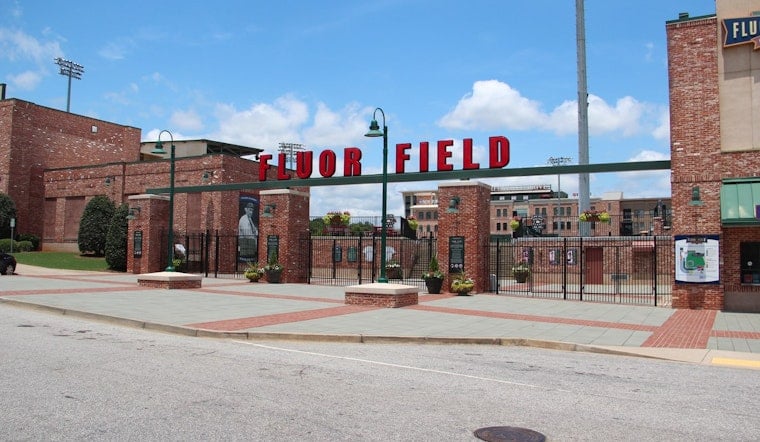
Firefighters and first responders will climb the equivalent of 110 stories at Fluor Field next month, retracing the ascent of the World Trade Center towers as Greenville marks the 25th anniversary of the September 11 attacks. The Greenville 9/11 Memorial Stair Climb returns to the West End ballpark on September 12, with opening ceremonies beginning at 8:30 a.m. and the walk itself starting at 8:45 a.m.
The event is hosted by the National Fallen Firefighters Foundation's Greenville chapter, which has staged the climb at Fluor Field since 2020, according to Greenville Business Magazine. The stadium's steep seating bowl gives climbers roughly 2,200 steps to work with, a setting organizers use to replicate the 110-story climb up the Twin Towers. That national tradition traces back two decades, to when five firefighters in full bunker gear climbed 110 flights in Denver to honor their fallen FDNY colleagues, a model the National Fallen Firefighters Foundation later adopted nationwide.
Registration is required for climbers, but members of the public need no ticket to show up and cheer them on, and organizers are encouraging the community to attend and support the climbers in person. The Greenville event ranks as the seventh largest stair climb in the nation when measured by combined climber turnout and funds raised, the magazine's report notes. Last year's climb drew approximately 800 participants and raised close to $65,000; this year's organizers have set a $75,000 fundraising goal.
Carrying a Name Up Every Step
The climb is run as an untimed memorial walk rather than a race, and each participant carries the badge of an individual fallen firefighter for the entire ascent, a design meant to ensure that every lost responder's journey is symbolically completed. Some firefighters choose to climb in full turnout gear that can weigh as much as 75 pounds, adding physical weight to the tribute. The walk typically takes 2.5 hours or less, and the event proceeds rain or shine.
The climb honors the 343 FDNY firefighters and other first responders killed on September 11, and its scope nationally extends further still: NFFF documentation shows the broader responder community lost that day also included 71 law enforcement officers and 55 military service members, out of 2,977 total fatalities in the attacks. The stakes behind the fundraising have only grown with time. By September 2024, the FDNY reported that more than 360 of its members had died from 9/11-related illnesses tied to Ground Zero rescue and recovery work, a toll that has now surpassed the 343 firefighters killed the day of the attacks, according to EMS1.
Where the Money Goes
Proceeds from the Greenville climb support the FDNY Counseling Services Unit and benefit the National Fallen Firefighters Foundation, helping fund families of fallen firefighters. Nationally, money raised through NFFF stair climbs goes toward academic scholarships for surviving children and spouses, peer-led behavioral health initiatives, and grief support programs for what the foundation calls Fire Hero Families. The City of Greenville's own accounting of the 2024 climb put registered turnout at more than 800 participants across 50 teams and 25 area fire departments, with $58,633.52 raised that year for firefighter support organizations.
What to Know Before You Go
Gates at Fluor Field, located at 945 S. Main St., open at 6:30 a.m., with opening ceremonies running about 15 minutes before the walk begins. Fluor Field is a cashless venue and enforces a strict clear bag policy, so attendees should plan accordingly. Outside food and beverage are not permitted inside the stadium, though food and beverages will be available for purchase, and participants may bring empty water bottles to refill once inside. The Greenville Drive team store on Main Street will be open throughout the event for anyone looking to shop before or after the climb.
Fluor Field itself carries its own layer of local history into the tribute. The $15 million, 6,700-capacity ballpark opened in April 2006 as a scaled replica of Boston's Fenway Park, complete with a 30-foot Greenville Monster wall in left field, according to Wikipedia. Builders incorporated roughly 500,000 reclaimed bricks salvaged from demolished Upstate textile mills during construction, tying the stadium to the region's industrial past even as it now serves as home turf for the Greenville Drive, the Boston Red Sox's High-A Minor League affiliate.





