

























































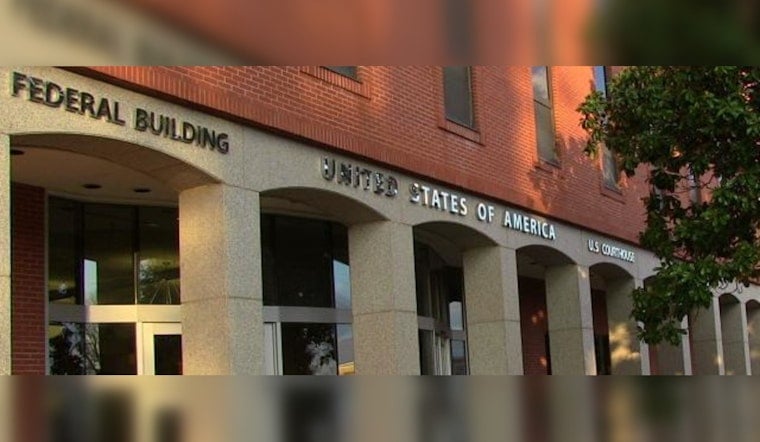
A Grenada, Mississippi, man who spent roughly a year on the run as a federal fugitive before U.S. Marshals caught up with him in California has been sentenced to more than 16 years in federal prison for running a methamphetamine and fentanyl trafficking operation across the Mississippi Delta. Christopher “Snow” Caffey, 49, received the longest sentence among 12 co-defendants who were collectively handed roughly 73 years behind bars for their roles in the ring.
Chief U.S. District Judge Deborah M. Brown sentenced Caffey in Greenville to 200 months, or just over 16 years, in federal prison, along with five years of supervised release, for conspiracy to distribute methamphetamine and fentanyl, according to the U.S. Drug Enforcement Administration. Caffey had evaded law enforcement as a fugitive for about a year before U.S. Marshals apprehended him in California in January 2025, according to PacerMonitor, court records that show he went through initial proceedings there before being extradited back to Mississippi.
Twelve people in total were sentenced following a multi-agency effort to dismantle the drug trafficking organization operating in the Mississippi Delta, per the Department of Justice, as reported by FOX13 Memphis. The case traces back to a multi-count indictment returned on February 28, 2024, in the U.S. District Court for the Northern District of Mississippi under case number 4:24-cr-00017, which originally charged 13 defendants before 12 were ultimately convicted and sentenced, court records reviewed by PacerMonitor show.
A Hierarchy of Sentences
Behind Caffey, co-defendant Courasier Young received the second-longest penalty at 151 months, or about 12.5 years, for conspiracy to possess methamphetamine with intent to distribute, FOX13 Memphis reports. The remaining sentences fell well below those two, ranging from as much as 120 months for Marcus Jones down to 18 months for Antonio Harley, according to the outlet's report.
Other sentences handed down included 92 months for Erik Love, 70 months for Aleatha Pullen, 48 months for Jesse Coleman, 46 months for Chauncey Young, 44 months each for James Pruitt and Kevin Golliday, and 21 months apiece for Jerrica Nahwooksy and Johnathan Sanders. Most defendants also received one to three years of supervised release once their prison terms conclude, per the same reporting.
Grenada County records show Pullen had a prior drug enforcement history in the local jurisdiction dating back to May 2018, when she was arrested on state charges of methamphetamine possession and evidence tampering, according to the Grenada County Sheriff's Department.
Meth, Fentanyl, and Firearms Seized
Law enforcement agencies seized 25 pounds of methamphetamine and more than 4,000 pills containing fentanyl as part of the investigation, and the organization was also tied to firearm crimes, FOX13 Memphis reports. U.S. Attorney John P. Scott said removing that volume of methamphetamine and fentanyl pills from the streets saved lives, according to the outlet.
The danger tied to those seized pills is significant. DEA testing indicates that roughly 40% to 42% of illicit counterfeit pills containing fentanyl analyzed in federal laboratories carry a potentially lethal dose, with a fatal dose of fentanyl estimated at just two milligrams. That risk plays out statewide: a drug threat assessment from the Mississippi Department of Public Safety found that in 2021, about 65% of suspected drug overdose deaths in the state involved fentanyl, methamphetamine, or both.
Chicago Gangs and a Decades-Old Pipeline
The trafficking organization involved members of the Vice Lord and Gangster Disciple gangs, per the DOJ findings cited by FOX13 Memphis. That connection fits a long-documented pattern: Chicago-based street gangs including the Vice Lords and Gangster Disciples have maintained active distribution channels across the rural Mississippi Delta since the 1980s, a pipeline rooted in family ties dating to the Great Migration, according to a historical account from Police1. Those networks reportedly traded firearms moving north for narcotics flowing south.
U.S. Attorney Scott F. Leary said drug trafficking organizations entice children with promises of camaraderie and easy money, and he credited the interagency partnership behind the case for targeting violent repeat offenders, according to the Department of Justice. The prosecution was handled by Assistant U.S. Attorney Chad M. Doleac as part of the federal Homeland Security Task Force initiative, which combined resources from the DEA, U.S. Marshals Service, and Grenada Police Department, court filings reported by the DOJ show.
The Mississippi Department of Public Safety said it supports continued cooperation among local, state, and federal law enforcement partners, while the DEA and its partners said they will keep working to find and hold accountable people dealing lethal drugs in Mississippi. Law enforcement agencies involved in the case said they share information and coordinate resources to hold offenders accountable and prevent crime.
No Parole Under Federal Law
All 12 sentences were handed down under federal drug conspiracy statutes, 21 U.S.C. §§ 841 and 846, which trigger mandatory minimum sentences of 5 to 10 years depending on drug quantities involved. Unlike many state sentences, federal terms require defendants to serve the vast majority of their time with no possibility of parole, according to Cornell Law School's Legal Information Institute, meaning the roughly 73 combined years handed down across the case represent firm prison commitments rather than negotiable terms.





