

























































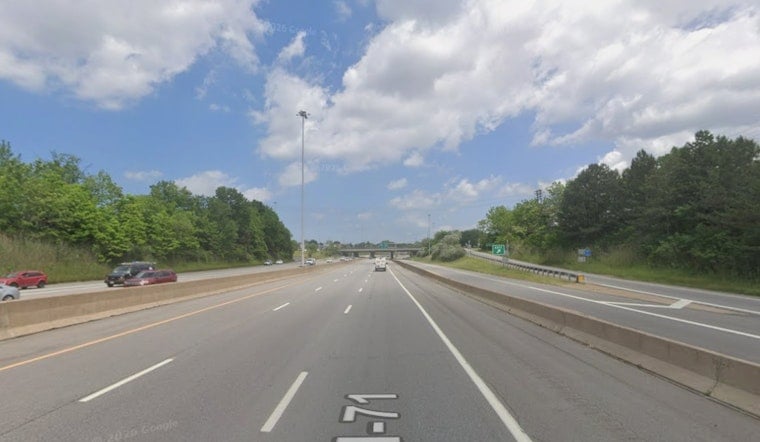
A Greyhound bus carrying 25 passengers and a driver caught fire on Interstate 71 South near the Fulton Road bridge in Cleveland on Wednesday, forcing everyone aboard to scramble off the burning coach and onto the highway. All 26 people made it out without injury, turning what had been a routine intercity bus trip into what passengers later called a near-death experience.
All 26 Aboard Make It Out Safely
Passengers described the frantic escape from the burning bus in interviews with FOX 8 News, which first reported on the ordeal along I-71. The outlet's video report shows riders recounting how quickly the situation escalated once flames appeared. According to Cleveland.com, all 25 passengers and the driver were safely evacuated near the Fulton Road bridge, and no injuries were reported to first responders on scene.
Highway Shut Down Near the Fulton Road Bridge
The fire forced emergency crews to shut down all southbound lanes of I-71 near the Fulton Road exit while firefighters worked to suppress the flames, according to a report carried on Apple Podcasts. The Fulton Road bridge above the interstate was also temporarily closed during the response. Lanes reopened shortly after crews wrapped up emergency operations, per the same report.
A Bus Line Already in Transition
The burning coach was part of Greyhound's Cleveland intercity network, which has looked different than it did a few years ago. Departures moved away from the long-time downtown Chester Avenue station to a smaller hub at the GCRTA Brookpark Rapid station back in February 2024, after the historic depot was sold to Playhouse Square, Hoodline reported in its piece on the old depot's second act. That shift put regional departures closer to Cleveland Hopkins International Airport.
How Often Do Buses Catch Fire?
Wednesday's blaze fits into a broader national pattern. A Federal Motor Carrier Safety Administration study found that roughly 160 motorcoach fires occur annually across the United States, with about 70 percent originating in either the engine compartment or the wheel wells, according to the FMCSA. The same research found that roughly 95 percent of reported motorcoach fires result in no direct injuries or fatalities, a statistic that lines up with how Wednesday's evacuation played out.
Ohio's Inspection Rules and Crash Numbers
Commercial buses operating in Ohio are subject to mandatory annual safety checks. Under Ohio Administrative Code 4501-52-01, the Ohio State Highway Patrol's Motor Carrier Enforcement Unit is required to inspect critical systems on commercial buses, including emergency exits, exhaust systems and fire extinguishers. Ohio also averages roughly 25,000 commercial-vehicle-related crashes a year across its major highway corridors, with an average of 161 fatalities annually, according to Ohio State Highway Patrol data cited by the International Association of Chiefs of Police.
Not the First Wheel-Well Scare in Cleveland
Wednesday's fire is not the first time a Cleveland-area bus has caught fire in a high-risk mechanical zone. In February 2025, a Cleveland Heights school bus carrying 15 students caught fire behind one of its rear wheels during its morning route, according to WKYC, which reported that the bus had passed a state inspection just two weeks earlier. That case, along with an October 2025 fire on a municipal transit bus on a Cleveland-area highway also reported by FOX 8 News, illustrates how quickly mechanical fires can develop even on recently cleared vehicles.
Federal regulators have taken notice of the pattern. Following investigations into major bus fires, the National Transportation Safety Board recommended that federal regulators mandate temperature monitoring systems in wheel wells and fire-hardening materials around high-risk motorcoach compartments, according to a report published by the National Highway Traffic Safety Administration. Common ignition points named in that research include overheated brakes, turbochargers, electrical failures and tire failures.
What Investigators Still Don't Know
As of Wednesday, the specific mechanical origin of the I-71 fire had not been determined. It also remains unclear when the bus was last inspected, or whether it was equipped with early temperature detection or suppression equipment in its wheel wells or engine compartment.





