

























































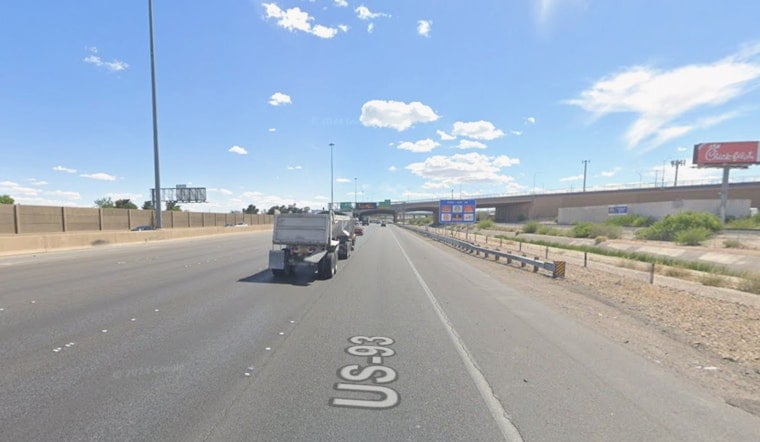
A Tennessee man known nationally as “the guardrail guy” spent about an hour and a half driving Interstate 15 in Clark County before he found what he was looking for: 15 guardrails he says were installed the wrong way, in stretches near the Glendale and Hidden Valley exits. The manufacturer of those guardrails now agrees with him, and it says the mistake could get someone killed.
Steve Eimers traveled from eastern Tennessee to Southern Nevada this month to scrutinize the barriers, according to KLAS 8 News Now. Eimers has spent years examining guardrails across the country ever since his 17-year-old daughter, Hannah, died in November 2016 when her car struck an X-Lite guardrail terminal on Interstate 75 in Tennessee that failed to absorb the impact and instead impaled her vehicle, according to WUSA-TV. The tragedy was compounded months later when the Tennessee Department of Transportation mistakenly mailed the Eimers family a $3,000 repair bill for the very guardrail that killed Hannah, a blunder NDTV reported drew nationwide criticism before the agency apologized and withdrew the invoice.
The guardrails Eimers found in Clark County are made by Road Systems Inc., whose MASH Sequential Kinking Terminal, or MSKT, is a 50-foot energy-absorbing end terminal engineered to collapse and sequentially kink steel W-beam guardrail during head-on impacts, bringing colliding vehicles to a controlled stop, per Road Systems Inc. The Nevada Department of Transportation keeps the MSKT on its official Qualified Products List as an approved tangent guardrail end terminal for state highway construction, meaning contractors are required to select it or similar approved hardware for state road work.
Manufacturer Confirms the Defects
After John Durkos emailed several people, including NDOT's communications director, about problems with Road Systems' product on August 19, the company itself reported that some highway guardrails in Southern Nevada are wrongly installed, per the same 8 News Now account. Road Systems recommended that state officials repair the wrongly installed guardrails as soon as possible, warning that deficient guardrails could kill a driver rather than protect one.
The core problem, per the station's report, is that the guardrail terminals along I-15 were not installed according to the manufacturer's instructions. That distinction matters under federal rules: Federal Highway Administration policy guidance specifies that W-beam guardrail end terminals are only recognized as crashworthy safety devices when installed and maintained strictly to manufacturer specifications and MASH crash-testing criteria. A joint Federal Highway Administration and AASHTO study that examined 1,231 real-world highway crashes found extruding W-beam terminals from multiple manufacturers suffered severe performance limitations when field installation went wrong, a finding that helped shape updated national crash-testing guidelines.
NDOT Says It Will Look, but Won't Talk On Camera
The Nevada Department of Transportation has said it constructs guardrails to all applicable regulations and federal requirements, and the agency said it will examine the locations brought to its attention. NDOT declined an on-camera interview request from 8 News Now, leaving the manufacturer's warning and the advocate's field count as the public record on what is actually bolted to the roadside near Glendale and Hidden Valley.
Road Systems has previously trained independent roadside safety advocates to spot loose bolts, misaligned impact heads, and improperly installed end terminals, according to CBS News Philadelphia, underscoring that the manufacturer expects field inspectors to enforce its installation manuals rather than relying solely on state audits. It is the kind of scrutiny Eimers has now brought to the I-15 corridor, a stretch of Southern Nevada freeway already under public-safety attention after Hoodline's coverage of a Valley of Fire crash indictment tied to a fatal July 2025 wreck in which a vehicle left the roadway and lodged against a guardrail near the same interstate.
Federal Fix Stuck in Congress
Guardrails are intended to absorb a vehicle's impact upon a collision, and the debate over how tightly the hardware must match manufacturer specifications has taken on new urgency as Congress weighs a rewrite of federal highway hardware rules. The BUILD America 250 Act, a $580 billion transportation package, would require that installation manuals or instructions for roadside safety hardware devices be up-to-date, publicly available, and written plainly, according to the 8 News Now report. But the bill known as Build 250 is currently stuck in Congress.
House Speaker Mike Johnson, who visited Henderson this month, said more legislation remains on Congress's plate for the lame-duck session after the election, but he said he did not know where Build 250 currently stood on the legislative schedule. The measure would need to move before the existing Infrastructure Investment and Jobs Act authorization lapses on September 30, 2026, a deadline that has already pushed the House Transportation Committee to advance a bipartisan replacement earlier this year.
Until Congress acts or NDOT completes its promised review, the 15 guardrails Eimers documented near Glendale and Hidden Valley remain in place along one of Clark County's busiest freeway corridors — the same interstate where Hoodline has also reported on a family's push for higher overpass walls following a fatal motorcycle plunge. Eimers' cross-country scrutiny of guardrail hardware has previously surfaced similar concerns in Arizona, where a controversial guardrail was linked to a fatal I-17 crash near Cordes Lakes in 2024.





