

























































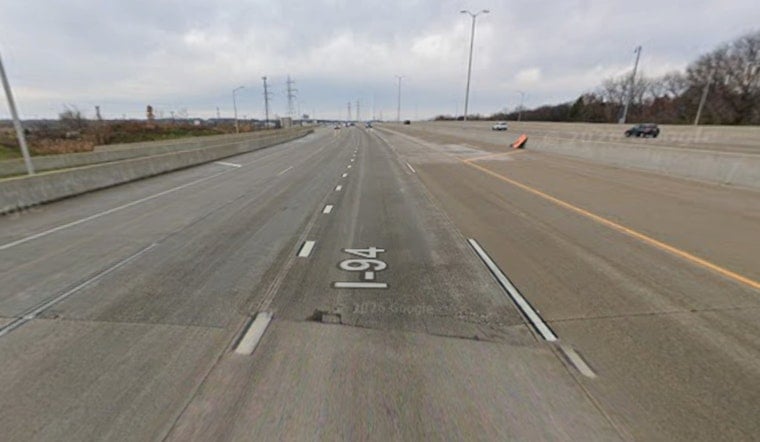
Two innocent drivers found themselves surrounded by Brookfield police officers with at least one gun drawn on Interstate 94 Thursday afternoon, after an automated license plate camera flagged their vehicle as connected to a Milwaukee homicide and an armed suspect. The alert was outdated. Milwaukee police had already lost interest in the vehicle and its occupants, but nobody had cleared the flag from the system.
Chief Says Officers Followed the Information They Had
Brookfield police responded to the Flock alert around 4:45 p.m. Thursday, converging on the vehicle and detaining two people who turned out to have no connection to any crime, according to the Milwaukee Journal Sentinel. Police vehicles surrounded the suspect vehicle on the freeway, and at least one Brookfield officer displayed a drawn gun during the stop, per FOX6 Milwaukee. Brookfield Police Chief Chris Garcia defended his department's response, finding that officers had sufficient information and objective facts to support their actions and stating plainly that his officers did not stop the wrong vehicle.
Milwaukee police said the incident stemmed from human error rather than a failure of the Flock system itself. The department acknowledged that its staff failed to remove the vehicle alert after officers were no longer interested in the vehicle or its occupants, and that lapse generated information showing the car was still wanted. Once the situation was sorted out, Brookfield police allowed both individuals to continue on their way.
Civil Liberties Groups Flag the Broader Danger
The mix-up landed the same day civil liberties advocates with the ACLU of Wisconsin warned that multi-jurisdictional data sharing in automated license plate systems creates high-stakes hazards, cautioning that outdated alerts can lead officers to draw weapons on innocent motorists during routine stops on public highways. Flock's nationwide network automatically logs vehicle make, model, color, and plate data, storing records on cloud servers accessible to networked agencies for a default 30-day window, a mechanic that explains how an alert generated by one department can trigger action by an entirely different one down the highway.
Flock, the AI-powered license plate tracking system at the center of the incident, has drawn mounting criticism across Wisconsin communities over privacy concerns and repeated cases of camera misuse by the very officers meant to use it responsibly. That criticism has been building for months, not just in Milwaukee but across the state.
A Pattern of Misuse Inside Milwaukee's Own Ranks
The freeway stop lands amid a string of scandals over how Milwaukee-area officers have handled the same surveillance tool. A former Milwaukee police officer pleaded guilty in June to misusing Flock technology to track someone he was dating, part of a case Hoodline first reported when the officer was suspended after allegedly running nearly 180 unauthorized searches to stalk a romantic partner and her ex-boyfriend; he was sentenced in July to probation and fines, according to FOX6 Milwaukee.
That was not an isolated case. In July, Milwaukee Police Internal Affairs Detective Tehranghi Chapman was charged with misconduct in public office for allegedly conducting 20 unauthorized Flock searches and using a GPS device to monitor individuals, misconduct that allegedly occurred while he was investigating another officer for the exact same kind of abuse, according to the ACLU of Wisconsin. Hoodline covered the detective's charges at the time, and similar allegations have surfaced beyond Milwaukee, including a Menasha, Wisconsin, officer arrested in January and charged with felony misconduct for allegedly using the system off-duty to track his ex-girlfriend, as reported by FOX 11.
Milwaukee Tightened Access, But Alerts Still Slipped Through
In response to the internal investigations, the Milwaukee Police Department cut the number of personnel authorized to access the Flock system from 370 down to 100 officers in May and added automated audit alerts for unusual search activity, according to Urban Milwaukee. Those safeguards were meant to catch officers misusing the database for personal reasons, not necessarily to prevent an alert from simply sitting uncleared after a case had moved on, which is what appears to have happened Thursday.
The scale of the surveillance network involved is considerable. As of May, Milwaukee police operated 31 cloud-connected Flock cameras along with license plate readers mounted on 80 patrol vehicles, while the Milwaukee County Sheriff's Office maintained more than 200 Flock cameras countywide, per the Milwaukee Neighborhood News Service. Department spending on the technology has grown just as quickly, expanding from an initial 2022 agreement authorized for up to $25,000 to a contract worth up to $182,900 by 2025, the outlet's records show.
Some Wisconsin Agencies Are Walking Away From Flock Entirely
Not every local government has stuck with the technology. The Dane County Board of Supervisors voted 32-1 in April to eliminate $80,000 in annual funding and terminate its Flock Safety contract effective May 31, a decision that forced the sheriff's department to physically bag its cameras while awaiting vendor removal. The University of Wisconsin–Madison Police Department followed suit, officially ending its own Flock contract in June and taking down all eight campus license plate reader cameras after faculty and staff raised privacy concerns.
Those cancellations stand in contrast to Brookfield and Milwaukee, where the cameras remain active and central to how officers respond to reported crimes across jurisdictional lines. Whether Thursday's freeway stop prompts either department to revisit how alerts get cleared once a case is resolved remains an open question, though Chief Garcia's defense of his officers suggests Brookfield sees the failure as originating elsewhere.



