

























































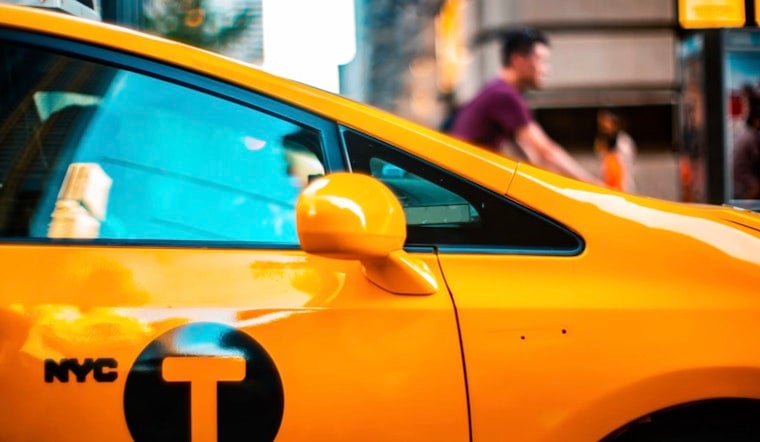
A 73-year-old taxi driver known to friends as Richard Coulibaly was found dead inside his cab after it sat parked overnight near a bus stop on Frederick Douglass Boulevard between West 116th and 117th Streets in Harlem on July 2. He had driven a New York City taxi since 2007, quietly building a life around long shifts and few local ties, and when police discovered his body, they had no way to reach his family. It would take his fellow drivers, working the phones and social media for days, to find them.
Coulibaly’s real name was Gustave Bertrand Adjeli Yao, according to amNewYork, which reports that friends and fellow cabbies pieced together his identity using a garage sticker found on his taxi. New York Taxi Workers Alliance executive director Bhairavi Desai said fellow drivers and friends worked together to identify him and locate his relatives, ultimately tracing his family back to Ivory Coast. Those who knew him described a quiet, private man who was devoted to his work and who sent much of what he earned back home to support relatives overseas.
A Community Effort to Bring Him Home
Once his family was found, the Alliance helped pay to return Coulibaly’s remains to Ivory Coast. A GoFundMe campaign titled “Help Send Richard Coulibaly Home,” organized on behalf of Abdul K. Traore, raised $7,584 from 71 donors to cover the cost of international body transportation and funeral expenses. Friends and fellow taxi drivers received word that his remains had arrived in Ivory Coast on Sunday, closing out nearly two months of effort that began the night his body was discovered.
The Office of Chief Medical Examiner ruled that Coulibaly died of natural causes, though his death came during a summer heat wave that gripped the city. Desai told amNewYork that his death reflects the loneliness faced by many immigrant workers, recalling how one driver once said that USA stood for “you stand alone.” She said Coulibaly died in the United States alone, and that his family back home did not even know.
Drivers Gather Where He Died
The New York Taxi Workers Alliance organized a public memorial for Coulibaly on Sunday at 2 p.m. on Frederick Douglass Boulevard between 116th and 117th Streets, returning drivers to the same stretch of Harlem where he died. Drivers and local residents had already held a vigil there the night his body was removed from his cab. At the memorial, friends and fellow taxi drivers gathered once more, saying he would not be forgotten.
Coulibaly’s isolation was not unique among New York’s cabbies. According to Memorial Sloan Kettering Cancer Center’s Taxi Network health initiative, roughly 94% of the city’s yellow cab and for-hire vehicle drivers are foreign-born, coming largely from South Asia, the Caribbean, and West Africa. A separate 2025 demographic briefing from the NYC Comptroller’s Office found that taxi driving has the highest foreign-born concentration of any detailed occupation in the city, with immigrants making up 82% of all cab drivers, many of whom send substantial portions of their earnings to family abroad.
Heat and Health Risks Facing NYC Cabbies
The city’s taxi workforce also faces documented health risks tied to the nature of the job itself. A cardiovascular health study on NYC taxi drivers published in the Journal of Immigrant and Minority Health found that cabbies face elevated health risks driven by sedentary 12-to-14-hour shifts, chronic job stress, and a lack of employer-provided medical benefits. Those long hours have only intensified as the industry has contracted; as of late 2025, New York City had roughly 10,390 active yellow medallion cabs in service, while more than 3,100 medallions sat stored or inactive following years of disruption from ride-hailing apps, according to a report from AutoMarketplace.
Extreme heat compounds those risks every summer. The NYC Health Department’s 2026 Heat-Related Mortality Report found that extreme heat causes approximately 500 premature deaths in the city each year, including an average of 7 direct heat-stress deaths and roughly 490 heat-exacerbated deaths. A severe four-day heat wave in June 2025 alone resulted in 19 direct heat-stress deaths citywide — the highest single-event toll in more than a decade — and prompted over 1,100 heat-related emergency room visits, according to the Fund for Public Health in New York. City health data also shows that Black New Yorkers suffer direct heat-stress death rates three times higher than white residents, a disparity tied to structural inequities in housing, healthcare access, and cooling resources.
For now, the drivers who searched for Coulibaly’s family and raised money to send him home say their work reflects something the city’s systems could not provide on their own. His remains reached Ivory Coast Sunday, closing a chapter that began with an unanswered phone in a parked cab on Frederick Douglass Boulevard and ended with strangers turned into family, determined that a man who spent nearly two decades driving New Yorkers around would not simply disappear.




