

























































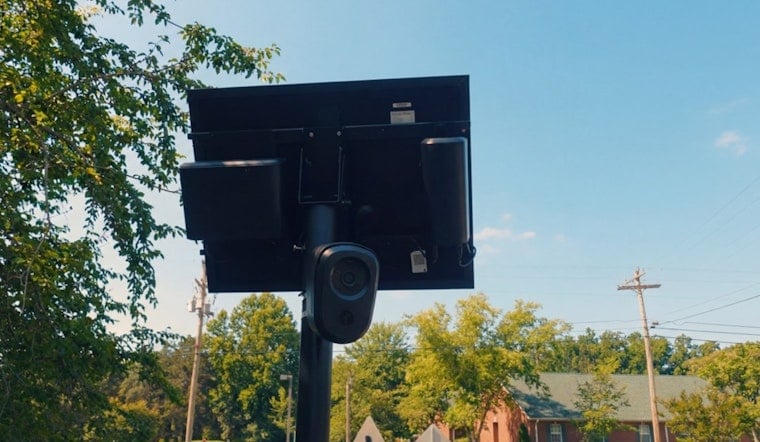
Three Harris County Sheriff's Office deputies have had their access to the agency's Flock Safety camera system suspended while investigators review their activity for potential misconduct. The sheriff's office says the deputies' searches are being scrutinized as part of a broader look at how the license-plate reader network has been used, and any policy violations uncovered could lead to discipline up to and including termination.
The suspensions were announced after a USA Today reporter asked the sheriff's office about potentially questionable uses of the Flock system by the deputies, according to Click2Houston. The sheriff's office says it has launched a formal review of the three deputies' activities and will hand over any evidence of potential criminal wrongdoing to the Harris County District Attorney's Office, which will determine whether charges are appropriate. Sheriff Ed Gonzalez said the technology is a powerful public safety tool that remains subject to abuse, and that deputies who violate the public's trust will be held fully accountable, both professionally and criminally.
A Camera Network Built for Vehicles, Not Faces
The sheriff's office manages 480 Flock Safety cameras across 20 license plate reader networks, some of which are owned by municipal utility districts, neighborhood associations, and similar entities that have designated the sheriff's office as their system administrator. Flock cameras focus on vehicles and license plates rather than people, and the underlying technology does not use biometric data, analyze faces, or identify individuals, per the sheriff's office. Policy limits access to authorized law enforcement personnel and states that data may only be viewed or searched for legitimate law enforcement purposes, with every search logged to promote accountability.
Gonzalez has credited the cameras with tangible public safety wins since the sheriff's office began using the technology in 2022, crediting Flock license plate readers with thwarting kidnapping attempts, leading to the quick apprehension of armed robbery crews, and helping recover countless stolen vehicles. Those successes echo other recent Harris County cases, including how Flock pings helped nab a bank robbery suspect and helped Precinct 4 constables track down a wanted assault suspect in Cypress.
Part of a Wider Harris County Reckoning
The suspensions land amid a rapid wave of scrutiny across Harris County law enforcement agencies over Flock misuse. On the very same day the sheriff's office disclosed its review, the Deer Park Police Department announced it had disciplined an officer after an internal audit found the officer had violated department policy by misusing the Flock system, according to the Houston Chronicle. Deer Park operates 11 Flock cameras in eastern Harris County, and records released this month show those cameras logged 221 search sessions over a 30-day period, with motor vehicle theft, active warrants, traffic violations, and narcotics offenses among the top query categories.
The pattern extends further. The Baytown Police Department launched internal affairs and criminal investigations in late July into an officer accused of misusing its Flock system, enlisting the district attorney's office for oversight after Police Chief John Stringer publicly announced the probe to maintain community trust. And in early August, former Pasadena Police Sergeant Michael Palitz surrendered his peace officer license to the Texas Commission on Law Enforcement in lieu of prosecution, after resigning during an internal investigation into allegations he used Flock cameras to track a female colleague — a case Hoodline first reported when Palitz quit amid the probe.
What the Law Says About Unauthorized Access
Under Texas Penal Code § 33.02, knowingly accessing a computer, computer network, or system without effective consent is Breach of Computer Security, an offense that can range from a Class B misdemeanor to a felony depending on the severity and context of the access, according to FindLaw's summary of the statute. Texas law also imposes enhanced penalties when the offense involves a public servant or a breach of official duties, which could shape how prosecutors evaluate any case referred by the sheriff's office.
National Scrutiny Prompts Vendor Overhaul
The Harris County cases are unfolding alongside a national reckoning over ALPR misuse. An August investigation by The Washington Post found that at least 50 law enforcement officers across the country have been accused, charged, or convicted of misusing Flock Safety and similar systems to stalk or monitor personal targets, with policing experts noting that most cases were uncovered through victim complaints rather than internal agency audits.
Flock Safety responded on August 13 by announcing it is cutting its standard default data retention period from 30 days down to seven, while introducing an Evidence Mode for active criminal cases, the company said in a statement covered by Police1. The company estimates more than 90% of non-full-plate searches happen within a week. By the end of 2026, all law enforcement clients will also be required to enter a case number before running searches and to enable an AI-driven Audit Assistance tool that flags abnormal search behavior and can trigger automatic account lockouts — case codes were previously optional when Flock introduced them in July 2025. The sheriff's office says it is now utilizing these updated safeguards, and it will require deputies to provide a descriptive case code for all license plate searches going forward.
Civil Liberties Groups and Voters Push Back
Not everyone is convinced the changes go far enough. The American Civil Liberties Union called Flock's updated safeguards inadequate PR measures, arguing that search-reason requirements can be easily bypassed, and it is demanding independent evaluation of the company's auditing tools. The organization launched its nationwide Get the Flock Out campaign in June to push local governments to limit ALPR use.
That resistance is now reaching the ballot box. On August 11, League City became the first municipality in Texas to approve placing a referendum on the November ballot asking voters whether the city should continue using Flock cameras or automated license plate readers at all, a move Conroe city leaders have also reportedly considered. Whether Harris County's own suspended deputies triggered a criminal referral, or whether internal logging tools caught the alleged misuse independently versus only after media inquiries, remains unclear for now.





