

























































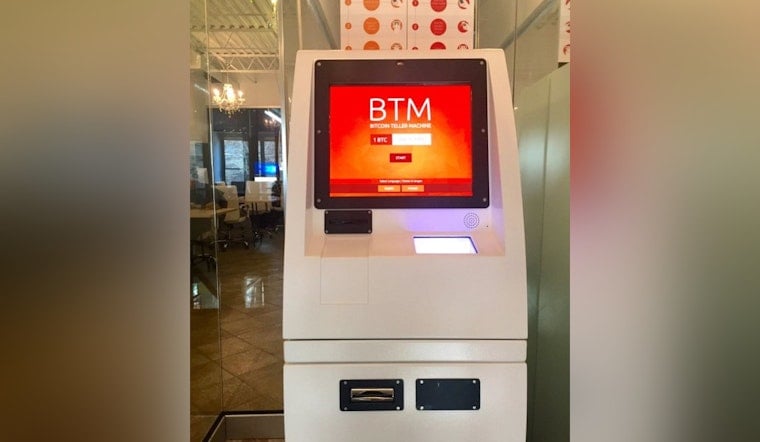
Hawaii is about to shut off one of the easiest ways scammers drain cash from unsuspecting victims. Starting October 1, cryptocurrency kiosks across the islands will no longer be allowed to accept cash deposits, closing a loophole that fraud investigators say has been exploited to funnel stolen money offshore before anyone notices it's gone.
Governor Josh Green signed House Bill 1642 into law as Act 224 on July 9, according to legislative records, making it illegal to own, operate, or manage a cash-accepting digital asset kiosk in the state once the law takes effect. As Hawaii News Now reports, the new law aims to stop scammers who exploit these kiosks to defraud victims, and consumers will no longer be able to deposit cash into the machines to buy cryptocurrency. People who already hold digital assets will still be able to convert their crypto into cash and withdraw it, the station notes.
How the Scam Typically Unfolds
The station's report lays out the mechanics scammers rely on: a caller tells a victim their bank account has been compromised, or that they missed jury duty, then directs them to withdraw cash from their bank and feed it into a cryptocurrency kiosk. Scammers stay on the phone with victims the entire time, from the bank withdrawal to the moment cash enters the machine, according to the same report. They count on victims' isolation and politeness to keep them from pausing to ask anyone for help, per the outlet's account.
Hawaii Banking Commissioner Dwight Young told the station that cryptocurrency machines have become a favorite tool for criminals because they're anonymous and hard to trace. Young said kiosk users caught in the middle of a scam tend to show no positive emotion at all — most appear panicked, scared, or worried, he said. Store employees stationed near the kiosks have told the state Department of Commerce and Consumer Affairs that the majority of users they see are kūpuna, Hawaii's elder community.
Losses Quadrupled in a Single Year
Fraud involving cryptocurrency kiosks caused $3.85 million in losses in Hawaii in 2025, nearly four times the amount reported the previous year, according to FBI data cited in the station's coverage. Nationally, the numbers are even starker: the FBI's Internet Crime Complaint Center recorded $389 million lost across 13,460 complaints tied to crypto ATMs in 2025, a 58% jump from the $246 million reported in 2024, as reported by Credit Union Times.
An FBI public service announcement released in May found that people aged 50 and older filed more than half of all 2025 crypto kiosk fraud complaints and accounted for over $302 million of the total national losses, according to BleepingComputer. That demographic pattern lines up with earlier Federal Trade Commission data showing Bitcoin ATM scam losses climbed nearly tenfold between 2020 and 2023, with victims reporting a median loss of $10,000 per incident in the first half of 2024 — and older adults three times as likely to report losing money this way, per the FTC.
Why the Regulatory Door Was Open
Part of what made Hawaii vulnerable was its own recent deregulation. The state's Division of Financial Institutions allowed digital currency companies to operate without money transmitter licenses starting in July 2024, after its Digital Currency Innovation Lab sandbox program wound down that June, according to the Hawaii Department of Commerce and Consumer Affairs. That left digital asset transactions largely unmonitored under state banking statutes just as kiosk fraud losses were climbing.
Representative Scot Z. Matayoshi, chair of the House Consumer Protection & Commerce Committee, introduced HB 1642 and told the Hawaiʻi House of Representatives in May that cryptocurrency scams caused roughly $240 million in fraudulent losses nationally in just the first six months of 2025. He emphasized that converted cash is quickly laundered offshore and removed from Hawaii's economy, framing the bill as a direct response to schemes targeting vulnerable island residents. State lawmakers passed the consumer protection law last session, per Hawaii News Now.
Hawaii's Approach Versus Other States
AARP Hawaii reported in July that Hawaii became the 35th state to pass consumer protections around crypto kiosks — and the first to specifically target cash-deposit machines, while four other states have banned crypto kiosks outright. AARP volunteers lobbied for Act 224 after Hawaii's kiosk fraud losses quadrupled in 2025, according to the group.
Other states have taken different paths. California regulates kiosks under Senate Bill 401, capping daily customer transactions at $1,000 and limiting fees to $5 or 15%, according to Womble Bond Dickinson. Indiana became the first state to enact a total ban on all crypto ATM operations in March, with Tennessee and Minnesota following shortly after, per AARP. California regulators have also taken enforcement action, ordering a kiosk operator in May to shut down 42 Bitcoin ATMs across Southern California over transaction cap violations, non-compliant receipts, and anti-money laundering failures, according to Sheppard Mullin — a case that included a suspended $9.9 million administrative penalty.
What Hawaii Officials Want Residents to Do Now
Until the ban takes effect on October 1, Hawaii is urging the public to stay vigilant and watch for crypto kiosk scams, per Hawaii News Now. Some states have gone further with mandated refunds for fraud victims or transaction limits, though Hawaii's law does not include those provisions, the outlet notes.
Young advises people to slow down, take a breath, and verify everything before acting on a call demanding cryptocurrency. He also recommends people talk to family members if they're unsure about a request. Anyone asked to buy cryptocurrency should not use a phone number provided by the requester, and should instead look up the bank's own number to verify the request directly, according to the station's report. If someone claiming to represent a government agency asks for cryptocurrency, the advice is simple: do not engage. Hawaii's Department of Commerce and Consumer Affairs, which maintains a website at cca.hawaii.gov, asks that anyone targeted by a scam report it to police and to the department at 844-808-3222.





