

























































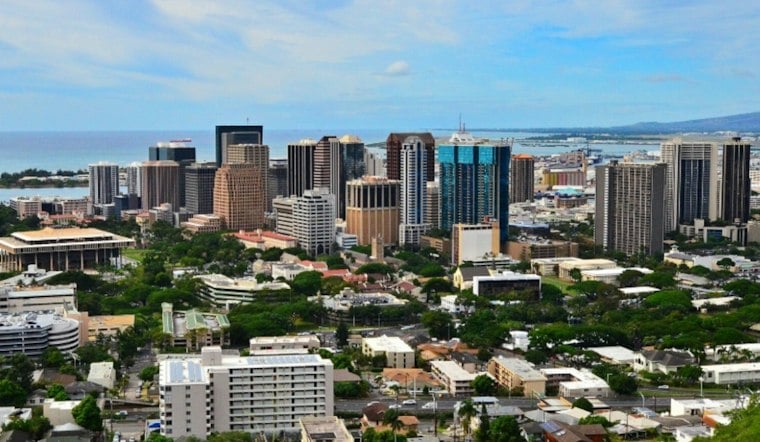
Housing costs are driving more people into poverty in Hawaiʻi than in any other state or the District of Columbia, according to a new analysis that found 34% of the state's poverty rate stems directly from the price of shelter. The study estimates roughly 150,000 people in Hawaiʻi live below the poverty threshold, based on 2023 American Community Survey figures, and for children the housing-cost burden is even steeper.
The analysis, commissioned by the Pew Charitable Trusts and conducted by University of Oxford professor Zach Parolin, used the U.S. Census Bureau's Supplemental Poverty Measure, which factors in income, state and federal benefits, and local housing-cost variations, rather than the official poverty measure, which accounts only for food costs and pre-tax earnings, according to News From The States. By that measure, housing costs account for 42% of child poverty in Hawaiʻi, the second-highest share in the country behind only Washington, D.C. California, by comparison, sees 30% of its poverty rate attributable to housing costs.
“Hawaiʻi's poverty rate goes way up once you account for the fact that its housing costs are so high because more income is needed for a household just to meet its basic needs,” said Alex Horowitz, director of the housing policy initiative at the Pew Charitable Trusts, per the same report. Horowitz added that income-support programs remain important tools for reducing poverty even as housing absorbs so much of their impact.
How Shelter Costs Eat Away at Safety-Net Gains
The dynamic Horowitz describes shows up elsewhere in Pew's research. A separate Pew study published in September found that across 11 high-cost jurisdictions between 1989 and 2023, the $17.3 billion increase in housing-induced poverty gaps effectively offset roughly 57% of the $30.5 billion increase in SNAP allocations, according to The Pew Charitable Trusts.
That squeeze is acute in Hawaiʻi. The average rent for a two-bedroom unit was $2,050 as of 2023, and 57% of Hawaiʻi renters pay more than 30% of their income toward housing, per the News From The States report. Slightly more than a quarter of renters pay more than half their income toward housing, far above the threshold the U.S. Department of Housing and Urban Development uses to define affordable housing, which caps shelter costs at 30% of income.
What Fixing the Supply Problem Could Mean
The Pew-commissioned study points to one policy lever that could ease the pressure: building more housing. Lowering rents by 20% statewide could cut Hawaiʻi's overall poverty rate by a quarter and its childhood poverty rate by just over a third, lifting about 39,000 residents out of poverty, according to the same analysis. Horowitz said state and local governments have substantial control over housing costs through zoning, building codes, and permitting rules.
Cities that have already loosened those rules offer a glimpse of what is possible. Austin, Houston, and Minneapolis implemented policy changes that increased housing construction, particularly multifamily buildings, by eliminating most minimum parking requirements, allowing multi-unit buildings on lots previously zoned for single-family homes, and streamlining permit approvals for certain projects. Renters in cities that adopted similar reforms save more than $4,000 annually on average, the News From The States report notes. A related Pew analysis found that comprehensive land-use and zoning reforms in cities like Austin and Minneapolis produced roughly 20% drops in real rents, a reduction Pew's researchers suggest could cut poverty rates by up to a quarter in high-cost states.
Hawaiʻi's Own Steps Have Fallen Short So Far
Hawaiʻi has not been standing still. The state passed laws in 2024 allowing accessory dwelling units on single-family residential lots and requiring counties to create rules for converting empty office space into apartments. But Horowitz said those recent efforts have produced only small improvements, pointing to persistent permitting and building-code barriers and partial zoning steps that have not gone far enough.
Those bottlenecks carry a real price tag. Building permits in Hawaiʻi take roughly three times longer to process than the national average, adding an estimated $233,000 to $325,000 in regulatory expenses to the cost of a new home, according to CSG West. Governor Josh Green, who first declared a housing emergency in July 2023, issued his 21st Emergency Proclamation Relating to Affordable Housing in September, continuing executive efforts to streamline development approvals, according to the Hawaiʻi Emergency Management Agency.
A Shortage That Keeps Compounding
The scale of the shortfall helps explain why incremental fixes haven't moved the needle much. The 2024 Hawaiʻi Housing Planning Study found the state will need 64,490 additional housing units by 2027 just to satisfy unmet market demand, according to the Hawaiʻi Housing Finance & Development Corporation. Separately, an AARP Hawaiʻi report projected the state will need nearly 60,000 more units by 2050 to house aging kūpuna, even as high costs push working-age families to leave the islands, Honolulu Civil Beat reported in April.
Meanwhile, home prices keep climbing in the state's main population center. Oʻahu's single-family home market hit a median resale price of $1,240,000 in August, up 12% from a year earlier, with 850 homes available, per Locations. An Aloha United Way report found that 12% of Hawaiʻi households lived below the poverty line and 29% were ALICE, while 37% of respondents said they were considering leaving the state because of living and housing costs.



