

























































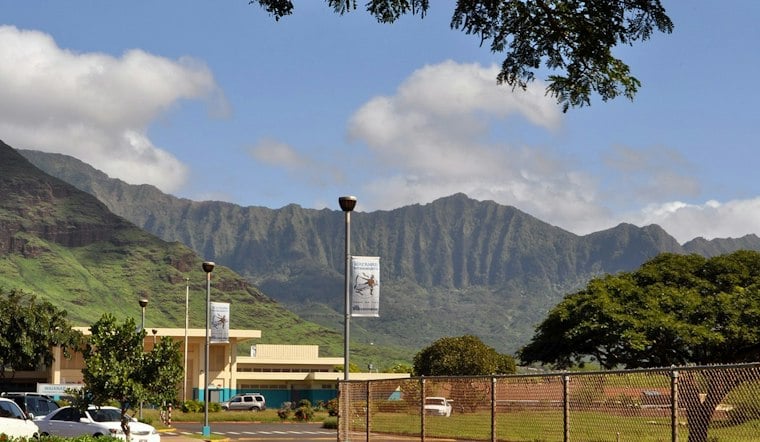
Decades of overgrowth, missing boundary markers and perimeter fencing are finally getting attention at eight state-owned cemeteries across Hawaii. At Waianae Japanese Cemetery, albizia trees had uprooted graves, and crews have completed new fencing as the first visible step in a broader overhaul. The Department of Accounting and General Services manages all eight of these aging burial grounds, and officials say the work at Waianae marks the start of changes planned for each site.
The push comes after the Hawaii State Legislature appropriated $2.3 million over the 2025–2027 budget cycle specifically for cemetery maintenance and restoration, according to the Hawaii Department of Accounting and General Services. It was the first time state lawmakers had dedicated funding specifically to the upkeep of these graveyards, many of which had gone without any formal maintenance budget for years. As KITV reported Monday, the state has finished surveying the cemetery land to reestablish long-lost boundaries and is now making physical changes to each property, starting with Waianae.
Altogether, the eight cemeteries cover a combined 27 acres and hold more than 5,900 interments, per the department's own accounting. That scope helps explain why the restoration has been organized as a multi-site, multi-year project rather than a single quick fix.
A Pilot Project Built on Trash Removal and Fencing
Before any broader rollout, the department tested its approach at Waianae Japanese Cemetery with a $200,000 pilot project. Crews cleared more than five tons of trash from the grounds, cut down invasive albizia trees that had been uprooting graves, and installed 2,000 feet of perimeter fencing, the department's report shows. The department says fencing work at the cemetery was completed in September.
Getting to that point required more than shovels and chainsaws. In spring 2026, the department established a new Cemetery Management Office and spent nearly $100,000 hiring contractors to conduct 10-week drone aerial photogrammetry surveys, a technical step needed to reestablish property lines that had vanished over decades of neglect. Those surveys, the department says, were necessary groundwork before fencing or cleanup could even begin at any of the sites.
Six Oahu Sites, Plus Kauai and Hawaii Island
The eight state-managed cemeteries stretch across three islands. Six sit on Oahu: Waianae Japanese, Waianae Catholic/Sacred Hearts, Puʻukamaliʻi in ʻĀlewa Heights, Puea in Kalihi, ʻAiea, and Makiki. The remaining two are Hanapepe Cemetery on Kauai and Kalaoa Fourth, also known as Mauna Ziona, Cemetery in Kailua-Kona on Hawaii Island, according to the department.
The legal authority behind the effort traces back to Hawaii Revised Statutes § 110-1, which designates the State Comptroller as responsible for operating, maintaining, redeveloping and disposing of state-owned cemeteries, as well as preserving burial and plot-ownership records, per Justia Law. That statute has existed for years, but the new funding is what allows the department to actually act on it at scale.
Historic Graves Add Weight to the Cleanup
Some of these cemeteries carry deep historical significance beyond their physical condition. Makiki Cemetery, established in 1877 to serve Native Hawaiians before later opening to other ethnic groups, is the oldest and largest of the eight, spanning 7 acres with an estimated 4,000 graves, according to a 2002 report from The Honolulu Advertiser.
Puea Cemetery in Kalihi has its own storied past. Set aside by Governor Walter Frear in 1910 as a Native Hawaiian burial ground, it holds the grave of Joseph Kahahawai Jr., a central figure in Hawaii's 1930s Massie trial, according to Honolulu Civil Beat. Meanwhile, the 1.5-acre ʻAiea Cemetery, which borders Aloha Stadium, contains more than 500 estimated gravesites, many with unidentifiable markers, the Advertiser's reporting notes.
Part of a Wider Reckoning With Neglected Graveyards
The state's cemetery overhaul fits into a broader statewide conversation about abandoned burial grounds. In 2024, Hawaii lawmakers advanced legislation allowing nonprofit organizations to take limited ownership of neglected private cemeteries.
For now, the focus remains on the eight state-owned sites, where boundary fencing and tree clearing address immediate safety and preservation concerns. Longer-term questions, including how the state will keep up maintenance once the current two-year funding cycle ends and how unidentified graves might eventually be documented, remain open as the project moves from Waianae to the next cemetery on the list.





