

























































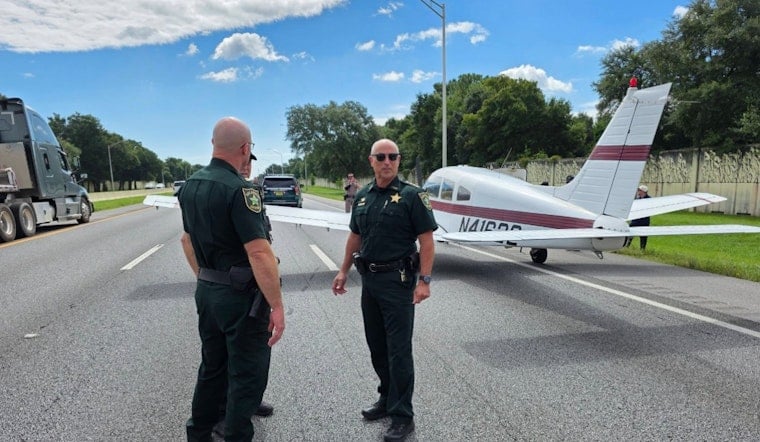
A routine flight lesson over Pensacola turned into a split-second highway landing Monday, when a small plane lost engine power and glided onto eastbound I-10. The aircraft slipped beneath an overhead sign structure, avoided traffic and came to a stop with everyone involved walking away unharmed.
The landing happened around 9:55 a.m. near mile marker 14 in Escambia County, as the plane headed back toward Pensacola International Airport. According to WDRB, the Piper PA-28 was carrying a flight instructor and student when it experienced engine failure; the two occupants and a nearby truck driver were unharmed.
The single-engine Cherokee was being used by Pensacola Air Flight School and had taken off from the airport at 8 a.m. Dashcam video reviewed by WEAR News shows the aircraft passing beneath the overhead sign structure before landing on the roadway, while the pilot told air traffic control, “We’re not making the airport, we’re going down on I-10.”
A follow-up from WEAR News identified the instructor as 21-year-old Emily Shelton, who has logged roughly 1,300 flight hours. The student was on his first-ever lesson, and Shelton said she had practiced the emergency scenario many times but never expected to execute it in real life.
Why The Highway Became The Safest Reachable Option
The Federal Aviation Administration’s Airplane Flying Handbook describes a forced landing as an immediate landing made necessary when an aircraft cannot continue flying, including after an engine failure. The guidance emphasizes maintaining control, establishing the best glide and selecting the safest reachable landing area—priorities that left Shelton with few good options as the plane approached the airport. Federal Aviation Administration guidance lists inadequate preflight preparation and/or planning among the 10 most frequent causal factors in general aviation accidents involving the pilot in command.
Authorities pushed the plane off the interstate after the landing, slowing traffic while crews cleared the scene. All lanes were reopened by 1 p.m., and the Federal Aviation Administration is investigating, WDRB reported. According to the National Transportation Safety Board, its aviation accident database covers U.S. civil aviation accidents and selected incidents from 1962 to present.





