

























































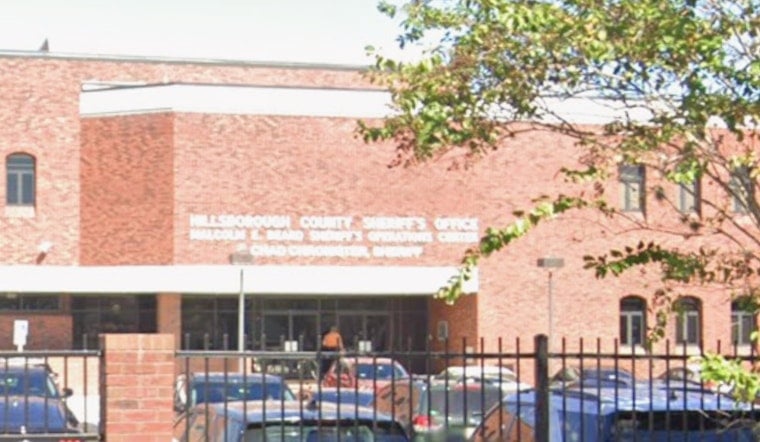
Two people accused of distributing fentanyl that led to fatal overdoses in Hillsborough County are now facing first-degree murder charges, and Sheriff Chad Chronister plans to lay out the details of both cases at a press conference Monday afternoon. The briefing will identify the suspects and walk through how detectives traced the fatal doses back to them, according to the sheriff's office.
As reported by Tampa Free Press, the Hillsborough County Sheriff's Office reaffirmed its commitment to holding drug distributors accountable when their actions result in a loss of life. The two suspects each face first-degree murder charges after allegedly distributing the controlled substance that led to the fatal overdoses, and Chronister is expected to use the briefing to address the growing dangers of counterfeit pills circulating in the community.
A Familiar Playbook for HCSO
This is not the first time the sheriff's office has pursued a murder charge over a fentanyl death. Just weeks ago, on June 23, deputies arrested 46-year-old Aaron Lee Morris on a first-degree murder charge after toxicology confirmed a 43-year-old Riverview woman died from a fatal fentanyl overdose he allegedly supplied in December, according to FOX 13 Tampa Bay. That case, which Hoodline previously detailed in June, followed months of toxicology work and digital investigation by the department's Opioid Overdose Investigations Section.
The pattern goes back further. In April 2024, a Hillsborough County grand jury indicted 47-year-old Anthony Mansfield on first-degree murder charges stemming from the distribution of a controlled substance that killed Querran Talley in Thonotosassa in November 2023, per the Hillsborough County Sheriff's Office. Mansfield had initially been arrested on trafficking charges while investigators spent roughly six months building the murder case. Years earlier, in February 2021, the sheriff's office charged two distributors with two counts each of first-degree murder following a double fatal fentanyl overdose in Tampa, after undercover detectives used the deceased victim's own cell phone to arrange transactions and trace the supply chain.
How Florida's Murder Statute Applies to Drug Deaths
These prosecutions rely on Florida Statute § 782.04(1)(a)(3), which classifies unlawfully distributing fentanyl or its analogs as first-degree murder — a capital felony — when the drug proximately causes a user's death, according to Online Sunshine. The statute carries a maximum penalty of life imprisonment without parole or the death penalty, and prosecutors must give 45 days notice if they intend to pursue capital punishment.
Crucially, the law removes the usual requirement that prosecutors prove intent to kill or premeditation. Instead, per the Hornsby Law Firm, prosecutors need only show that a defendant unlawfully distributed the drug and that it was a proximate cause of death. Defense attorneys, the firm notes, frequently challenge causation and toxicology findings when contesting these felony murder charges — a legal fight that hinges on proving beyond a reasonable doubt that the specific substance a defendant provided was what actually killed the victim.
Even Minors Now Face Murder Exposure
The sheriff's aggressive stance extends to juvenile suppliers as well. Florida enacted Senate Bill 612 in May 2025, allowing juveniles under 18 who distribute fentanyl or its analogs resulting in a fatal overdose to be prosecuted for third-degree murder, a second-degree felony carrying up to 15 years in prison. Before the law took effect on July 1, 2025, Florida law excluded minors from felony murder overdose charges entirely. Chronister partnered with state lawmakers to draft that bill after a 17-year-old, identified as Devin Ramos, died of a fentanyl-laced pill shared by a fellow teenager in Hillsborough County in June 2024 — a case where prosecutors could not file murder charges because the alleged supplier was under 18, according to FOX 13 Tampa Bay.
Statewide Overdose Deaths Keep Falling
The local murder prosecutions are unfolding against a backdrop of declining overdose deaths statewide. The Florida Medical Examiners Commission's 2024 annual report, released by the Florida Department of Law Enforcement in October 2025, found that statewide fentanyl-caused deaths fell 35% and total opioid-caused deaths dropped 32% compared to 2023, with overall drug-related deaths down 14% for the year. More recent interim data reported by WUSF showed fentanyl-caused deaths fell another 46% in the first six months of 2025 compared to the same period a year earlier, with total opioid-caused deaths down 42% over that stretch.
Hillsborough County's use of the murder statute against dealers is not new either. WUSF has reported that the county recorded its first such indictment back in June 2018, when a grand jury targeted a 23-year-old supplier following a fatal fentanyl overdose in Tampa — a case that authorities at the time said posed real evidentiary challenges in matching toxicology samples directly to specific sellers. Monday's press conference will show whether those same investigative hurdles shaped the two newest cases now heading toward prosecution.





