

























































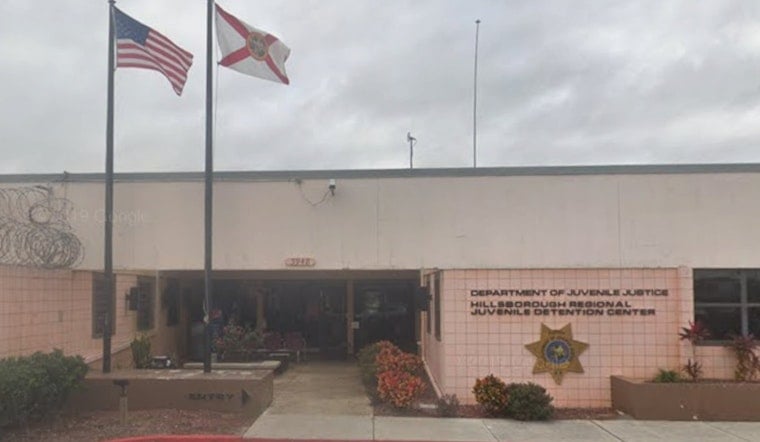
Hillsborough County's only juvenile detention center is closing at the end of August, and the roughly 38 youth currently held there will be transferred to detention centers in surrounding counties. The move has left public defenders, prosecutors and youth advocates scrambling to figure out how families will stay connected to kids who may suddenly be an hour or more away.
The Florida Department of Juvenile Justice confirmed the shutdown of the Hillsborough Regional Juvenile Detention Center, an 80-bed facility that has served as the county's primary lockup for youth awaiting trial or placement, according to the Tampa Bay Times. The facility sits at 3948 W. Martin Luther King Jr. Blvd. in Tampa's Drew Park neighborhood, near Raymond James Stadium, per the same report. As WFLA reports, the state department says it is working with local stakeholders to ensure continuity of services and to minimize the impact on youth during the transition.
Youth arrested in Hillsborough County are first taken to the Juvenile Assessment Center, where they receive a score that helps determine whether they should be placed in secure detention, WFLA notes. Those who score for detention can currently be held at the Hillsborough facility until a detention hearing the following day. Once the closure takes effect, youth arrested locally may instead be transported to Pasco, Polk or another county, per the outlet's reporting.
Families Face Longer Trips, Less Access
Freddy Barton, with Safe and Sound Hillsborough, identified additional distance from families and legal representation as a major concern tied to the closure, according to WFLA's report. Families without reliable transportation may find it especially difficult to visit youth transferred to another county, the outlet notes. Barton said Safe and Sound Hillsborough is working with legal, law enforcement and public defender partners to find solutions for youth sent to other detention centers.
The Hillsborough Public Defender's Office has separately expressed deep concern over the closure, warning that moving detained children out of county will restrict confidential attorney-client visits and significantly increase travel costs for public defense staff, the Tampa Bay Times reported. The closure raises open questions about how transfers will actually occur and how quickly parents will learn where their children have been taken, per WFLA. Detained youth can contact families or legal representatives through Zoom, the outlet notes, though advocates maintain that tangible in-person interaction remains something detained youth need.
Local agencies say they were given little advance notice. The Hillsborough State Attorney's Office learned of the decision in person this week and was not part of the decision to close the facility, according to WFLA. Hillsborough County Public Schools learned of the closure on Wednesday and plans to identify other opportunities within the district for staff affected by the shutdown. Safe and Sound Hillsborough was also notified only earlier this week and says the Florida Department of Juvenile Justice has not provided a direct timeline for when the new facility will open.
A Long-Planned Replacement, Now Overlapping With an Abrupt Shutdown
The state has framed the closure as related to the future use of the current facility's property and as part of a long-planned effort to transition to a new detention center, WFLA reports. That replacement is a 35,040-square-foot, single-story facility off Falkenburg Road designed to hold up to 96 beds with an indoor recreation space, according to Citizen Portal, which noted state and local officials broke ground on the project in early 2025. Officials have called it Florida DJJ's first new juvenile detention center construction in more than 25 years.
Until that facility opens, displaced Hillsborough youth are expected to be absorbed by existing out-of-county lockups, including the Pinellas Regional Juvenile Detention Center in Clearwater, a hardware-secure, 100-bed facility that already serves Pinellas, Pasco, Polk and surrounding jurisdictions under Circuit 6. Surrounding county facilities already house juveniles from their own communities, and accepting transferred Hillsborough youth means those centers must weigh staffing, safeguards and other safety measures as capacity tightens.
Statutory Clock Still Ticking on Detention Limits
Any transfers will still have to operate within Florida's statutory limits on how long a juvenile can be held before trial. Under Florida Statute § 985.26, youth placed in secure pretrial detention are capped at a maximum 21-day stay before an adjudicatory hearing must begin, unless a court grants an extension based on specific felony charges or public safety risks, according to The Florida Senate. Judges have already been allowed to place certain youth into Safe and Sound services instead of holding them in detention, and the organization is exploring whether more youth can remain in Hillsborough County under alternatives to secure custody. Barton's group says it plans to advocate for electronic monitoring or other supervision when appropriate, and is considering transportation assistance for families who would otherwise struggle to reach their kids in another county.
The closure lands amid a broader statewide strain on juvenile facilities. Florida Department of Juvenile Justice Secretary Matt Walsh requested a $163.4 million budget increase, to $925.9 million, for the coming fiscal year to address residential bed shortages, aging facilities and rising operational costs, according to Citizen Portal. Statewide, DJJ facilities were reported operating at 87% capacity with nearly 400 youth on waiting lists. Lawmakers have also moved to shore up staffing through House Bill 1153, enacted in March, which expanded correctional officer benefits — including Medal of Heroism eligibility and enhanced line-of-duty death benefits — to juvenile detention officers statewide, per the Florida Senate.
The closure also comes just days after a 27-year-old Florida Department of Juvenile Justice detention officer was arrested in Tampa during a human trafficking sting on solicitation charges, as Hoodline previously reported. For now, the core uncertainty facing families remains unresolved: how transfers will be carried out and how quickly parents will learn where their children have been sent once the Hillsborough facility shuts its doors for good.





