

























































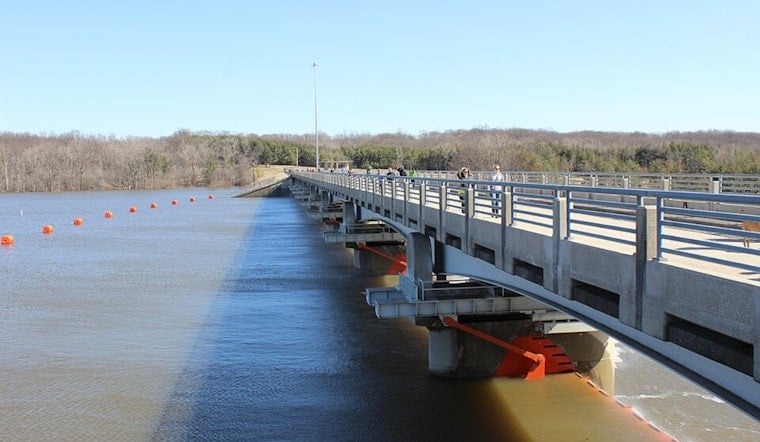
New aerial drone video shows Hoover Reservoir brimming with water this summer, a dramatic reversal from the drought-parched shoreline that defined the reservoir just a year earlier. The footage, captured by photojournalist Adam Cairns, documents how the 3,272-acre reservoir went from struggling under severe drought conditions in 2025 to overflowing capacity by summer 2026.
The turnaround is as striking as it is fast. According to The Columbus Dispatch, the reservoir shifted from drought-stricken lows in 2025 to overflowing conditions within about a year, a change the outlet's drone footage lays out in stark visual terms. Hoover Reservoir holds 20.8 billion gallons of water across its footprint and supplies raw water to the Hap Cremean Water Plant, which delivers drinking water to roughly 600,000 customers across Columbus and northern Franklin County, according to the City of Columbus.
A Historic Dry Spell Set the Stage
The drought that preceded this year's overflow was extreme by any historical measure. August 2025 was the driest August in Ohio history since statewide record-keeping began in 1895, with Columbus receiving just 0.61 inches of rainfall — 4.73 inches below average — according to WBNS 10TV. That flash drought accelerated already-severe drawdowns at the reservoir heading into late 2025.
The dry stretch followed an earlier regional drought in 2024 that put nearly 60% of Ohio under severe to exceptional drought conditions. During that period, water levels at Hoover Reservoir dropped an estimated 10 feet below normal pool levels, per the State Climate Office of Ohio, exposing slate bottom ledges that are normally submerged. When conditions get that dire, Columbus has a backup plan: if Hoover's water level drops below 80% capacity, the city activates a 3.8-mile emergency pipeline that pumps supplemental raw water from Alum Creek Reservoir, a system capable of boosting Hoover's safe yield by up to 34.3 million gallons per day, according to the Mid-Ohio Regional Planning Commission.
Growth and Industry Are Straining the Same Water Supply
Even as the reservoir refills, demand on the region's water resources keeps climbing. Commercial tech data centers operating around Columbus consumed 1.2 billion gallons of water in a single year, roughly 6% of Hoover Reservoir's total storage capacity, the Columbus Dispatch has reported. Central Ohio's rapid expansion from major technology companies has intensified pressure on a water system already coping with volatile rainfall swings.
Anticipating a population that could top 3 million residents by 2050, the Columbus Division of Water is expanding the Hap Cremean Water Plant and planning a fourth regional treatment plant along with new reservoirs, according to 10TV. Columbus currently operates three main water plants producing about 145 million gallons daily. City officials have also moved to protect the reservoir itself: in August 2025, the Genoa Township Board of Trustees approved an annexation agreement transferring more than 2,900 acres of land around Hoover Reservoir to the City of Columbus, a step aimed at protecting municipal drinking water infrastructure amid growing regional development, according to the Delaware Gazette.
A Reservoir With a Long History and Lingering Water Quality Questions
Hoover Dam in Blendon Township, which impounds Big Walnut Creek to form the reservoir, was built starting in 1953 and dedicated in 1955. It was named for brothers Charles P. Hoover and Clarence B. Hoover in recognition of their service to Columbus Waterworks, according to the City of Columbus.
The reservoir's massive capacity also means water can sit for long stretches before moving downstream, which creates its own challenges. Because of those long residence times, the Ohio EPA and local agricultural partners established the Upper Big Walnut Creek Water Quality Partnership to manage agricultural pesticide runoff, including atrazine, from farms upstream. Extreme low water levels, like those seen during the 2024 and 2025 droughts, can concentrate lingering pollutants, making the partnership's runoff-reduction work more urgent during dry years.
Water Rescue Crews Keep Watch as Levels Fluctuate
Hoover Reservoir has also been the site of high-profile public safety operations in recent months. Hoodline previously reported on a body found in the reservoir near Westerville that prompted a police investigation, and later on the discovery of human remains in a submerged vehicle tied to the cold case of missing man Trenton Rollins.
Those recovery efforts relied on the Columbus Fire Department's Dive and Rescue Team, which expanded to 45 certified members in June 2025 trained for surface water rescues, vehicle retrievals, and other emergency operations across local reservoirs. The team, known as DART, was dispatched 40 times in 2024 to respond to water emergencies, underscoring how fluctuating water levels at Hoover Reservoir carry consequences well beyond the drinking water supply.





_from_top.jpg)