

























































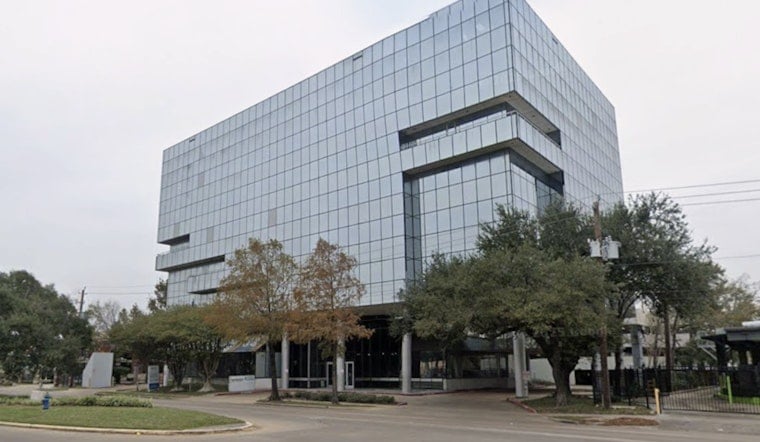
A Harris County judge is expected to sign an execution order Friday for Reinaldo Dennes, the man convicted of murdering Houston jeweler Janos Szucs during a 1996 diamond heist that netted more than $3.5 million in gems that were never recovered. Prosecutors have requested an execution date of November 19, 2026, closing in on 30 years since Szucs was found shot to death in his seventh-floor office. Dennes, now 70, was returned to Harris County from death row last month on a bench warrant for the hearing.
According to ABC13 Houston, Szucs ran his wholesale diamond business, J.S. Precious Stones, Inc., out of the Greenrich Building on Richmond Avenue, an office he protected with an electronically locked door and internal TV monitors instead of a receptionist, according to court records cited by mycrimelibrary.com. Dennes and his brother, Jose Alberto Dennes, worked in the same building and were in the diamond business themselves, and the pair had reportedly been inside Szucs's office before. Investigators came to believe the brothers used that familiarity to plan a carefully orchestrated inside job.
Building cleaner Estrella Martinez, who was in a relationship with Reinaldo Dennes, opened a side door of the building for the men after hours on January 24, 1996, and distracted the security guard, per the ABC13 report. Martinez was paid $5,000 for her role, according to the station's account. Court filings referenced by mycrimelibrary.com show Dennes had given Martinez a cellular phone days earlier, on January 22, 1996, to coordinate the after-hours entry, and Martinez testified that Dennes initially told her he only wanted to retrieve videotapes from the first-floor security booth.
A Gunman, A Guard, and a Missing $3.5 Million
Once inside, according to court records, Dennes told security guard David Copeland, “I have something I want to show you,” before Copeland was shot. Copeland survived his wounds. Houston police responded to a shooting inside the office building that same night, and Szucs's wife had already called police because her husband had not returned home. Officers found Copeland with gunshot wounds and, separately, found Szucs shot to death in his seventh-floor office, per the same report.
The gunman took two VCRs from the security booth along with a five-carat diamond pinkie ring, per court records. Investigators ultimately found more than $3.5 million in diamonds and roughly $200,000 in cash missing from the office, and the ABC13 report notes the diamonds would be worth an estimated $7.2 million today when adjusted for inflation. Some of the stolen money was reportedly spent on a sports car. None of the diamonds have ever been recovered.
How Investigators Built the Case
Court filings summarized by mycrimelibrary.com show that in early January 1996, Dennes approached an Ecuadorian machinist he had met through a mutual acquaintance in the Houston jewelry trade to build a homemade silencer from a hand-drawn sketch. Dennes then test-fired the weapon both in a field and inside his own office. According to ballistic analyses presented at trial and detailed by FindLaw, 9mm shell casings recovered from the Greenrich Building lobby where Copeland was shot matched casings found in that same field, forging the forensic link prosecutors used to tie Dennes to the murder weapon.
Retired investigator Don Smyth said the case was closed without a confession, per ABC13's reporting. Dennes was convicted of capital murder on September 4, 1997, and sentenced to death. His conviction was affirmed on direct appeal in January 2000, and the Texas Court of Criminal Appeals denied his state habeas corpus petition in December 2013, according to the FindLaw filing.
Decades of Appeals Before an Execution Date
Dennes's federal appeals, outlined in filings submitted to the U.S. Supreme Court, centered on claims that state prosecutors had improperly suppressed evidence that a key prosecution witness, Balderas, had been a longtime Houston Police Department informant dating back to 1989. Both the federal district court and the U.S. Fifth Circuit Court of Appeals rejected those suppression claims, and the Supreme Court denied Dennes's last appeal in December 2020, making him eligible for execution that same month. Prosecutors filed a notice of execution order, execution order, and death warrant in Harris County this past June.
The Harris County District Attorney's Office said such cases can take many years or decades to reach execution, and the office said it remains committed to ensuring justice, per the ABC13 report. Dennes is expected to appear at Friday's hearing when the judge is expected to sign the execution order.
Harris County's Outsized Role in Texas Executions
The three-decade gap between the killing and a scheduled execution date is not unusual for Texas capital cases. According to data from the Texas Department of Criminal Justice, death row inmates serve an average of more than 11 years before execution, though complex federal appeals routinely stretch that wait beyond 20 to 30 years; the agency notes 45 Harris County inmates currently on death row have already waited more than two decades.
Harris County has long been a driving force behind Texas's use of capital punishment. Statistics compiled by the Texas Coalition to Abolish the Death Penalty show the county alone accounts for 136 executions since 1982, more than any single U.S. state other than Texas itself, and the county currently holds 64 inmates on death row, over a third of the state's total. That statewide toll passed a milestone this past May, when Texas executed its 600th prisoner since reinstating lethal injection in 1982 with the execution of Edward Busby at the Huntsville Unit, according to the Death Penalty Information Center, accounting for more than a third of all executions carried out in the U.S. since 1976. The Texas Department of Criminal Justice has scheduled at least four executions statewide in 2026, a total that remains far below the state's peak of 40 executions in a single year in 2000.





