

























































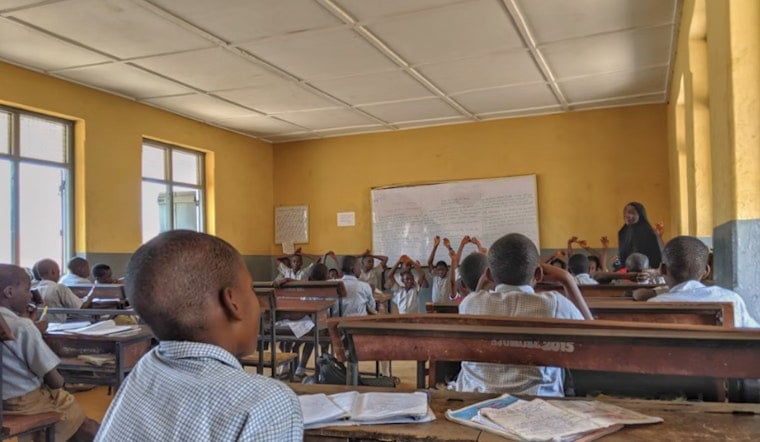
A Houston native who first set foot in Tanzania as a 19-year-old college student has spent more than a decade building an educational lifeline for children living in the shadow of Mount Kilimanjaro. Mandy Stein has built two schools in Tanzania, according to KHOU, and along the way she has described her own ADHD as a superpower that fuels her work.
Stein first traveled to Tanzania in June 2011 and officially founded her non-profit, Neema International, in 2012 to confront the deep poverty in Uru, a rural village at the base of Mount Kilimanjaro, according to the Houston Chronicle. Most residents there live on less than a dollar a day, with limited access to clean water or electricity, per the same account. Stein, a graduate of Houston's Emery/Weiner School who went on to earn a bachelor's degree in social work from the University of Texas at Austin and a master's in education from the Harvard Graduate School of Education, reportedly shaped her graduate coursework around improving the educational and community-development models she was already building in Tanzania.
A School Built Around a Different Set of Rules
Under Tanzanian law and Ministry of Education circulars, corporal punishment remains legal in primary and secondary schools, with up to four strokes permitted per infraction, according to the Daily News. Neema International's Uru Academy explicitly bans physical discipline and maintains an 8:1 student-to-teacher ratio, the outlet reports, even as international advocacy groups continue to push for a repeal of the practice nationwide while Tanzanian guidelines still allow authorized administrators to use it for serious infractions.
That contrast matters because of the scale of the problem Stein is working against. UNICEF Tanzania has reported that roughly 3.2 million children between ages 7 and 17 are out of school nationwide, with net secondary school enrollment reaching only 27 percent. Dropout rates spike around age 12, the agency notes, driven by family poverty, long distances to schools, and a lack of learning supplies.
Reaching Teens Who Already Dropped Out
To pull adolescents back into learning after they have already left the formal school system, Neema International launched the Digitruck in October 2015: a solar-powered, 40-foot shipping container outfitted with 20 laptops that delivers remedial digital literacy, STEM, and English instruction to out-of-school teens aged 14 to 20. The mobile classroom runs offline on pre-loaded educational materials, allowing it to operate despite local infrastructure limitations.
The organization has also had to grapple with what happens after students finish primary school. In December 2024, Neema International launched a campaign to purchase and operate an existing partner secondary school in Moshi, aiming to prevent primary graduates from dropping out simply because there weren't enough secondary seats available. Secondary education in Tanzania requires passing national exams and paying fees that many low-income families cannot afford, a barrier the campaign was designed to remove.
A Houston Pipeline That Keeps the Project Running
The project has never been a solo effort from Tanzania alone. Houston's Emery/Weiner School established an annual summer service program in 2018, sending student delegations to Uru after a high school math teacher there helped break ground for Uru Academy that same year, a partnership the school has said was built on the Jewish concept of Tikkun Olam, or repairing the world.
That Houston-to-Tanzania pipeline has continued into 2026. In August, Stein arranged the shipment of a second cargo container, traveling roughly 8,800 miles from Houston, filled with donated classroom furniture from Houston Christian University and the Shlenker School, according to a Facebook post documenting the effort.
A Growing Network of Sponsorships and Local Jobs
By 2026, Neema International was supporting more than 250 children and families with full educational sponsorships, medical care, and daily meals, while directly employing more than 60 Tanzanian men and women, according to a GoFundMe campaign detailing the organization's reach. The model reflects a deliberate strategy of building local human capital by hiring community members rather than relying on outside staff.
Stein's long-term commitment has also drawn recognition inside Tanzania. In November 2023, Kilimahewa Modern Secondary School awarded her its Community Impact Award, honoring more than a decade of academic sponsorships, holiday study centers, and healthcare support for local youth spanning from primary school through university graduation.
Open questions remain about how Neema International will manage the financial leap required to fund secondary and higher education as more primary-school cohorts graduate, and how it will continue navigating local regulatory oversight while holding to progressive policies like its zero-corporal-punishment rule and English-language immersion model. For now, the Houston native who once arrived in Uru as a 19-year-old visitor has built an operation that spans two schools, a mobile classroom, and a fundraising network stretching from Texas to the base of Kilimanjaro.





