

























































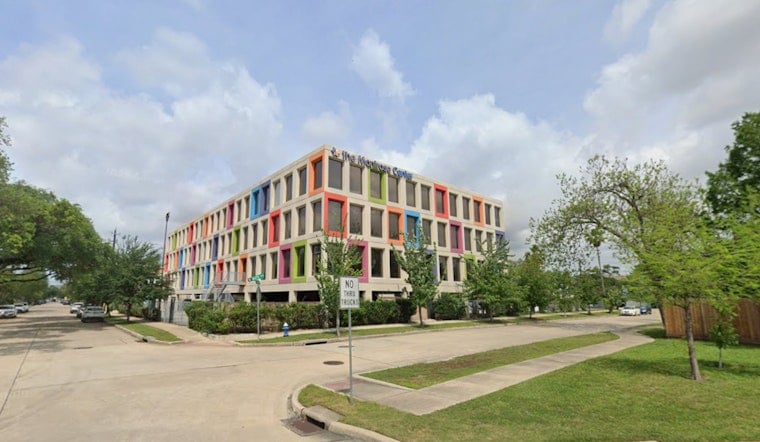
Houston LGBTQ+ community leaders and advocates unveiled Asia's House on Monday at Living Mosaic Church in Montrose, introducing what organizers describe as the city's first temporary emergency shelter built specifically for queer and trans youth. The six-bed facility is set to officially open September 1, giving teenagers ages 15 through 17 across Harris, Fort Bend, and Montgomery counties a local, identity-affirming place to sleep when home is not safe.
Until now, a 16-year-old fleeing an unsafe home in the Houston area with nowhere else to turn had to travel roughly 150 miles to Austin to find an LGBTQ-affirming shelter bed, according to a PR Newswire announcement from Grace Place and the Montrose Center. As reported by Chron, entry into Asia's House is voluntary and does not require parental permission, with residents identified through referrals, street outreach, school partnerships, and a 24-hour hotline. Each resident gets a private bedroom, and the shelter connects them with clothing, counseling, and what staff call a safe place to heal and sleep.
Named for a Woman Who Fought for Youth Like Her
The shelter is named for Asia Foster, a 22-year-old Black transgender woman who was murdered in 2020. Foster had advocated for the needs of transgender teenagers and young adults, particularly around shelter and safe spaces, according to Chron's reporting. Courtney Sellers said Foster wanted to advocate for better youth services, especially shelter and safe places, per the same account.
Houston police arrested 22-year-old Jermal Richards in October 2022 and charged him with murder in Foster's November 2020 shooting death, according to KHOU 11. Foster became the 38th transgender or gender-nonconforming person violently killed in the United States that year, the station reported. Hoodline previously covered a separate case involving violence against a transgender woman in Houston, in a story that referenced a community vigil held at the Montrose Center underscoring the safety risks trans Houstonians face.
Before the physical shelter existed, Montrose Grace Place had already built programming in Foster's memory, including Asia's Fund, an emergency financial resource offering unhoused transgender youth direct aid, gender-affirming care, binders, and medical assistance, according to the organization's website. Grace Place also runs Tracey's Closet, an identity-affirming boutique where unhoused youth can pick out free clothing, hygiene products, and Black hair care items tailored to the organization's majority-Black client base.
Filling a Gap No Existing Shelter Could Cover
Grace Place, a nonprofit supporting homeless youth in the Houston region since its founding in 2010, identified a need for overnight shelter specifically for older teenagers ages 15 through 17, per Chron's reporting. Sellers said the issue of a safe overnight space for 15-, 16- and 17-year-olds became a clear priority, and noted that existing emergency shelters do not allow someone under 18 to independently obtain emergency overnight service.
Avery Belyeu, a transgender woman and CEO of the Montrose Center, helped unveil the shelter, which will operate alongside the center's other programs, including HATCH Youth and NEST. Asia's House will offer tutoring, employment skills training, counseling, and case management on-site, connecting residents with wrap-around care for both queer youth and their families.
Danielle Stephen, Grace Place's street outreach lead, said she will provide the unconditional support she wished she had received, and she will help connect in-need teens with assistance through the shelter. Residents will ideally stay three to six nights, though the shelter can accommodate longer stays when needed.
A Federal Mandate Meets a Local Reunification Goal
Asia's House staff aim to reunite LGBTQ+ youth with their families when it is safe to do so, and staff will provide resources for families supporting queer or transgender children. Under federal rules governing Runaway and Homeless Youth Act grantees, staff must attempt to contact a minor's parents or legal guardians within 72 hours of intake unless doing so is determined to pose a safety risk or contradict the youth's best interest, according to eCFR Title 45 CFR § 1351.18(e). The shelter's establishment and operation are supported in part through a federal grant under that same act, administered locally by Grace Place, which the grant complements alongside community fundraising efforts.
LGBTQ+ youth are 120 percent more likely to experience homelessness than their heterosexual and cisgender peers, per the National Network for Youth, and the group estimates that 40 percent of homeless youth nationally identify as LGBTQ+. Advocates point to unsupportive homes, abusive partnerships, and poverty as common reasons queer and trans youth end up without stable shelter. By some estimates, at least 10,000 Houston-area youth ages 15 to 17 lack a place to sleep on any given night.
A Six-Bed Shelter Against a Much Larger Crisis
The scale of that estimate stands in sharp contrast to the six beds Asia's House can offer at a time. The Coalition for the Homeless of Houston/Harris County counted 3,321 people experiencing homelessness on a single night during its February 2026 Point-in-Time survey across Harris, Fort Bend, and Montgomery counties, a figure nearly identical to the 3,325 counted in 2025, according to the coalition's State of Homelessness report.
An analysis of the region's 2025 count found a 15.8 percent single-year jump in unsheltered homelessness to 1,282 people, with Black residents making up 56 percent of the overall unhoused population, per the Houston Defender's reporting on University of Houston research. The region's broader homeless response network, The Way Home, served 35,988 unique clients and placed 2,135 households into permanent housing in 2025, coalition figures show — institutional capacity that Asia's House will now plug into as it opens its doors to some of the area's most vulnerable teenagers.





