

























































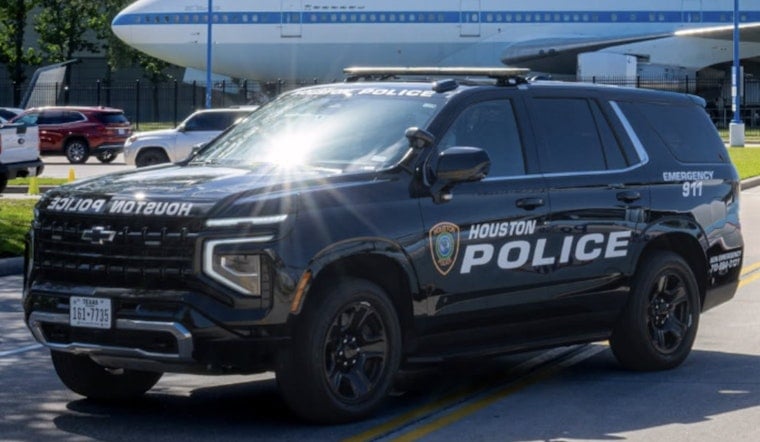
A 78-year-old Houston man reported missing from a residential block near the Texas Medical Center has been found safe, ending a Silver Alert that had gone out to residents across the region overnight. Robert Wise was last seen Tuesday around 4:30 p.m. near the 2600 block of Bellefontaine Street, wearing a dark green sweater, tan pants, and navy-blue slippers, before he turned up safe Wednesday morning.
The TX Center 4 Missing confirmed the recovery in a social media post Wednesday, writing simply that “Mr. Wise was located safe this morning. The Silver Alert has been cancelled. Thank you for sharing.” The organization, formally known as the Texas Center for the Missing, issued the alert on behalf of the Houston Police Department, which had requested public help locating Wise. The nonprofit is based in Houston and describes its mission as bringing hope and healing to missing people and their families.
Wise disappeared from a stretch of Bellefontaine Street that sits in the Braeswood Place and Medical Center area, a residential corridor lined largely with multi-family condominium and townhouse communities dating back to the 1960s, according to HAR.com. The neighborhood sits in South-Central Houston near major medical facilities and thoroughfares, the kind of dense, walkable area where a disoriented senior could easily wander unnoticed for hours.
Why the Alert Went Out So Quickly
Texas law sets a high bar for triggering a Silver Alert. Under Texas Government Code § 411.382 and related state administrative regulations, the alert can only be activated for Texas residents 65 or older who have a documented mental impairment posing a credible threat to their safety, which requires physician documentation before police can request the broadcast. That statutory framework meant Houston police had to obtain signed medical confirmation of a cognitive diagnosis before the alert for Wise could go out at all.
The regional infrastructure that carried the alert traces back to October 2014, when the Houston Regional Silver Alert System was established. It's administered by the Texas Center for the Missing and covers a 14-county Houston-Galveston region that includes Harris, Fort Bend, Galveston, and Brazoria counties, according to the Texas Center for the Missing. The organization functions as the region's official missing-persons clearinghouse, coordinating around the clock with local law enforcement and media outlets whenever a case like Wise's arises.
Understanding the Wandering Risk
Cases involving elderly residents with cognitive impairments carry particular urgency because of how often wandering occurs. According to the Alzheimer's Association, six in 10 people living with dementia or Alzheimer's disease will wander away from safety at least once, and many do so repeatedly, at any stage of the disease. That risk is compounded by how quickly a wandering episode can turn dangerous if the person isn't located fast.
Research on dementia-related wandering also helps explain why searchers focus so tightly on the immediate area where someone was last seen. Studies show a majority of missing seniors who wander on foot are found close to their starting point, with roughly 53 percent located within one mile and 75 percent within five miles. That pattern underscores why localized canvassing around Bellefontaine Street was central to finding Wise, since disorientation often leads people to walk aimlessly near familiar landmarks or residential streets rather than travel far.
How Texas's Alert Network Works
The statewide framework behind Wise's alert dates to 2007, when the Texas Legislature created the Texas Silver Alert Network under House Bill 157. The Texas Department of Public Safety administers the network using infrastructure modeled on the Amber Alert system, pushing notifications through news broadcasts, state lottery terminals, and TxDOT highway signs. Once a missing senior is found, state law requires local law enforcement to immediately notify DPS so the public emergency alert can be officially canceled across every channel, which is what led to Wednesday's cancellation for Wise.
That rapid-cancellation requirement exists in part to prevent alert fatigue among motorists and residents who might otherwise start tuning out the notifications. Hoodline reported on a similar sequence earlier this month after a Silver Alert for a 77-year-old San Antonio woman ended quickly when she, too, was found safe and the advisory was pulled from circulation almost immediately.
A Small Piece of a Much Larger Caseload
Wise's disappearance is a single entry in a much bigger statewide count. Data compiled by the Texas Center for the Missing shows Texas law enforcement agencies logged 40,309 missing-person reports in 2025, with 12,080 of those involving adults over 18. Not every adult case qualifies for a Silver Alert, either — for missing adults between 18 and 64 who don't meet the senior or cognitive-impairment criteria, the Texas Legislature created a separate CLEAR Alert system in 2019 to cover people believed to be in imminent danger, filling the statutory gap between child Amber Alerts and senior Silver Alerts.
Houston police continue to route tips and manage missing-senior investigations through the department's Missing Persons Division, which can be reached at 832-394-1840. Wise's case adds to a string of recent Texas disappearances that have drawn public alerts and community attention, though his ended within roughly a day with a safe recovery.





