

























































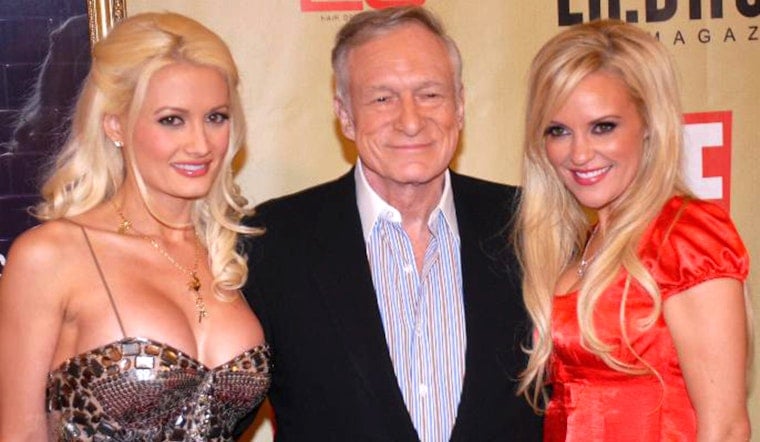
Hugh Hefner called the FBI multiple times in 2005 to report Jeffrey Epstein after a former Playboy Playmate asked him to intervene on her behalf, according to an amended federal court filing. The Playboy founder made the calls at the request of Audra Lynn Christiansen, who was Miss October 2003 and believed Hefner's law-enforcement connections and public standing might finally get her allegations taken seriously. Federal agents did not interview Christiansen about the matter until October 2020, more than a year after Epstein died in federal custody.
The detail comes from a filing first reported by investigative journalist Julie Brown, whose earlier Miami Herald reporting exposed Epstein's controversial 2008 non-prosecution agreement, according to her Substack column. The tip is now central evidence in a lawsuit filed by 32 Epstein victims against the United States, as reported by the New York Post. Christiansen, a Minnesota-born former model who appeared on The Girls Next Door, was 23 years old when she lived at Hefner's Beverly Hills mansion in 2003, and she reported that her agents introduced her to Epstein, who reportedly wanted to meet her after her Playboy nude centerfold was released.
A Web of Introductions and Alleged Trafficking
Christiansen reported that Jeffrey Epstein raped and trafficked her, and separately alleged that Stanley Ho, described in the filing as China's godfather of gambling and identified elsewhere as a Macau casino billionaire, trafficked her to one of his wealthy friends. Ho died in 2020. In a 2011 email, Epstein reportedly described Ho as the richest man in Hong Kong and, separately, said Ho owned most of Macau and was the leader of the Chinese mob, according to the same New York Post account. Epstein's friend Boris Nikolic is also named in the reporting, though the dossier does not detail his role in Christiansen's allegations.
Christiansen's 2003 Playmate data sheet, cited in the reporting, listed being taken for granted among her turnoffs and described her turn-on as a secure older man who makes her laugh — details that now read starkly against her later allegations. Hefner himself was accused of rape in the 2022 documentary Secrets of Playboy, five years after his 2017 death, with women in the film describing him as a predator and accusing him of being interested in bestiality. He was not accused of rape while he was alive, and no rape claims against him have reached court.
The Legal Fight Over FBI Accountability
The amended complaint at the heart of the case was filed in May 2026 in the U.S. District Court for the Southern District of Florida. In April 2026, U.S. District Judge David S. Leibowitz had dismissed a prior version of the lawsuit without prejudice over jurisdictional issues under the Federal Tort Claims Act, but ruled it was premature to toss the case on the government's discretionary function exception defense, according to DonPorque.com. That exception, which shields policy-based law enforcement decisions from liability, allows the government to dismiss nearly 75 percent of Federal Tort Claims Act lawsuits at early stages, according to legal analysis published in the Harvard Law Review. Plaintiffs must show federal agents violated mandatory directives rather than simply exercised investigative discretion.
The FBI sought dismissal of the lawsuit in June 2026, arguing it was not required to investigate every complaint it received. The bureau has not publicly addressed Hefner's tip. Christiansen filed a formal sworn declaration on March 11, 2026, submitted in federal court to bolster claims that federal agents failed to act after receiving warnings about Epstein, according to court dockets reviewed via Justia Dockets. Attorney Jordan Merson, who represents the victims, said the FBI's procedural arguments to avoid accountability for its failures to investigate Epstein should be deeply concerning.
Part of a Longer Pattern of Ignored Warnings
Hefner's 2005 calls were not the first time the FBI received word about Epstein's abuse. Congressional records released in December 2025 show the bureau's earliest documented report came in August 1996 from artist Maria Farmer, nearly a decade before local Florida police opened their own investigation, according to House Oversight Democrats, who have requested an Inspector General inquiry into why that 1996 complaint went nowhere. Merson Law, the firm representing Christiansen and Merson, now represents more than 60 Epstein survivors across multiple legal actions, including the pending Southern District of Florida suit, according to the firm's summer newsletter.
Federal oversight of Epstein-related records has also drawn bipartisan scrutiny. In April 2026, Senators Lisa Murkowski and Richard Blumenthal announced that the Department of Justice's Office of the Inspector General had launched an audit into the department's compliance with statutory document releases under the Epstein Files Transparency Act, according to a statement from Senator Murkowski's office. Lawmakers and survivors have accused federal officials of selective releases and stonewalling.
The pattern of institutional failure extends beyond investigative delays. A June 2023 report by the Department of Justice's Office of the Inspector General documented what it called numerous and serious failures by federal prison staff constituting misconduct and dereliction of duty leading up to Epstein's August 2019 death at the Metropolitan Correctional Center in New York, citing unmonitored celling and widespread protocol non-compliance. Justice Department documents released in April 2026 also revealed that during Epstein's 2008–2009 Florida county jail sentence, he was permitted off-duty deputy supervision and used a custom SUV fitted with a bed where sexual encounters continued while parked on jail property, according to CBS News.
For Christiansen, now 46, the 15-year gap between Hefner's calls and the FBI's follow-up remains the crux of her claim that federal agents had every opportunity to intervene long before Epstein's arrest. Reporting from Mint notes that the 2020 FBI interview report was later submitted as an exhibit in federal court, underscoring the delay that now anchors the litigation. The lawsuit remains before the courts, with no resolution yet on whether the discretionary function exception will shield the bureau from liability.



