

























































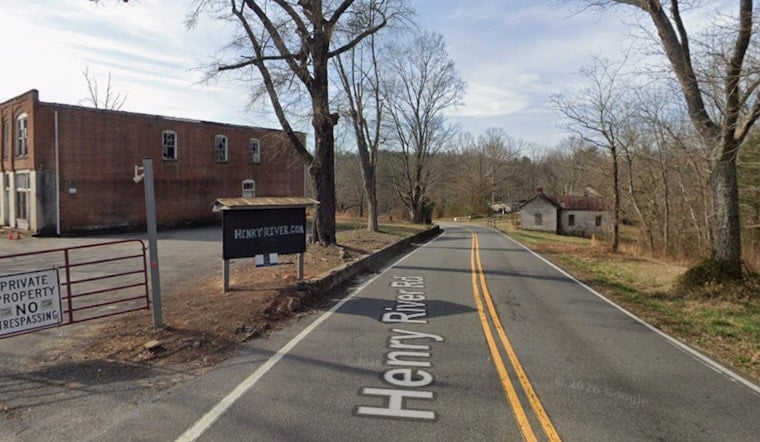
The company store at Henry River Mill Village has holes in its roof letting rainwater pour straight into the 1905 building that once served as the bakery backdrop for Peeta Mellark's family in “The Hunger Games.” Co-owner Elaine Namour calls the structure the focal point of the village, and now it's also the most urgent repair problem facing the roughly 60-mile drive northwest of uptown Charlotte that fans still flock to see.
According to the Charlotte Observer, water intrusion is accelerating deterioration throughout the company store, and the roofs and floors across the property are in disrepair. The Henry River Preservation Fund has raised money through GoFundMe and warns that immediate intervention is needed to prevent the loss of the site's history and its status as an iconic filming location, per the nonprofit. The fund's GoFundMe campaign is seeking $18,000 just to renovate the company store, while the broader preservation effort may need nearly $1 million overall, according to the Observer's reporting.
From Cotton Mill to Movie Set
Henry River Mill Village was established in 1905 and grew into a hub of textile production before it became a ghost town. Founded as the Henry River Manufacturing Company by the Aderholdt and Rudisill families, the operation ran 4,000 spindles powered by a 30-foot concrete dam and eventually expanded to 12,000 spindles producing fine lace yarn, according to Blue Ridge Country. The mill closed in the 1970s, and the original three-story brick mill building itself burned to the ground in 1977 after a suspected lightning strike, as detailed by the Associated Press, leaving the company store, worker cottages, and dam as what survived.
The village once had 35 original homes, and builders made bricks on site and used wood from local trees to put them up. Residents had no indoor plumbing or municipal water, instead drawing from a central deep well and community hand pump, according to the NC State Historic Preservation Office's federal nomination filing. Today only 20 of those original homes still stand, and the remaining structures show some form of deterioration, per the Observer's reporting.
District 12's Real-World Address
The company store itself once held a post office, a school, a grocery, a church, a bank, and the mill owner's offices in the back — practically the whole village crammed into one building. That same store became the on-screen bakery backdrop for Peeta Mellark's family when “The Hunger Games” filmed there in 2012, and one of the workers' cottages was transformed into Katniss Everdeen's on-screen home, the character played by Jennifer Lawrence. The film put the village's workers' homes and store in the spotlight worldwide after Wade Shepherd, who owned the property during filming, later sold the abandoned 72-acre site to current owners Calvin Reyes and his mother and stepfather in October 2017 for $360,000, according to the Associated Press.
Beyond the blockbuster, the ghost town has drawn national television crews too, appearing in Magnolia Network's “In With The Old” and Science Channel's “Mysteries of the Abandoned,” as reported by WCNC. Movie buffs still visit the site on tours each year, and Namour has said she hopes visitors come away loving the village's history, not just its movie trivia. One other cottage on the property has already been renovated into Airbnb rentals, showing a different path some structures have taken toward survival.
A Property Caught Between Sale and Preservation
The preservation push is unfolding even as the owners put the entire 72-acre property up for sale for nearly $2 million in early 2025, splitting the listing into a 28-acre parcel with the historic company store priced at $1.15 million and a 43-acre parcel at $800,000, according to WSOC-TV. That listing also touts the property's spot along the projected route of the North Carolina Wilderness Gateway Trail, a planned regional eco-tourism corridor that could reshape how the site is used in the years ahead. It leaves the ghost town caught between private redevelopment ambitions and the nonprofit fundraising trying to keep its historic buildings standing.
The Henry River Mill Village Historic District earned a spot on the National Register of Historic Places on May 9, 2019, a designation supported by state preservation officials and the property owners at the time, per the Associated Press. WSOC-TV also notes the grounds carry a separate piece of local history: Burke County Sheriff David Oaks was killed in the line of duty there in 1966. Whether the site's next chapter is written by preservationists or a new buyer, its 120-year-old buildings remain exposed to the weather in the meantime, with the company store's leaking roof standing as the most visible sign of what's at stake.




