

























































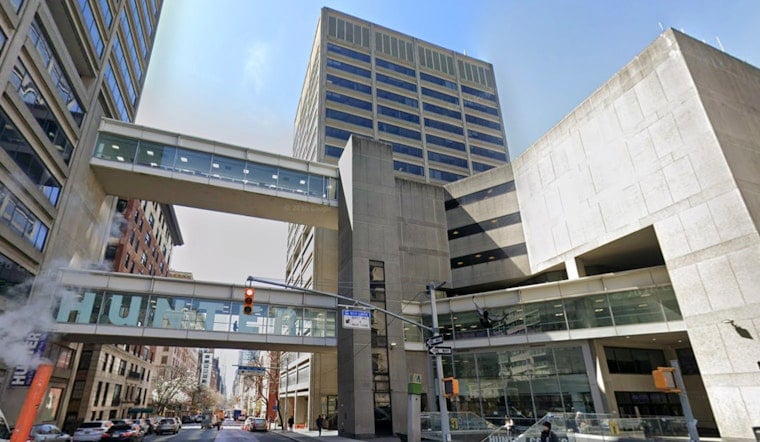
Hunter College is grappling with a $14 million deficit inside its $399 million budget, and the way CUNY trustees discussed that shortfall is now drawing scrutiny. The Board of Trustees held a two-and-a-half-hour retreat at Hunter's Roosevelt House Public Policy Institute on August 17 to go over the finances of CUNY's 26 colleges and institutions, then reconvened for a public meeting that lasted just two minutes.
The gap between those two sessions is at the center of a brewing dispute over whether CUNY violated New York's Open Meetings Law, according to the New York Post. A CUNY official told the paper the closed-door session was legal and appropriate because no official board business was conducted and no votes were taken during the retreat. State law does require public meetings for official CUNY board business, though it allows executive sessions or closed-door discussions for matters like personnel issues or litigation.
Not everyone in CUNY's orbit is buying the university's defense. Jeffrey Wiesenfeld, a former CUNY trustee appointed by then-Gov. George Pataki, said the retreat constituted a meeting of the board. Rachel Fauss argued that public business cannot be conducted privately when a quorum is present, adding that college finances and demographic and enrollment trends are information the public should see. Sources questioned whether the closed-door session violated the state's transparency law, per the Post's reporting.
What Legal Precedent Says About Quorum Gatherings
The legal question isn't new. In Orange County Publications v. Council of the City of Newburgh, the New York Court of Appeals established that any gathering of a quorum of a public body convened to discuss public business constitutes a meeting under the Open Meetings Law, regardless of whether formal votes are taken or how the meeting is labeled, according to the New York State Committee on Open Government. Separate advisory guidance from the same body, cited by the New York State Association of School Attorneys, holds that while pure board-development retreats can be private, any retreat where a quorum discusses substantive public policy, district goals, or administrative finances must be open to the public.
That distinction matters here because the retreat's agenda went well beyond team-building. The CUNY Institute for State & Local Governance presented projected demographic shifts among high school- and college-age populations and their potential impact on future enrollment, and Marc Shaw gave the board a PowerPoint presentation on those same enrollment and demographic trends. If a court found CUNY in violation, New York Public Officers Law Article 7 gives judges authority to declare void any actions taken at the meeting and award legal costs and attorney fees to petitioners, according to the Reporters Committee for Freedom of the Press.
Hunter's Deficit Is One Piece of a Larger Puzzle
The public meeting that followed the retreat was brief but not empty — trustees passed one resolution and shelved another. A Hunter College spokesperson said the school is implementing financial savings measures to address its projected structural deficit, and added that full-time faculty, staff, and academic programs are not expected to be affected. Hunter may draw on reserves to cover any remaining deficit at the end of the academic year, and several CUNY community colleges are also carrying operating deficits of their own.
Hunter's shortfall sits inside a much bigger fiscal picture. CUNY's system-wide structural operating deficit reached $234 million in fiscal year 2022 before dropping to $194 million in fiscal year 2023, thanks to university-wide spending targets and a central vacancy review board, according to Bronx Community College administration figures. New York City's budget plans between fiscal years 2023 and 2026 layered on successive Programs to Eliminate the Gap, cutting tens of millions in municipal aid and eliminating hundreds of civilian and pedagogical staff positions, per the Office of the New York City Comptroller. Sherif Soliman, who took over as New York City budget director in December 2025, previously worked as a senior CUNY administrator responsible for reducing that structural deficit and securing labor contract funding, a connection Hoodline reported in its earlier coverage of Soliman's appointment.
Hunter's low tuition compounds the pressure. Full-time in-state undergraduate tuition runs between $6,930 and $7,382 a year, and more than 75% of undergraduates graduate debt-free because of federal and state aid, according to Hunter College's own published figures. That structure leaves the school reliant on state and municipal appropriations rather than tuition revenue when those funding streams tighten. Meanwhile, CUNY estimated its deferred capital maintenance backlog across 25 campuses at $4.3 billion in its 2024 budget request, with only about 8% of university buildings classified in a state of good repair, per reporting from the Knight News.
Enrollment Swings and Who Controls the Board
Part of what trustees reviewed behind closed doors was enrollment data showing a system in flux. CUNY enrollment stood at 271,242 students in fall 2019, fell to 225,881 by fall 2022, and climbed back to 246,503 in fall 2025 — a 9.13% increase over three years. CUNY expects another enrollment increase in the upcoming fall semester.
Who sits on the board shaping these decisions is itself a matter of political appointment. Governance of CUNY is vested in a 17-member Board of Trustees, with 10 members appointed by the governor and five by the New York City mayor, all subject to State Senate confirmation, plus two ex-officio student and faculty representatives, according to city government records. Trustees are appointed to staggered seven-year terms, and Gov. Kathy Hochul has appointed many current board members, including chair Bill Thompson. Mayor Zohran Mamdani must wait for vacancies before he can appoint his own trustees to the board.
The financial strain comes even as Hunter has been positioned as a showcase for CUNY's academic reinvestment efforts. Hunter's human biology program was selected in March as an early pilot site for CUNY Beyond, the system's expanded career initiative embedding dedicated career advisors and paid placements into degree tracks, as Hoodline detailed in its report on Hunter's new career-hub push. Whether that kind of program investment can coexist with the deficit-cutting measures CUNY says are already underway remains an open question for the college's administration.





