

























































A driver topped out at 139 mph on Interstate 15 near Oceanside, and just minutes later, officers pulled over a Dodge Challenger allegedly racing at 119 mph on the same freeway. Both drivers were detained the night of July 18, for allegedly driving nearly twice California's maximum speed limit during separate illegal races.
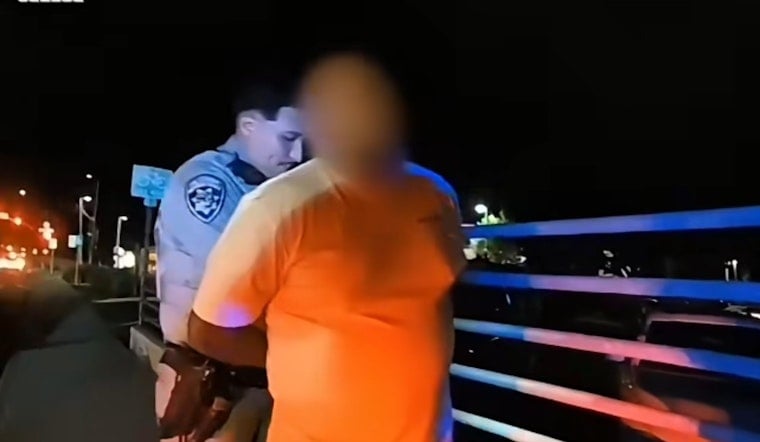
The California Highway Patrol's Oceanside office released officer bodycam video from that night, according to FOX 5 San Diego. CHP said a BMW was racing at 139 mph on I-15, and the driver was arrested for reckless driving. Most California highways cap out at 65 mph, though some stretches allow up to 70 mph during certain times, meaning the BMW driver was clocked at more than double the posted limit.
Officer Warns Driver: Someone Could Have Died
In the bodycam footage, an officer told the BMW driver that the driving was extremely dangerous and could have hurt or killed someone. CHP has said that racing on highways or public roads can lead to arrest and to vehicle loss. When the officer raised the possibility of losing his car, the BMW driver said he could not afford it.
Minutes later and nearby on the same freeway, officers stopped a Dodge Challenger allegedly racing at 119 mph, per CHP. That driver was arrested for street racing. According to a CHP officer, the Dodge Challenger driver could have faced a felony charge had he not stopped. The Challenger driver told officers the fault was his, and CHP said the car will be held as evidence for 30 days.
What The Law Allows Officers To Do
The 30-day hold on the Challenger reflects authority already written into state law. Under California Vehicle Code Section 23109.2, officers can immediately seize and impound a vehicle for up to 30 days once they establish probable cause for a speed contest, exhibition of speed, or reckless driving violation, according to FindLaw. Vehicle owners typically must pay substantial towing and storage fees to get their cars back once that impoundment period ends.
The criminal exposure for each driver differs depending on the charge. A first-offense conviction for engaging in a motor vehicle speed contest under Vehicle Code Section 23109(a) is a misdemeanor carrying 24 hours to 90 days in county jail, base fines up to $1,000, two DMV points, and up to 40 hours of community service, according to Cron Israels and Stark. A first-time conviction for misdemeanor reckless driving under Vehicle Code Section 23103 carries 5 to 90 days in county jail, fines between $145 and $1,000, and two negligent operator points, per FindLaw.
State Crackdown Extends Beyond The Courtroom
Beyond criminal court, California has built out administrative tools aimed squarely at extreme speeders. In December 2025, the California State Transportation Agency, CHP, and DMV launched the Forwarded Actions for Speeding Tickets pilot program, which automatically routes citations for driving over 100 mph to the DMV's Driver Safety Branch for administrative license suspension or revocation, according to the California State Transportation Agency. Separately, Assembly Bill 3 authorized state courts to impose a 90-day to six-month license suspension specifically for street racing or sideshow convictions, with full enforcement underway since July 2025, as reported by CalMatters.
The scale of the problem shows in CHP's own numbers. Officers issued more than 18,000 citations statewide in 2024 to motorists driving faster than 100 mph, averaging roughly 1,600 excessive speeding tickets per month, per the state transportation agency's release. CHP safety analyses note that kinetic energy quadruples when a vehicle doubles its speed from 70 mph to 140 mph, and that speeding contributes to roughly 32% of all traffic fatalities statewide, or about 1,300 deaths annually.
San Diego's Role In Fighting Sideshows Runs Deep
San Diego's connection to this enforcement push goes back further than most drivers realize. The statewide Vehicle Racing/Sideshow Modified Vehicle Enforcement program traces to 2001, when it began as DRAGNET, a San Diego Police Department initiative built to combat illegal street racing gatherings that once drew as many as 1,200 vehicles, according to the Bureau of Automotive Repair. That program has since trained more than 7,100 California law enforcement officers.
CHP has kept up pressure on the freeways more recently, too. In May 2025, the agency deployed 100 low-profile, specially marked patrol vehicles across high-risk corridors statewide, generating more than 33,000 speeding citations within their first six months on the road, per edhat. Beyond fines and jail time, a conviction for driving over 100 mph or joining a speed contest strips a driver's 20% California Good Driver discount and typically drives auto insurance premiums up 26% to more than 100%, an increase that can stick on a record for up to seven years, according to FOX 11.
It is not yet known whether the BMW or Dodge Challenger driver will face the administrative FAST license suspension process ahead of their misdemeanor court proceedings, or whether prosecutors will pursue additional penalties. The I-15 stops come days after a separate San Diego sideshow chase in which a suspect hit 100 mph fleeing CHP and city police on the same freeway.





