

























































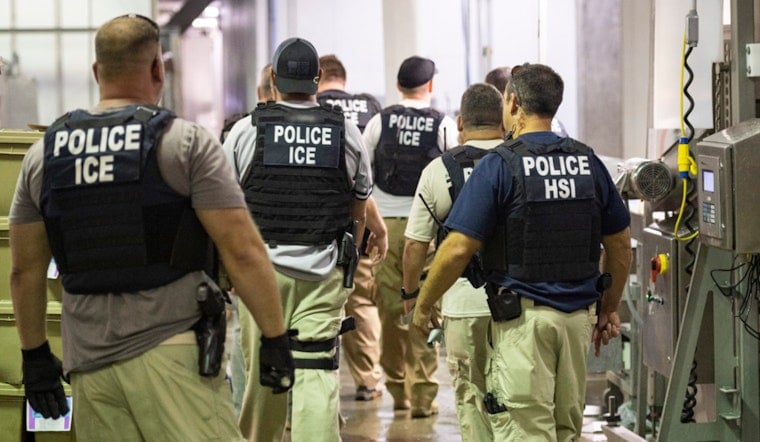
The Department of Homeland Security is moving forward with a plan to arm Immigration and Customs Enforcement officers with electric shock gloves capable of delivering up to 380 volts directly through skin contact, a proposal that could cost the federal government between $10 million and $20 million. The announcement, published in a DHS procurement notice on August 10, has landed amid nationwide scrutiny of ICE's use of force following two fatal shootings during vehicle stops in July.
According to Spectrum News, ICE plans to purchase the CTG-5 glove, which stands for Generated Low Output Voltage Emitter, for use by both Homeland Security Investigations and Enforcement and Removal Operations. The device is manufactured in Kentucky by APB Consulting Solutions, and unlike standard Tasers that fire skin-piercing prongs from a distance using under 1.5 milliamperes at higher voltages, the CTG-5 requires direct contact with a person's skin to deliver what the manufacturer calls Neuro Peripheral Interference, according to Mashable. The glove reportedly delivers currents between 324 and 362 volts, with a maximum output of 380 volts, at 700 to 1,200 milliamperes, running for roughly 90 minutes per charge and logging every activation through built-in microprocessors, per the same outlet's reporting.
Manufacturer Pitches De-Escalation, Warns of Risk to Vulnerable Groups
APB Consulting Solutions has described the CTG-5 as a conductive distraction and de-escalation device, and company representative Noah Wallington has said the gloves can reduce fights with combative individuals from minutes to seconds, adding that compliance is imminent for people who undergo the training. The company demonstrated the gloves for Kentucky state lawmakers and told them training was imperative, and the glove's user manual requires recertification every two years while explicitly barring use of the device in response to verbal defiance, belligerence, or as punishment, per Spectrum News.
But the manufacturer's own user manual carries stark warnings. Compliant Technologies' documentation states that applying more than two G.L.O.V.E. devices simultaneously to a single person could cause severe injury or death, and it prohibits use on children, pregnant women, and the elderly or disabled, according to The Guardian. Legal experts and former federal oversight officials told TIME in August that the device's discreet, low-optics design lets officers deliver painful shocks without bystanders noticing, raising what they described as severe accountability and abuse risks during civil immigration stops.
Civil Rights Group Demands a Halt
LULAC has called for a halt on purchasing the gloves and is pushing for greater congressional oversight of ICE training standards and accountability procedures. LULAC CEO Juan Proaño said the purchase process was deplorable because it had not been properly investigated, thoroughly reviewed, or opened for public comment, according to Spectrum News. Proaño also said the tactics used by the administration and ICE violate civil and human rights, and warned that the gloves could lead to more people being killed.
DHS has defended the proposal, with the agency saying ICE officers are highly trained in de-escalation tactics and regularly receive ongoing use-of-force training. A homeland security official said ICE assesses field officers' needs and reviews technology for compliance with law enforcement policies and standards, per Spectrum News, which noted the Associated Press first reported the potential purchase and that the contract is expected to be completed by the end of March. More than 700 law enforcement, corrections, and hospital security agencies nationwide — including the Cape Girardeau Police Department in Missouri and the Louisville Metro Department of Corrections in Kentucky — already deploy Compliant Technologies' shock devices, Mashable reports.
Deadly Vehicle Stops Fuel the Backlash
The proposal lands just weeks after an ICE officer fatally shot 52-year-old Lorenzo Salgado Araujo during a vehicle stop in Houston in July, a case Hoodline covered in our earlier report on the Canal Street stop. The Harris County Institute of Forensic Sciences ruled Salgado Araujo's death a homicide caused by a penetrating gunshot wound to the torso, according to Click2Houston. Federal laboratory tests completed in August confirmed that a white crystalline substance found in his work van was not methamphetamine, refuting initial federal drug allegations, as reported by ClickOnDetroit; family attorneys have said the substance was a homemade electrolyte mixture.
Six days after the Houston shooting, an ICE officer fatally shot 25-year-old Colombian national Johan Sebastián Durán Guerrero during a July 13 vehicle stop in Biddeford, Maine, though federal officials later acknowledged he was not the target of the underlying warrant, according to PBS. Following both shootings, DHS briefly suspended most ICE vehicle stops nationwide, but President Donald Trump overturned the order the following day, per CBS News. The back-to-back deaths sparked vigils and protests across the country, including demonstrations Hoodline covered in Detroit and the South Bay.
A Bigger Budget for Enforcement Gear
The shock glove proposal also fits into a broader spending trajectory. Federal procurement records show ICE spent $71.5 million on weapons and ordnance between January and October 2025, a 700% increase over previous years, before proposing the CTG-5 acquisition, according to the Daily Voice. Spectrum News also notes that the Republican-led Congress has approved billions of dollars for immigration enforcement, allowed ICE to hire 12,000 additional officers, and cleared the agency to purchase new technology such as body cameras.
Critics of ICE, including LULAC, are demanding the agency abandon its plan to spend millions on the shock gloves altogether, arguing detainees could be hurt in the process. For now, the contract remains on track for completion by the end of March, leaving the debate over pain-compliance tools, oversight, and transparency unresolved as ICE's enforcement footprint continues to expand.





.jpg)