

























































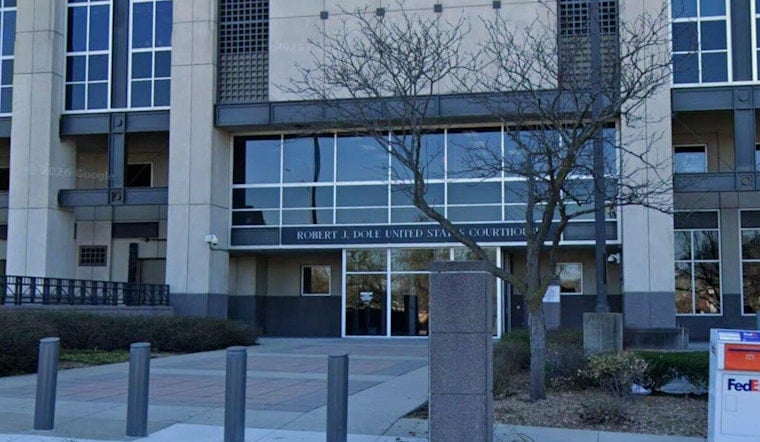
A 26-year-old Independence, Missouri woman has pleaded guilty to federal cyberstalking charges after prosecutors say she waged a harassment campaign against a Kansas victim that included rape and death threats, fake dating profiles that sent strangers to the victim's home, and messages that got the victim fired. Julianne Grace Willis entered her guilty plea to one count of cyberstalking in the U.S. District Court for the District of Kansas, admitting she used the internet to stalk and terrorize a victim in Kansas.
The case, prosecuted in the U.S. District Court for the District of Kansas, traces back to 2022, when a minor relative of the victim received messages on a Roblox account from someone claiming to be a 24-year-old man, according to KSHB. The victim eventually blocked the account, but the harassment that followed did not stop — it escalated. The FBI traced a phone number and IP address connected to the harassment back to Willis, per the same report.
A Campaign That Followed the Victim Everywhere
Prosecutors say Willis harassed the victim through calls, texts, and social media messages that were described as demeaning. She also sent messages accusing the victim's family of infidelity and made derogatory statements to the victim's employer — statements that ultimately caused the victim to change jobs. Perhaps most disturbing, Willis created a fake dating profile that caused men to appear at the victim's home expecting romantic encounters, according to the U.S. Attorney's Office.
Per the U.S. Attorney's Office, Willis also threatened to rape and kill the victim and the victim's family. Chris Ormerod, commenting on the case, said the victim endured a sustained and deliberate campaign of harassment by the defendant, and that the conduct had a profound and lasting impact on the victim's sense of security and quality of life. Ormerod added that the harassment caused significant disruption to the victim's daily life and the well-being of their family.
Interstate Reach Brought In Federal Investigators
Because the harassment crossed state lines from Independence, Missouri, to rural Kansas, the case fell under the jurisdiction of the FBI Kansas City Field Office, which maintains primary federal jurisdiction across Western Missouri and the entire state of Kansas. That single office coordinated the investigation spanning both states before a federal grand jury issued an indictment against Willis on September 30, 2025, under case number 6:25-cr-10105, according to court records reviewed by PacerMonitor.
The victim lived in Ulysses, Kansas, a rural municipal seat in Grant County with an estimated 2026 population of 5,469 residents, per World Population Review. Willis is scheduled to be sentenced in November, with the U.S. Department of Justice confirming the date as November 4, 2026, in a case prosecuted by Assistant U.S. Attorney Katie Andrusak, who joined the federal prosecutor's office in Wichita in 2019 after previously serving as a local Assistant District Attorney in Sedgwick County, Kansas.
What Willis Faces at Sentencing
Under federal law, a cyberstalking conviction under 18 U.S.C. § 2261A carries a statutory maximum sentence of up to five years in federal prison and a fine of up to $250,000, according to Eisner Gorin LLP. Separately, federal law under 18 U.S.C. § 2261B allows for an enhanced penalty of five additional years of imprisonment when cyberstalking targets a victim under 18, though the dossier does not specify whether that enhancement applies in this case. Federal law under 18 U.S.C. § 2264 addresses restitution related to harassment.
The Roblox Connection and a Wider Safety Reckoning
The harassment in this case began with an unwanted message on Roblox, a detail that lands amid broader scrutiny of the gaming platform's safety practices. Roblox rolled out an age-verification system earlier in 2026 and launched age-segregated accounts in June 2026 to restrict communication between minors and adults, according to CBS News. The platform's Roblox Kids and Roblox Select accounts were designed specifically to curb unsolicited messaging between children and adult strangers.
The case also arrives amid broader concern about digital harassment nationwide. The case has drawn attention to similar concerns.
The article does not provide national stalking statistics. The article also discusses complaints and reported losses across age groups.





