

























































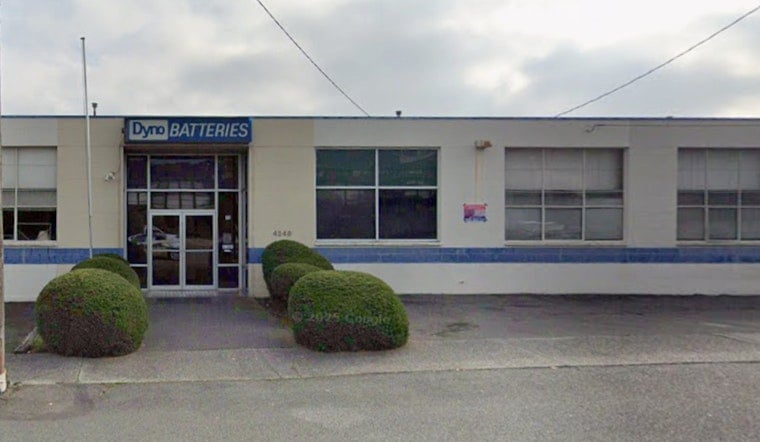
A stormwater catch basin along the 4200 block of 23rd Avenue West in Seattle's Interbay neighborhood tested at 451 parts per million of leachable lead, more than 90 times the state's hazardous waste threshold of 5 parts per million. The discovery, tied to a lead-acid battery manufacturer that has operated in the area since 1933, triggered a municipal cleanup effort Wednesday and a public health advisory urging pedestrians to steer clear of the block.
According to KOMO News, a specialized contractor cleaned known contamination areas in the roadway and the stormwater catch basin on August 26, targeting sites where Seattle Public Utilities had already confirmed elevated lead levels. A separate roadway sample also came back over the hazardous threshold, containing 55.3 parts per million of leachable lead, per the same account. City, county, state and federal agencies are now conducting additional soil and water sampling to determine whether the contamination extends beyond the block already tested.
Officials have not yet determined the full extent or source of the contamination, KOMO reports, though the investigation centers on Dyno Battery Inc., a family-owned manufacturer that has made lead-acid batteries for boats, trains, forklifts and golf carts at 4248 23rd Avenue West since 1947, according to Discover Magnolia. Battery production inherently involves lead, and the surrounding investigation traces back to workplace safety findings at the plant more than a year earlier.
How a Factory Safety Case Led to Street Testing
The public environmental testing did not begin in a vacuum. The Washington State Department of Labor & Industries fined Dyno Battery $224,320 in March for 16 safety violations, including nine failure-to-abate citations after the company failed to resolve lead hazards first identified during a July 2025 inspection, according to the Washington State Department of Labor & Industries. Inspectors documented roughly an inch of lead dust accumulated inside the plant's air showers — equipment meant to remove contaminants from workers that instead blew toxic dust onto them — along with lead residue found on lunchroom tables. Dyno Battery has appealed the fine, which would otherwise go to the state's workers' compensation pension fund, the agency says.
The violations were serious enough that state regulators issued an Order of Immediate Restraint on October 8, 2025, halting all work in the plant's assembly area until required hazard corrections were verified in February 2026 — a rare step state officials reserve for immediate worker health risks. In April, the Washington State Department of Health and L&I warned King County Public Health that Dyno Battery workers could be carrying lead home on their clothing and vehicles, exposing family members, which is what set the offsite environmental investigation into motion.
From Factory Floor to Public Right-of-Way
Public Health then contacted Seattle Public Utilities, which conducted soil and dust testing near the plant in July, collecting roadway and stormwater catch basin samples that first flagged the elevated readings. Confirmatory testing followed in August, according to KOMO, cementing the findings that led to Wednesday's cleanup. Public Health is also working directly with Dyno Battery employees on lead risks and blood lead testing, per the outlet's report.
Officials collected water and dust samples in August at a nearby private daycare, and 3 of 11 samples exceeded EPA action levels for lead dust. But those elevated readings all turned up in areas where children do not spend time; samples taken from active child-care spaces showed no concerning lead levels, KOMO reports. Public Health is now working with the daycare to eliminate lead dust from the facility and to inform parents about testing options and ways to protect their children.
What Public Health Is Telling Residents
Public Health – Seattle & King County issued a health advisory asking pedestrians to avoid the 4200 block of 23rd Avenue West and the adjacent alley between 22nd and 23rd Avenues West unless access is necessary, in order to prevent tracking lead dust into homes. Officials recommend that anyone who has recently been in the affected area remove their shoes before entering their home and wipe down stroller or wheelchair wheels with a damp cloth, since lead-contaminated dust can cling to shoes and wheels and travel indoors.
Additional sampling is underway to assess potential public exposure and to determine whether contamination is present elsewhere in the neighborhood, which will guide any further cleanup. Residents concerned about lead exposure can reach the Washington Poison Center helpline, and guidance materials are available in multiple languages, including Spanish, Amharic, Chinese, Arabic and Dari. Chronic exposure to concentrated lead dust can cause neurological damage, kidney disease and high blood pressure, underscoring why officials are treating the block-by-block testing with urgency even as the full scope of the contamination remains unknown.





