

























































A federal judge in Washington, D.C. ruled Saturday that an Iranian-born journalist and her eight-year-old daughter can proceed anonymously in a lawsuit accusing agents of the Iranian government of beating the mother, stalking the child, and detaining her brother back in Tehran. The plaintiffs, identified in court filings only as Once Doe and her daughter Doce Doe, are suing under a federal law that strips foreign governments of immunity in cases involving state-sponsored terrorism.
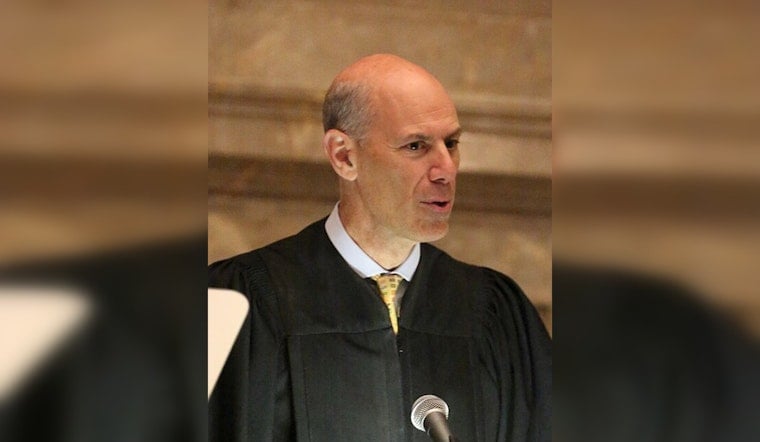
Chief Judge James E. Boasberg of the U.S. District Court for the District of Columbia granted the pseudonym request, writing that the plaintiffs have shown that their interest in pseudonymity outweighs the public's interest in learning their identities. As reported by the Tampa Free Press, Boasberg applied a five-factor balancing test to evaluate the request and found that suing a foreign government entity for individualized relief supports allowing the plaintiffs to use pseudonyms. He also noted that revealing the mother's identity would compromise the privacy and safety of her young child.
According to the complaint, Once Doe began her journalism career with a reformist newspaper in Iran, and her reporting drew scrutiny from Iranian authorities following the 2009 Green Movement protests. That year, per the complaint, Iranian authorities conducted surveillance and interrogation of her. She eventually moved to the United States in 2020 and became a naturalized U.S. citizen last year.
Alleged Assaults and a Broken Nose
The lawsuit alleges that alleged Iranian proxies physically assaulted Once Doe on three separate occasions in the years since, per the complaint. One of those attacks, the complaint states, resulted in a broken nose requiring corrective surgery. Court documents allege that the same network of agents targeted Once Doe and her family both in Maryland and in Tehran.
The complaint also describes a pattern of harassment aimed at her daughter. Agents allegedly followed, confronted, and photographed the girl, according to the complaint, prompting Once Doe to withdraw her daughter from public school and enroll her in a private school with enhanced security. Separately, filings allege that agents detained and physically assaulted Once Doe's brother while he was in Iran.
Suing Under the State-Sponsored Terrorism Exception
The complaint names three defendants: the Islamic Republic of Iran, the Islamic Revolutionary Guard Corps, and the Ministry of Intelligence and Security. Once Doe and Doce Doe are seeking compensatory and economic damages under the Foreign Sovereign Immunities Act, the federal statute that allows victims to sue designated state sponsors of terrorism in U.S. courts. Under 28 U.S.C. § 1605A, that law strips sovereign immunity from foreign nations designated as state sponsors of terrorism, permitting victims to pursue compensatory, economic, and punitive damages for injuries caused by torture, extrajudicial killing, or material support for terrorism, according to the U.S. House Office of the Law Revision Counsel.
Both the IRGC and MOIS are designated by the U.S. government as Foreign Terrorist Organizations and Specially Designated Global Terrorists, according to the U.S. Department of the Treasury, stemming from their roles in state-sponsored terrorism and extrajudicial violence. Iran routinely does not appear in U.S. courts to contest such lawsuits, and Boasberg's court has handled similar cases before — in 2022, the same district court granted a $299 million judgment to U.S. military families harmed by Iranian-backed attacks in Iraq, according to a release carried by PR Newswire.
An Initial Ruling, Subject to Change
Boasberg was careful to frame his ruling as preliminary. He noted that the decision is an initial ruling subject to reconsideration if the defendants appear to contest the lawsuit. The court ordered the plaintiffs to file a sealed declaration containing their real names and residential addresses for in-camera judicial review within 14 days of the ruling, by August 22, a procedural safeguard that keeps the plaintiffs' identities under judicial oversight even as their names stay out of the public docket.
If Iran fails to appear and a default judgment follows, collecting on it is its own battle. Plaintiffs who win such judgments can apply for compensation through the U.S. Victims of State Sponsored Terrorism Fund, a Justice Department program funded by forfeited assets and criminal penalties, though the fund caps individual compensatory awards at $20 million.
Part of a Broader Pattern, Federal Officials Say
The allegations in this case echo warnings federal agencies have issued about Iranian activity inside the United States. The FBI and Department of Homeland Security have identified Iran and China as the primary nation-state sources of transnational repression in the U.S., pointing to tactics including harassment, cyber spying, attempted kidnapping, and targeted violence against regime critics. A House Homeland Security Committee investigation likewise found that Iranian intelligence agencies frequently recruit criminal organizations, private investigators, and third-party operatives to track and intimidate dissidents living in the U.S., rather than relying solely on official diplomatic channels.
Other recent cases underscore the pattern. In May, a federal judge sentenced a Staten Island man to 10 years in prison for his role in an Iranian-backed plot to surveil and assassinate Brooklyn-based Iranian-American journalist Masih Alinejad, according to the Associated Press. And in a separate civil case in January, a federal court in Washington ordered the Iranian government to pay Alinejad $3.3 million in damages over the detention and harassment of her brother in Iran, as reported by Middle East Eye — a striking parallel to the allegations Once Doe has made about her own brother's treatment in Tehran.
In March, the Justice Department seized four internet domains operated by Iran's Ministry of Intelligence and Security that were allegedly used for cyber-enabled psychological operations, doxxing dissidents, and publishing death threats against journalists. Once Doe's case now joins a growing docket of civil and criminal actions working through U.S. courts against the same web of Iranian institutions, even as the ultimate question of whether she and her daughter will ever collect damages remains far from settled.





.jpg)