

























































A high-end real estate agent who admitted to illegally cutting down more than 140 trees in King County's Grand Ridge Park has sold his Renton home for $6 million, even as a civil lawsuit and a state criminal investigation tied to the tree-cutting remain unresolved. Vlad Popach bought the property in Renton's private Highlands neighborhood in 2023 for just over $2 million, and King County assessor records show the recent sale price at $6 million, roughly $1 million over an earlier asking price he had set after the cuttings.
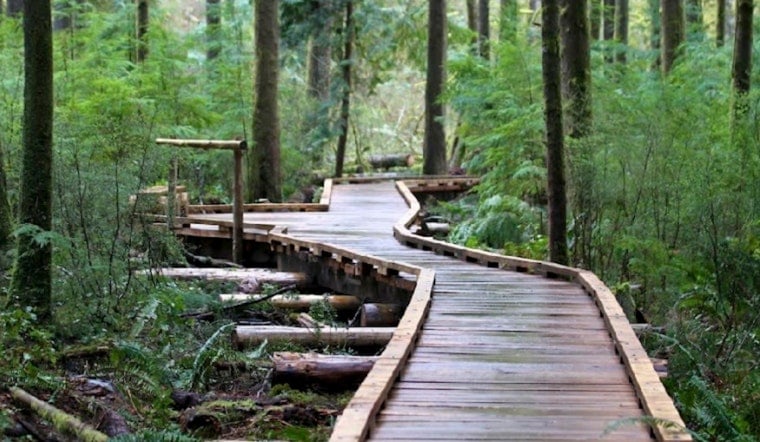
The case traces back to work that Popach's company carried out on public land inside Grand Ridge Park, a 1,300-acre forest of backcountry trails wedged between the Issaquah Highlands and rural forest lands, according to King County Parks. As reported by The Seattle Times, Popach hired a company that cut down 45 trees entirely, chopped the tops off 18 more, and stripped 72 others of their limbs — a total of more than 140 trees damaged inside the park. King County officials counted dozens of trees slashed and sawed after the damage was first discovered.
The cutting was uncovered not by government inspectors but by grassroots advocates: members of the Issaquah Alps Trails Club and a neighbor whose trail camera caught footage of a large log barreling down the hillside, according to the club's own account of the investigation. That early evidence became a key piece of the puzzle as county officials began estimating the scope of the damage, which they eventually put at more than $2.3 million.
A View Worth Millions, or a Safety Concern?
King County attorneys have argued that Popach cut the trees to improve the view of Tiger Mountain from his home, boosting its market value, per the same Seattle Times report. Popach has instead cited the property's once-in-a-lifetime mountain views and argued that the trees posed a threat to his home, telling one contact by text that the property was the best in the neighborhood. He has also said an automated county phone message granted him verbal permission for the work, though he admitted to the illegal cuttings themselves.
Co-defendant Sam Cunningham offered a related explanation to a neighbor, saying property owners had hired a licensed arborist to clear fire hazards on private land, and that the contractor went rogue and exceeded authorized boundaries into county parkland, according to FOX 13 Seattle. King County's original June 2025 civil lawsuit named multiple neighboring property owners as co-defendants, but Mercer Island candidate Julie Hsieh was formally dropped from the case in July 2025 after court filings cleared her of involvement, the Mercer Island Reporter reported. Popach's company also damaged seven additional trees beyond the initial count, and King County attorneys sued Popach, his wife and two neighbors for millions in damages.
Why the Damage Figure Could Triple
Washington's timber trespass statute, RCW 64.12.030, dates to the state's territorial era in 1869 and allows tree-cutting damages to be tripled when trees are cut, girdled, or injured without lawful authority, according to the Washington State Legislature. State law also allows restoration costs, emotional damage, arborist fees and court costs to be tripled, meaning the county's $2.3 million estimate could grow substantially in the civil case. Certified arborists typically calculate that kind of economic loss based on tree replacement costs and land depreciation, while courts separately allow un-trebled compensation for emotional distress, per the Brandt Law Group.
Grand Ridge Park is not just any patch of forest. It was set aside under a conservation agreement that preserved four acres of parkland for every acre developed in the Issaquah Highlands, and it includes western red cedar groves with trunks exceeding five feet in diameter, according to King County Parks. The damaged area forms the headwaters of Canyon Creek, a tributary of the Snoqualmie River watershed that supports salmon, cutthroat trout, and steelhead — underscoring why county officials treated the cutting as more than a boundary dispute.
Criminal Case Stalled for Nearly a Year
On the criminal side, the case has moved slowly. King County Sheriff's deputies investigated whether Popach committed a crime, but the assigned detective was out of town for weeks after the tree-cutting report first surfaced. The state Attorney General's Office took over the criminal case in October and has now investigated for nearly a year, according to the Seattle Times account, without the case advancing in any meaningful way. Attorney General spokesperson Mike Faulk confirmed his office took over the case but, per the report, declined to explain why the criminal investigation is taking so long.
Under Washington's Malicious Mischief in the First Degree statute, RCW 9A.48.070, knowingly and maliciously causing property damage exceeding $5,000 is a Class B felony carrying up to 10 years in prison and a $20,000 fine, according to a legal analysis cited by the Washington State Legislature's framework. That threshold is far below the county's multimillion-dollar damage estimate, meaning any charges brought could carry significant criminal exposure if prosecutors decide to move forward.
Judge Sides With Popach on Sale Proceeds
Popach sold the Renton property in mid-July to a limited liability company that was formed less than two months before the sale and was connected to a Bellevue law firm. Conversations with another realtor had fallen through before that deal closed, and Popach had said in late 2023 that he would accept $5 million for the property, before later valuing the house at $6.5 million and telling contacts he was not interested in negotiating.
King County attorneys had expressed concern that Popach might transfer the sale proceeds outside the judge's jurisdiction and asked that the money be set aside in a trust until the civil case concludes. Popach argued he had no intention to flee or hide his profits, and a judge ultimately ruled in his favor on setting aside the sale proceeds, allowing him to keep the money from the sale. He has since moved to an unclear location.
A judge separately ordered the civil proceedings paused until the criminal investigation is finished, with both sides directed to provide a status report in the fall. The civil case may move forward after that report, and a trial remains a possibility, though one described as being in the relatively distant future. Popach did not respond to a request for comment from the Times.
A Regional Pattern of Steep Penalties
Vlad Popach is the principal broker of Popach Group, a Bellevue-based real estate team affiliated with luxury brokerage Compass that specializes in high-end Eastside residential sales, according to the Popach Group's own profile. Similar tree-cutting disputes have drawn steep penalties elsewhere on the West Coast; Oakland officials fined a landowner $915,000 in 2025 for illegally clearing 38 protected hillside trees, as Hoodline previously reported. Whether King County's case against Popach reaches a comparable resolution remains an open question, with both the civil suit and the state's criminal investigation still pending nearly a year after the cutting was first uncovered.





