

























































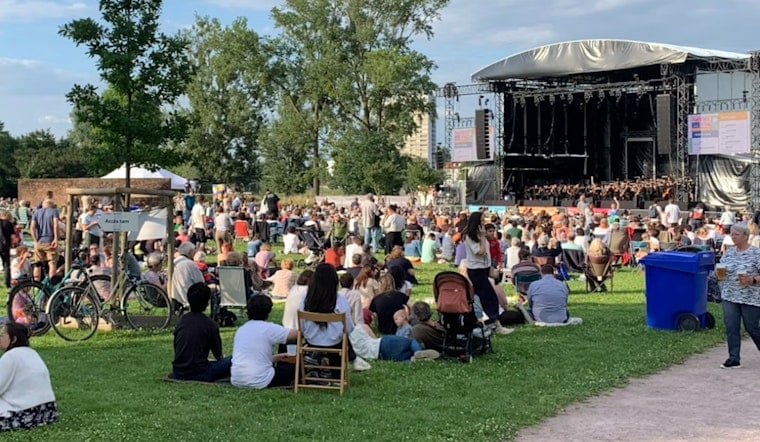
Springing the Blues, the free oceanfront music festival that once packed Jacksonville Beach's Seawalk Pavilion with as many as 150,000 fans over a single weekend, has played its final note after 34 years. The festival's board of directors voted to retire the event, saying its core mission of celebrating traditional and contemporary blues music had been accomplished.
The announcement, detailed in a news release covered by News4JAX, framed the closure as the end of an era for one of the largest and oldest blues festivals on the East Coast. Founder and executive director Sam Veal said the board reached its decision “with heavy hearts but an immense sense of pride,” according to the release, and added that organizers wanted to close the festival's chapter on a high note. Veal also expressed gratitude to fans, artists, volunteers, and the city of Jacksonville Beach for three-plus decades of support.
At its peak, the free three-day event pulled between 125,000 and 150,000 visitors annually to the oceanfront pavilion, according to Action News Jax. Veal estimated the festival generated more than $50 million in total economic impact over its run, filling hotel rooms and supporting local restaurants and vendors along the way.
From a Six-Band Concert to a Regional Landmark
The festival's roots trace back to 1990, when Veal was inspired by Arkansas's King Biscuit Blues Festival amid a period of economic recession and Gulf War tensions, as the Ponte Vedra Recorder reported. The first event launched in 1991 as a modest one-day, six-band concert that drew about 3,000 people to a small concrete stage near the Jacksonville Beach Flag Pavilion. From there it grew into a multi-stage oceanfront tradition that outlasted three decades of changing tastes and rising costs.
That growth eventually earned Springing the Blues national recognition. Music publication DownBeat ranked it among the top 50 music festivals in the world, while the Southeast Tourism Society named it one of the top 20 destination events in the United States, per the same Action News Jax report. Over 34 editions, the free festival hosted top-tier blues performers including Joe Bonamassa, Susan Tedeschi, Derek Trucks, Charlie Musselwhite, Tab Benoit, R.L. Burnside, Clarence “Gatemouth” Brown, and Jacksonville favorites JJ Grey & Mofro — with Tedeschi reportedly making an early appearance there before reaching international acclaim.
More Than Music: Schools, Charity, and a Life-Saving Reunion
Beyond the concert stages, Springing the Blues ran a “Blues in the Schools” educational program that introduced thousands of local students to the genre, while also raising money for causes such as the National Marrow Donor Program, the outlet notes. That charitable arm produced one of the festival's most personal moments this year, when board member Lloyd Hyatt publicly reunited with his life-saving bone marrow donor during the 2026 event.
The festival stayed free to attend throughout its run, but organizers offset production costs by selling commercial sponsorships and VIP passes, which ranged from $20 for single-day access to $60 for weekend packages with reserved stage-front seating and private amenities, according to Outdoorsy. That hybrid funding model kept the event free to the public for decades, even as the scale of the crowds it drew made logistics increasingly complex.
A Final Weekend, and an Unfinished Question
The 34th and final edition of Springing the Blues ran from April 10 through April 12, 2026, at the Seawalk Pavilion, featuring both international and regional performers before the board's retirement decision was made public. In announcing the end of the annual event, the board pointed to rising operational costs and what it called the evolving landscape of large-scale free events as reasons the festival had run its course.
That framing sits alongside a broader pattern Hoodline has tracked at Seawalk Pavilion in recent months. In February, police shut down surrounding streets during a crowded weekend event at the same venue, part of a wider tightening of crowd safety management downtown. Other seasonal gatherings near the beach, including a Memorial Day incident in a nearby parking garage, have similarly tested the logistics of managing large public crowds in Jacksonville Beach this year.
Despite the retirement of the marquee event, the organizational infrastructure behind it isn't going anywhere. Both the Springing the Blues Foundation, Inc., a charitable nonprofit, and Jax Beach Festivals, Inc., the 501(c)(4) social welfare organization that has managed the festival since gaining tax exemption in 1999, remain active and say they are planning future regional projects. Both entities have said they will continue the festival's legacy and are expected to announce new plans in the coming months, though what form those projects will take remains an open question for now.
For a festival that began with six bands and 3,000 fans on a concrete slab near the Flag Pavilion, the ending arrives on Jacksonville Beach's own terms — not with a scaled-back edition, but with organizers choosing to walk away while the tradition was still, by their own account, at its best.





