

























































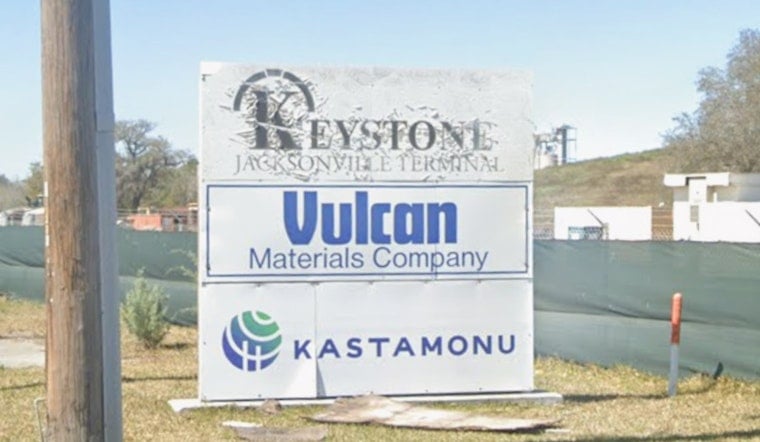
A Jacksonville deep-water cargo terminal has handled more than 2 billion pounds of potentially toxic coal combustion ash since 2022, and now a conservation group says much of it ended up somewhere it never should have: the St. Johns River and the groundwater beneath nearby neighborhoods. St. Johns Riverkeeper filed a federal lawsuit against Keystone Terminal, alleging the company illegally discharged coal ash into the river and stored it in ways that contaminated groundwater near the site.
The suit, filed on August 19 in U.S. District Court for the Middle District of Florida, was brought on behalf of St. Johns Riverkeeper by the Public Trust for Conservation, according to Action News Jax. Court records reviewed by PacerMonitor list the case as St. Johns Riverkeeper, Inc. v. Keystone Properties L.L.C., Case No. 3:26-cv-02157. The complaint asserts claims under Section 505 of the federal Clean Water Act and Section 7002 of the Resource Conservation and Recovery Act, following a mandatory citizen suit notice period required before such cases can be filed.
John November, executive director and general counsel of the Public Trust for Conservation, said the groups notified Keystone more than three months before filing that they would go to court unless the violations were sufficiently addressed, per the same account. St. Johns Riverkeeper describes itself as a member-supported nonprofit advocacy organization for the St. Johns River and its watershed.
What the Lawsuit Alleges
According to the lawsuit, coal ash discharge exposes the St. Johns River and area residents to mercury, cadmium, lead, selenium and arsenic, per the groups' representatives. The complaint further alleges that coal ash was stored in substantial amounts in unauthorized areas that were unlined and lacked adequate groundwater safeguards, the station's report notes. Beyond the water discharge claims, St. Johns Riverkeeper alleges that Keystone Terminal's outdoor storage lacked adequate dust-suppression controls, allowing fugitive heavy metal dust to blow into surrounding Jacksonville communities.
Keystone Terminal sits on 110 acres at the northern end of Talleyrand Avenue, on the former site of the Jefferson Smurfit paperboard plant along the St. Johns River, according to Global Energy Monitor. It operates as a private deep-water intermodal and bulk cargo facility, per the lawsuit as reported by Action News Jax, featuring large outdoor aggregate storage piles.
According to the U.S. Environmental Protection Agency, coal combustion residuals contain toxic heavy metals including arsenic, cadmium, lead, mercury, and selenium, contaminants that can cause cancer, organ failure, and severe neurological damage. Coal ash remains one of the largest industrial waste streams in the nation, the agency notes.
An Ocean-Spanning Supply Chain Through Jacksonville
The coal ash moving through Keystone Terminal originates roughly 1,300 miles away, at the AES investor-owned coal plant in Guayama, Puerto Rico, before being offloaded in Jacksonville and trucked or railed to the Chesser Island Landfill in Folkston, Georgia, according to CBS News. The material travels nearly 18 miles up the St. Johns River via barge before it is offloaded at the terminal.
Puerto Rico banned the permanent storage and disposal of coal ash on the island in 2017 following widespread public health concerns, a law that forces AES to ship roughly 300,000 tons of the waste annually to mainland U.S. ports, per Canary Media. Local studies in Puerto Rico have linked coal ash exposure to elevated cancer rates and groundwater contamination, the outlet reports.
This is not the first time coal ash bound for Jacksonville has raised alarms locally. In March 2021, a barge carrying coal ash from Puerto Rico crashed into jetties near the mouth of the St. Johns River, spilling up to 9,000 tons of toxic material into local coastal waters, according to St. Johns Riverkeeper. That incident sparked petitions urging local government officials to block coal ash imports altogether.
A Federal Rollback Backdrop
The lawsuit lands amid broader federal deregulation of coal waste oversight. The EPA proposed relaxing Biden-era Coal Combustion Residuals rules in May and repealed updated Mercury and Air Toxics Standards in February, according to Earthjustice. Environmental groups argue the federal rollbacks are shifting the cleanup burden onto local communities and citizen-led lawsuits like this one.
There is also a local irony playing out in Duval County. On the same day the Keystone lawsuit was filed, Florida regulators approved local utility JEA's $1.57 billion natural-gas plant to replace the retired coal-fired St. Johns River Power Park. Even as Jacksonville phases out its own coal-fired power generation, the city's port continues to serve as a transit hub for coal waste generated more than a thousand miles away.





