

























































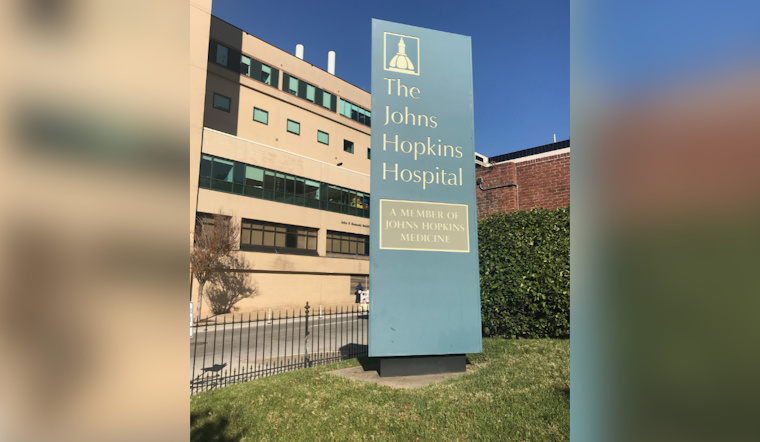
A team of Johns Hopkins liver cancer specialists has helped build a new treatment framework meant to replace a nearly 30-year-old staging system that doctors say no longer fits how hepatocellular carcinoma is actually treated. The framework, called BEACON-HCC, took close to two years to develop and was published August 7 in the journal Hepatology. In early testing, expert treatment decisions matched its recommendations 96.6 percent of the time.
The project responds to a problem doctors have flagged for years: the Barcelona Clinic Liver Cancer system, relied on by clinicians worldwide for nearly three decades according to Newswise, was introduced in 1999 and only updated in 2022 and 2025. Even with those revisions, the Journal of Hepatology has noted that its rigid staging categories fail to accommodate the multimodal approaches now common in cancer care. Under BCLC, tumors that invade blood vessels are automatically classified as advanced disease and steered toward systemic therapy alone, even when other options might apply.
Hepatocellular carcinoma, the most common form of primary liver cancer, is the leading cause of cancer-related death in patients with cirrhosis and the third-leading cause of cancer death worldwide, per the seed reporting. Globally, primary liver cancer caused an estimated 732,000 deaths out of 843,000 new cases in 2024, with incidence rates three times higher in men than women, according to a study indexed on PMC. In the U.S. alone, the American Cancer Society projected roughly 42,340 new diagnoses in 2026 and 30,980 deaths, reflecting a tripling of liver cancer diagnoses over the past four decades according to Oncology Central. Five-year survival for the disease remains below 25 percent overall.
A Framework Built Around How Doctors Already Practice
BEACON-HCC was developed through a modified Delphi consensus process involving 20 experts spanning hepatology, medical oncology, surgery, interventional radiology and radiation oncology, according to the American Association for the Study of Liver Diseases. Rather than sorting patients strictly by anatomic stage, the framework weighs tumor burden, vascular invasion, tumor biology and other factors together, and it incorporates options like transarterial radioembolization, which delivers radioactive beads into blood vessels feeding a tumor, and external beam radiation therapy, which uses high-energy beams to shrink or destroy cancer cells. It also factors in biologic markers such as alpha-fetoprotein levels to better match treatment to how aggressive a tumor actually is, per medical.watch.
Mark Yarchoan, associate professor of oncology at the Johns Hopkins University School of Medicine, said a Johns Hopkins prospective clinical trial showed that selected patients with vascular invasion could undergo potentially curative resection, a possibility the older BCLC system would have foreclosed by defaulting those patients to systemic therapy alone. Jeffrey Meyer, associate professor of radiation oncology and molecular radiation sciences at Johns Hopkins, said radiation plays a meaningful role in HCC management as either a primary treatment or in combination with other therapies. Marina Baretti, assistant professor of oncology and the Jiasheng Chair in Hepato-Biliary Cancer Research at Johns Hopkins, helped validate the new framework.
Pilot Testing Showed Wide Expert Agreement
To test BEACON-HCC, 18 North American HCC clinical experts reviewed 29 de-identified patient cases. Their treatment decisions aligned with BEACON-HCC recommendations 96.6 percent of the time, compared with only 72.4 percent agreement with 2025 BCLC recommendations on the same cases. Researchers now plan to evaluate the framework's real-world performance using prospective clinical data gathered through the multi-center HCC-Live Consortium, which compiled BEACON-HCC alongside Johns Hopkins and 16 other North American cancer centers, according to AASLD's announcement.
The paper's authorship reflects broad institutional backing across North American cancer research, with contributors from the University of Texas Southwestern Medical Center, MD Anderson Cancer Center, Mayo Clinic, University of Michigan and Northwestern University joining the Johns Hopkins Kimmel Cancer Center team, per PubMed. The framework is designed to support tumor board and multidisciplinary clinic discussions, including at the Johns Hopkins Liver and Biliary Cancer Multidisciplinary Clinic, and to reflect practices already underway at Johns Hopkins and other North American HCC centers.
Locoregional and Systemic Options Keep Multiplying
Newer, less invasive tools are part of what's pushing frameworks like BEACON-HCC forward. Ultrasound histotripsy, which liquefies liver tumors using sound waves for patients ineligible for surgery, has recently expanded into clinical use, as Hoodline reported in its look at sound-wave tumor treatment. Clinical trial data presented at the American Society of Clinical Oncology meeting in June 2026 showed that pairing locoregional interventions like transarterial chemoembolization with double-agent immunotherapy significantly improved progression-free survival compared with locoregional therapy alone, per Oncology Central. BEACON-HCC also incorporates novel combination therapies targeting tumors throughout the body, not just the liver itself.
Survival outcomes still depend heavily on how early HCC is caught. Five-year relative survival for U.S. liver cancer patients has climbed from 3 percent in the 1980s to 22 percent today, but that figure drops sharply from 37.6 percent for localized tumors to just 3.5 percent for distant metastatic disease, according to research cited by HCPLive. Because early hepatocellular carcinoma is frequently asymptomatic in patients with chronic liver conditions, doctors say that gap underscores why treatment allocation, once a tumor is found, matters so much.
Yarchoan disclosed that he is a co-inventor on filed and licensed cancer vaccine patents, co-founded Adventris Pharmaceuticals, a company focused on therapeutic cancer vaccines, and consults for AstraZeneca, Genentech, Incyte, Boehringer Ingelheim, Boston Scientific and Bristol Myers Squibb, in addition to receiving grants or research support from Bristol Myers Squibb, Genentech and Incyte. Meyer disclosed institutional sponsored research support from RayzeBio and royalties from UpToDate and Springer. It remains an open question how quickly community hospitals and non-academic centers outside the HCC-Live Consortium will adopt BEACON-HCC over the long-standing BCLC system, and whether the prospective data ahead will confirm that higher expert alignment translates into better long-term survival.




,_Baltimore,_MD_21205_(49027010891).jpg)