

























































A federal jury has convicted a 50-year-old Kansas City, Missouri, woman of bank fraud, theft of government funds, and aggravated identity theft after prosecutors say she siphoned off more than $66,000 in Social Security benefits meant for her mother, who was living in substandard conditions in Cuba. Divianys Morales-Alvarez now faces up to 30 years in prison without parole on the bank fraud count alone, plus an additional term tied to the identity theft conviction.
According to KSHB 41, Morales-Alvarez was a joint owner of her mother's U.S. bank account even after her mother moved to Cuba in February 2020. Investigators allege that despite the move, the Social Security Administration continued sending monthly benefits to that U.S. account, and that Morales-Alvarez intercepted U.S. Treasury checks payable to her mother for tax refunds and credits, forging her mother's signature on the backs of those checks before depositing them into the joint account, per authorities cited by the station.
Treasury regulations prohibit sending Social Security payments to or on behalf of beneficiaries residing in Cuba or North Korea, although payments may accrue to a U.S. citizen or national, according to the Social Security Administration's Program Operations Manual. The U.S. Department of the Treasury likewise does not allow government payments to Cuba, which is central to why the continued deposits into the joint account became the basis for federal charges.
How the Scheme Was Allegedly Carried Out
Investigators allege that Morales-Alvarez transferred the majority of the check proceeds into her own savings account and spent the money on her own living expenses. The station's report notes she also used remaining benefit funds to purchase a vehicle and to pay off her delinquent real estate taxes, spending what was left on herself.
Morales-Alvarez claimed to have sent about $10,000 in cash to Cuba to care for her mother, who has dementia, though authorities say she never traveled to Cuba herself. She also claimed to have sent packages of supplies and clothing to her mother through people traveling there, but per the same account, records show she actually sent only about $1,600 in cash and four to five packages of clothes and supplies between February 2020 and September 2024 — a fraction of the more than $66,000 the Social Security Administration sent to the joint account during that same window.
Federal Case Traces Back to a 2024 Tip
The case originated when the Social Security Administration's Office of Inspector General received a report in 2024 about a retirement beneficiary living in Cuba in what were described as substandard conditions. That tip set off an investigation led by Special Agent Andrew Zumhofe of the SSA-OIG, according to court records reviewed by CaseMine. According to the SSA Office of the Inspector General's Semiannual Report to Congress, its investigations involving RSI benefits include deceased payee fraud and representative payee misuse. Assistant U.S. Attorneys Amanda Hanson and Patrick D. Daly prosecuted the case in the U.S. District Court for the Western District of Missouri.
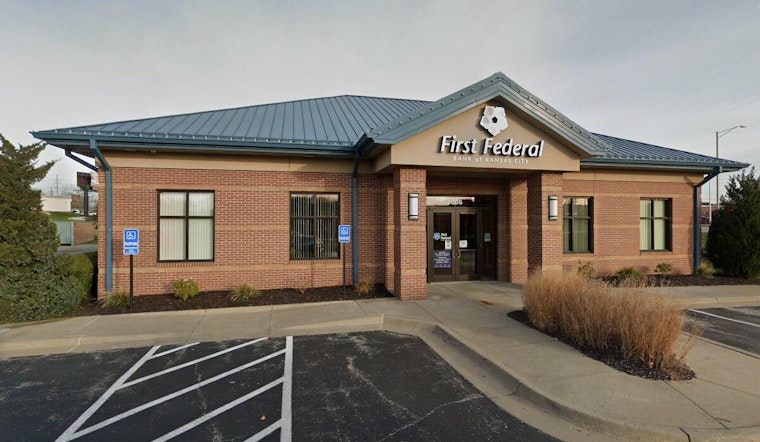
Pretrial filings show that Count Three of the indictment, charging bank fraud, was amended to name First Federal Bank of Kansas City as the affected institution, replacing an earlier reference to Capitol Federal Bank, per CaseMine's review of the case record. A grand jury returned a four-count indictment on December 9, 2025, and defense attorneys filed a motion to dismiss on March 30, 2026. The case record also includes the motion to dismiss, according to court filings posted on GovInfo. A federal jury ultimately found Morales-Alvarez guilty of one count of bank fraud, two counts of theft of government funds, and one count of aggravated identity theft.
What the Sentence Could Look Like
Bank fraud under federal law carries a statutory maximum of up to 30 years in prison and a fine of up to $1 million per count, per the Legal Information Institute's summary of 18 U.S.C. § 1344. That is the figure behind the case's headline prison exposure, though the aggravated identity theft conviction adds its own separate consequence: under 18 U.S.C. § 1028A, that charge carries a 24-month mandatory minimum, according to the United States Sentencing Commission.
Nationally, identity theft charges may be paired with underlying fraud, theft, or property destruction charges. The same data shows average prison sentences in cases involving that identity theft statute climbed from 46 months in fiscal year 2021 to 54 months in fiscal year 2025, though actual sentencing in any individual case still depends on federal guideline calculations and restitution obligations.
In a separate case, a Prairie Village, Kansas, woman pleaded guilty to Social Security benefits fraud on 8 Apr 2025, according to the U.S. Attorney's Office for the Western District of Missouri. In another separate case, a former FAA employee pleaded guilty to stealing deceased beneficiaries' Social Security benefits on 23 Jul 2025, according to the U.S. Attorney's Office for the Western District of Missouri.
The prosecution concerned fraud related to Social Security Administration benefits, according to the U.S. Department of Justice. The case now moves toward sentencing.





