

























































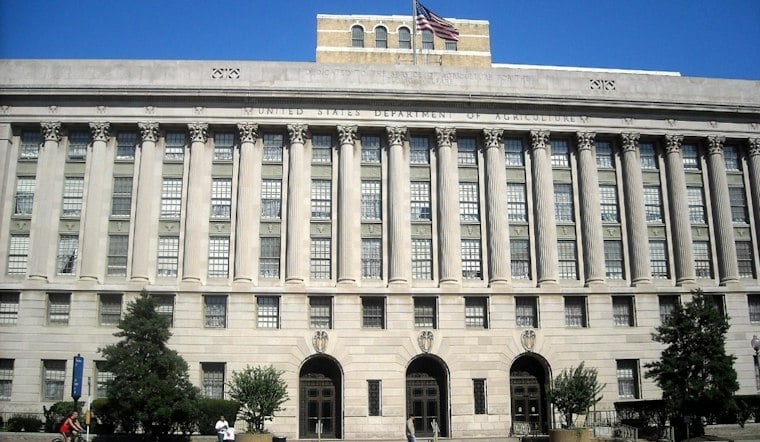
Bernard Bates farmed 950 acres in Nicodemus, Kansas, and helped bring one of the largest civil rights cases in American history against the U.S. Department of Agriculture. He died in 2022 having never received a settlement check. His family says the same is still true today.
The settlement in Pigford v. Glickman followed a class-action lawsuit filed in 1997 by Black farmers who said the USDA had systematically denied or delayed loans through local county committees, according to KCUR. That year, the USDA admitted its programs had routinely discriminated against Black farmers. The case named then-Agriculture Secretary Dan Glickman as defendant, and its settlement promised nearly $2.2 billion in collective compensation. KCUR reports that the case became the largest civil rights court case in U.S. history.
Timothy Pigford, the case’s lead plaintiff, said in 1996 that Black farmers could not get loans and that their loans were deliberately delayed when they did. He died this year at age 74, KCUR reports. Shirlette Ammons, creator of the six-part podcast series Tending about the lawsuit and the discrimination behind it, said the USDA had a long history of keeping Black people from owning and stewarding land.
A Kansas Farm Lost to Foreclosure
A 2012 affidavit from a regional credit association president admitted discriminatory treatment of Bates, according to KCUR. The account traces the dispute to the early 1980s, when bad weather destroyed crops on Bates’s Nicodemus farm and the USDA denied his request to extend his loans. His farm was foreclosed on soon after. KCUR reports that the Production Credit Association of Stockton, Kansas, preferred foreclosing on Bates even if it meant losing money, and that farmland taken from foreclosed Black residents in the area was transferred to white neighbors.
Despite his role as an original plaintiff, Bates and his family received no check from the Pigford v. Glickman settlement, and by the time of his death in 2022, Nicodemus residents were no longer actively farming, according to the same reporting. His niece, Dr. Johnella Holmes, now serves as president of the Kansas Black Farmers Association, an organization founded in Nicodemus in 1999 that works to preserve the legacy of Black agriculturalists in Kansas and educate younger generations on sustainable farming and land preservation. Holmes said her uncle's activism made a lasting impact.
Nicodemus's Place in Black History
Nicodemus was founded in 1877 by formerly enslaved Black people and is recognized as the last remaining African American settlement west of the Mississippi River. Established by roughly 350 Black Exodusters primarily from Kentucky, the town reached a peak population of about 600 in the late 1880s before rail lines bypassed it, and fewer than 40 residents live there today, according to the National Park Service. Congress designated the settlement's five surviving structures — including the St. Francis Hotel, the AME Church, and the Township Hall — as the Nicodemus National Historic Site in 1996. Nicodemus still holds an annual Emancipation/Homecoming celebration every late July.
Decades of Legal Fights Over Compensation
The scale of the underlying settlement helps explain why so many claims, including the Bates family's, remain unresolved decades later. Strict notification rules and gaps in legal representation meant more than 70,000 applicants missed the original September 12, 2000, filing deadline for the Pigford consent decree, according to a Congressional Research Service report. By late 2011, about $1.06 billion in direct cash relief, tax payments, and debt relief had gone to more than 15,600 approved class members under the settlement's Track A and Track B processes, per the same report. Congress later included a provision in the 2008 Farm Bill letting late filers petition federal court for their own determinations.
That provision led to a second wave of compensation. In December 2010, President Barack Obama signed legislation appropriating $1.15 billion for a follow-up claims process known as Pigford II, formally In re Black Farmers Discrimination Litigation, which covered late filers who had been shut out of the original 1999 settlement. Even that expansion didn't close every gap: more recent federal efforts have tried to reach farmers still left behind. In July 2024, the USDA completed payouts under the Inflation Reduction Act's Section 22007 Discrimination Financial Assistance Program, issuing $2.2 billion to more than 43,000 farmers, ranchers, and forest landowners who experienced USDA lending discrimination before 2021, according to a Roanoke Cooperative news release. Under that 2024 distribution, more than 23,000 operating or former farmers received individual awards between $10,000 and $500,000, averaging nearly $82,000, while more than 20,000 prospective farmers who were prevented from ever starting operations received smaller awards of $3,500 to $6,000, per the Intertribal Agriculture Council.
Other cases and local farm data
A separate USDA discrimination case involved Native American farmers and ranchers: in October 2010, the Obama administration announced a $760 million settlement to resolve allegations of loan discrimination, according to The Washington Post. The available details distinguish the case by its claimants and settlement amount, but do not establish its eligibility rules or how relief was distributed. For local agricultural context, the USDA’s 2022 Census of Agriculture counted 347 farms in Graham County, where Nicodemus is located, according to the USDA National Agricultural Statistics Service. That countywide total does not provide a comparison of Black farm operators or Black-operated acreage with Kansas overall.
A Legacy of Land Loss
The Bates family's story reflects a much larger national pattern. The number of Black farmers in the United States fell from a peak of nearly 950,000 in 1920, when they owned 16 to 19 million acres, to fewer than 20,000 by the late 1990s — a loss of more than 90% of Black-owned farmland, according to USDA Census of Agriculture data analyzed by the American Economic Association. A 2022 study published in AEA Papers and Proceedings estimated that discriminatory USDA lending practices and land dispossession cost Black farmers roughly $326 billion in lost agricultural property value, compounded between 1920 and 1997.
For a settlement meant to make families whole, those numbers underscore what the Kansas Black Farmers Association is still working against in Nicodemus. The Tending podcast series that chronicles Bates's story and the broader discrimination case was reported and produced by Ammons, Mosi Secret, and Andrea Weigl, with additional reporting from David Condos and the Kansas News Service, according to KCUR's account. Holmes and the association continue pushing to preserve what farmland and history remain in the settlement her uncle once called home.



