

























































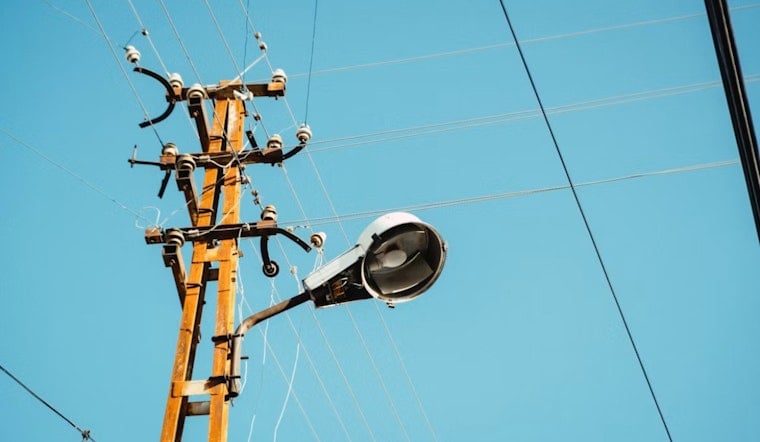
Power went out across Kessler Park and nearby Dallas neighborhoods this week just as the region hit some of its most dangerous heat of the summer, leaving families to cope with soaring temperatures without air conditioning. Crews were sent out to assess electrical equipment that residents say buckled under the strain, while multiple households reported outages hitting at once.
The timing could hardly be worse. On Tuesday, the National Weather Service issued an Extreme Heat Warning for the Dallas-Fort Worth area, according to CBS News Texas, projecting ambient temperatures up to 108 degrees and a heat index as high as 109. That same outlet's video report, via CBS News, documented the outages hitting Kessler Park and surrounding areas as crews worked to assess stressed electrical equipment.
A Historic Neighborhood Feels the Strain
Kessler Park sits in North Oak Cliff, roughly three miles from downtown Dallas. The neighborhood dates back to the 1920s and carries a City of Dallas Conservation District designation, prized for its rolling terrain, historic architecture, and mature tree canopy, according to the Texas Collective Group. That kind of older residential infrastructure can be especially vulnerable when demand spikes, since aging distribution equipment has to work harder to keep homes cool through triple-digit stretches.
The outages themselves are not part of any statewide blackout. Oncor, the region's primary electricity distributor, has explained that extreme summer heat puts severe thermal and mechanical stress on localized equipment, causing neighborhood transformers to overheat and fail even when statewide bulk generation remains adequate. Elevated overnight temperatures compound the problem because equipment never gets a chance to cool down before the next day's heat arrives.
Statewide Demand Hits Record Levels
The strain on neighborhood equipment is unfolding against a backdrop of record-breaking statewide electricity use. The Electric Reliability Council of Texas set an all-time peak demand record of 91,308 megawatts on July 22, driven by intense summer temperatures across the state's urban centers, as reported by The Texas Tribune. Rapid population growth and repeated heat waves have pushed overall Texas power usage higher year after year, per that report.
Even as bulk generation has kept pace so far, the equipment closer to individual homes is proving to be the weak link. Oncor does try to get ahead of the problem: the utility conducts spring pre-inspections of distribution equipment using infrared aerial drones and transformer oil analysis, aiming to identify and replace overloaded gear before peak demand hits. The company inspects thousands of transformers annually as part of that effort, though extreme and sustained heat can still overwhelm equipment that passed inspection months earlier.
Where Dallas Residents Can Cool Off
For families riding out an outage without air conditioning, the Salvation Army of North Texas has activated 12 cooling and hydration stations across North Texas counties, a response that kicks in whenever local forecasts call for temperatures of 100 degrees or higher, according to CultureMap Dallas. Those stations offer air-conditioned shelter, water, and meals to residents who need somewhere to escape the heat.
Public libraries have traditionally served as another daytime refuge during severe weather, but that safety net has shown cracks this summer. Dallas Public Library locations were closed on July 8 due to a mandatory citywide municipal budget furlough, according to WFAA, forcing some residents without home cooling to look elsewhere on what would otherwise have been a routine cooling-center day.
Consumer Protections During Extreme Heat
Residents struggling with utility bills during this stretch do have one legal safeguard. Under Texas Public Utility Commission regulations, retail electric providers are prohibited from disconnecting residential customers for nonpayment on days when a National Weather Service heat advisory or extreme heat warning is active, a protection intended to prevent heat exhaustion and heat stroke, as detailed by the Texas Tribune.
The bigger question of how the grid keeps pace with growth is also drawing attention in Austin. Governor Greg Abbott directed state utility regulators on August 3 to audit all data center projects seeking grid connections, temporarily pausing new approvals to evaluate risks to state energy stability, according to Capacity Global. Data centers reportedly account for roughly 90 percent of new grid connection requests statewide, per that report, a detail that underscores how much competition already exists for capacity even before neighborhood-level failures like the one in Kessler Park are factored in.
Longer term, the pattern is not going away. An analysis from Climate Central published this month found that Dallas now experiences an average of 13 additional days of extreme summer heat compared to historical baselines, a shift that is driving up seasonal cooling demand and, with it, the wear on the same neighborhood transformers now under scrutiny in North Oak Cliff.
The outages in Kessler Park follow a summer of similar heat-driven disruptions across Texas, including a blackout that hit El Paso reported by Hoodline earlier this month and Dallas's own 106-degree heat wave just a day earlier, Hoodline reported. For now, crews remain focused on getting stressed equipment back online while residents wait out the heat.



